
The phrase "monthly search volume" gets about 70 searches a month in the US. I pulled that from Google Ads data on October 19. "Keyword search volume", which asks the same thing, gets 880. And "how is search volume calculated" came back with no data at all, even though it's the exact question this post answers.
So one question gets three very different numbers, and Google already answers it in an AI Overview at the top of the page. That's a good preview of the whole metric. Monthly search volume is useful, but it's an estimate built on choices you can't see. This guide walks through how the number is made, then the five places it misleads.
What monthly search volume means at the source
Google is the only company with the real counts, and it shares them through Keyword Planner. Here's its own definition from the Google Ads Help page.
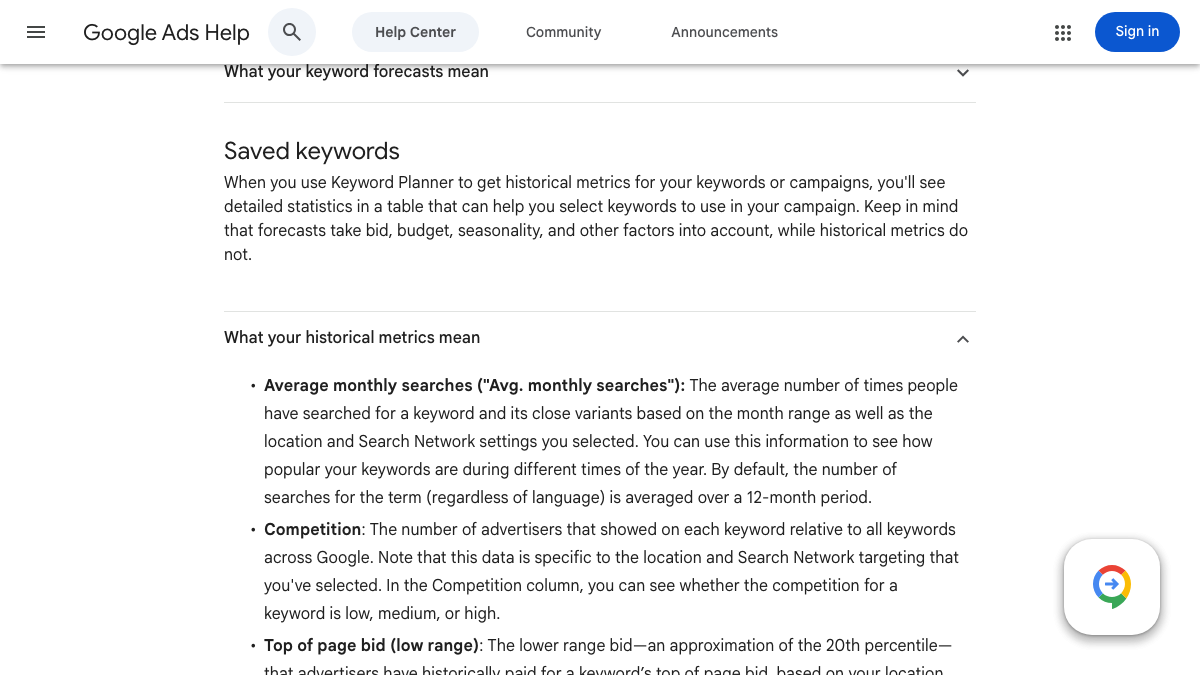
In plain words, Google's help page says average monthly searches is the average number of times people searched for a keyword and its close variants. It changes with the dates and the location you choose. By default, Google adds up 12 months and gives you the average.
Two parts of that do a lot of work. "Close variants" means Google folds similar phrasings into one bucket. Ahrefs showed this in its 2021 study, where "compare vpn" and "vpn comparison" shared one volume. It also found Google treating "chusky", a dog breed, as a typo for "husky".
The second part is the range problem. If your account isn't spending on ads, Keyword Planner tends to show a bucket like 1K-10K instead of a number. One r/SEO commenter put it well, saying the range lets you rank keywords against each other rather than giving you a count. Google doesn't publish the spend level that unlocks exact figures.
Where third-party tools get their numbers
Most people read volume in a tool like Ahrefs or Semrush, not in Keyword Planner. Those tools can't see Google's logs either, so they model the number.
Ahrefs says in its help center that it mixes Keyword Planner and Google Trends data with "other third party data sources". It also says search volume in any SEO tool "is always an estimation", since only Google has the exact data. Semrush's knowledge base describes third-party data laid over clickstream data and run through machine learning. Its numbers refresh monthly, and it takes 12 months of searches and divides by 12, the same averaging Google uses.
Clickstream data is the piece most readers have never had explained. A commenter in an r/SEO thread on trusting volume put it in one breath. Apps and browser plugins sell what their users search for. Tools gather that across everyone captured and scale it up to a full market. Fewer of those apps sit on work laptops, so B2B terms tend to have thinner samples.
I call this the copy-of-a-copy problem. Keyword Planner is already a grouped, averaged number. A tool's number is a model trained partly on that average, plus a panel of strangers. Every step adds error, and none of it shows on the screen.
15 hours a week manually. Or 15 minutes with RankControl.
Track citations, monitor competitors, and fix content gaps across every AI search engine. Automatically.

Seasonality hides inside the average
A 12-month average is one flat number for a demand curve that may not be flat at all. Google Trends makes this easy to see.
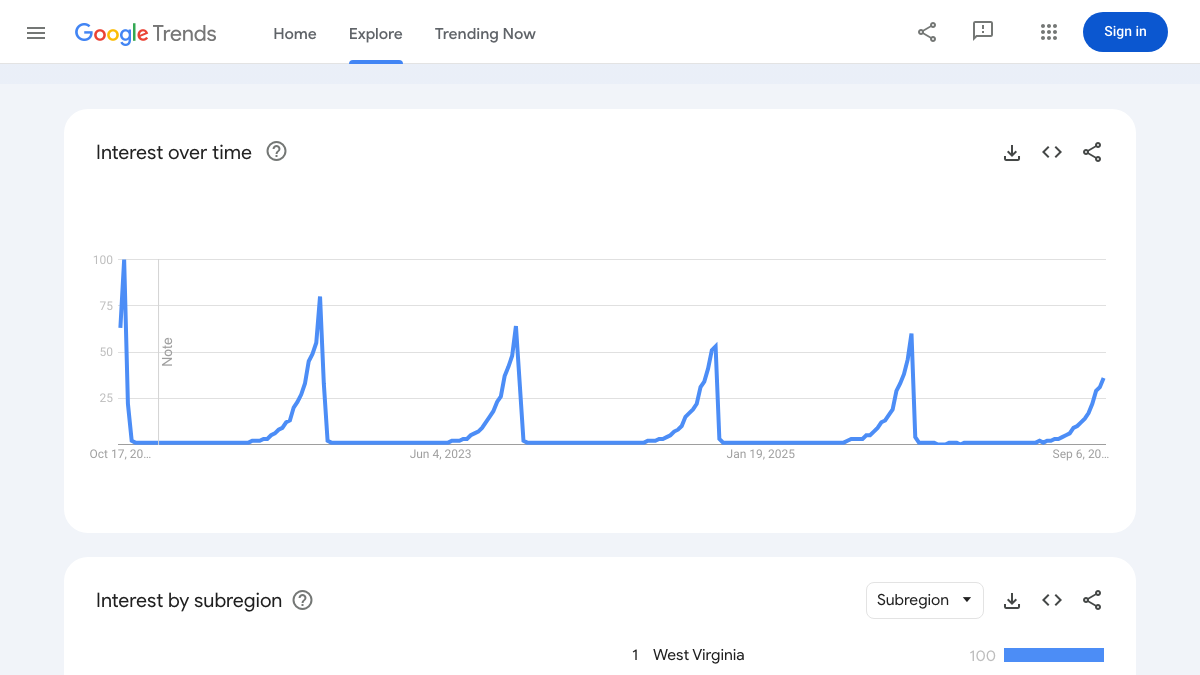
That's five years of US interest in "halloween costumes". Each October the line jumps toward the top of the scale, then it drops back near zero within weeks. A yearly average puts the term somewhere in the middle, which is wrong for nearly every month of the year.
Most B2B terms swing less than costumes. Tax software and school software still move a lot with the calendar, though.
Before you plan around a number, open the monthly trend in Keyword Planner or Trends and check when the demand actually shows up. Publish a few months before the rise, since new pages need time to rank.
Tools disagree, and Google tends to overcount
Ask four sources about one keyword and you'll get four answers. Alex Denning at Ellipsis tried this in March 2024 with "best coffee grinder". Keyword Planner's screen said 1K-10K, while its API gave an exact-looking 2,600. Among the paid tools, Semrush said 2,400 and SpyFu said 1,600, with Ahrefs at 2,000 in between. Ellipsis put the spread at 38.5%, from the API's 2,600 down to SpyFu's 1,600.
Google's own figure isn't the gold standard either. In a 2021 Ahrefs study of 72,635 keywords, Tim Soulo compared Keyword Planner volumes with real Search Console impressions. Keyword Planner came in high 91.45% of the time and badly high in 54.28% of cases. Only about 45% of its numbers were roughly right, against 60% for Ahrefs' own estimates.
Read both with care. The Ahrefs study is five years old and only covered keywords in the 1K-10K range. Ahrefs was also grading itself against a rival. Ellipsis sells SEO content, and its test was a single keyword. Still, both point the same way. Exact volume is a guess, so compare keywords inside one tool and never across tools.
Zero-volume keywords still get searched
A zero in a keyword tool rarely means nobody searches. It usually means the panel saw too few searches to report. Ahrefs says terms with fewer than 10 searches a month make up almost 93% of its US keyword database, so the long tail is most of the map.
The fair version of the evidence is mixed. In 2022, Joshua Hardwick checked Ahrefs blog pages ranking in the top five for terms with 10 or fewer estimated searches. Over 28 days, those terms drew 11.3 Search Console impressions each on average. Fewer than 1% passed 100 impressions, and he warned the sample was small.
So most zero-volume terms aren't big wins on their own. They aren't zero either, and they add up. Ahrefs' long-tail guide notes that a page ranking for a parent term also ranks for many of its longer variants.
One SEO practitioner on r/seogrowth reported a 40% traffic jump after building pages around terms their tool called zero-volume. That's one person's claim, but the same pattern shows up in at least three Reddit threads on the topic.
So let volume set the order you write in, and let buyer fit decide what goes on the list. A zero-volume question your buyers ask on sales calls still deserves a page. It just might wait behind a bigger one that fits just as well.
AI search traffic grew 835% this year. Is your content ready?
RankControl generates 26 content formats optimized for ChatGPT, Claude, and Perplexity. Published on your domain, matched to your brand.

Searches are not clicks
Volume counts searches. Your traffic depends on clicks, and the gap keeps growing.
Rand Fishkin's SparkToro study used Similarweb data for January to April 2026. It found 68.01% of US Google searches ended with no click. In 2024, using Datos data, the figure was 60.45%. Ahrefs also says it needs separate click-through models to turn volume into traffic estimates.
So a keyword with 1,000 monthly searches doesn't promise 1,000 visits, even at position one. AI Overviews, answer boxes, maps and ads all take a share first. Our zero-click search statistics cover how big that share gets by query type. When you size a keyword, think in clicks you might win, then check them against real numbers once the page is live.
AI prompts have no published volume
Then there's the demand that never shows up in any keyword tool. OpenAI hasn't published volume for any topic, keyword or prompt, only totals. Any "prompts per month" figure you see is a third-party estimate, which our post on prompt volume data takes apart.
Prompts also don't map cleanly to keywords, because people ask long, specific questions. Our piece on AI search volume covers how much of that demand keyword tools miss. For AI answers, the better question is whether you show up at all. RankControl's AI visibility tracking checks 50 buyer questions every week across seven engines and marks whether each answer names or cites you.
How to use monthly search volume without being fooled
None of this makes volume worthless. It's a decent way to compare topics, as long as you treat it as a rough rank and not a count. Here's the routine I'd use.
- Start from buyer fit. List the questions your buyers really ask before you open any tool. Our guide to keyword research for small business walks through finding them.
- Compare inside one tool. Use one source for every keyword in a plan, so the errors are at least the same kind.
- Check the monthly curve. Look at the trend for any keyword with a season, and time the page before the peak.
- Think in clicks. Discount terms where answers fill the page, but keep them if buyers ask them.
- Use volume to schedule. High fit and high volume go first, while high fit and low volume go next. Low fit gets cut whatever the volume.
- Trust Search Console last. Once a page is live, its impressions are the closest thing to real demand you'll get.
Search Console has its own blind spot, since it only counts searches where your page appeared. Terms you don't rank for yet stay invisible, which is why the 2022 Ahrefs test only used pages already in the top five. RankControl's analytics puts your Google and Bing rankings next to visits from AI answers, so you can see which pages earned their place.
You can run all of this by hand with Keyword Planner, Trends, Search Console and a spreadsheet. Or RankControl's content engine can write each article against the pages already ranking and publish it on your own domain, every month, while you work on your product.

Built by the team that got cited in 48 hours.
Content generation, backlink building, AI visibility tracking, and Google rankings. One platform, zero guesswork.