
On November 4, I looked up 40 pages that small sites had published two to ten days earlier. Google had 35 of them. Bing had 18, and it had nothing that Google missed.
That gap is the whole story of AI search indexing. There's no single AI index. Each engine draws on a different one, and a page can sit in one and be missing from another. Below is how indexing works in plain steps, which index feeds which AI product, what my test showed and what you can do about each. Facts attributed to a company come from its own pages, read on November 4, 2026.
How does a page get into Google's index?
Google says search works in three stages, and not all pages make it through each one. They're crawling, indexing and serving. The six steps most explainers list fit inside those three.
| Step | What Google says | A number it gives |
|---|---|---|
| Discover | There's no central registry of web pages. It finds URLs through links, sitemaps and pages it has visited | A sitemap holds up to 50,000 URLs |
| Crawl | It doesn't crawl everything it finds | It reads the first 2MB of an HTML file |
| Render | It runs JavaScript during the crawl with a recent Chrome | The render queue can take "a few seconds, but it can take longer" |
| Process | It groups similar pages and picks the most representative one | Redirects and rel=canonical are strong signals, and a sitemap is a weak one |
| Index | Not every processed page is indexed | None |
| Serve | An indexed page can still fail to show | None |
The 2MB limit is newer than most guides. Google's Googlebot page was updated on February 3, 2026, and a copy from the day before still said 15MB. Google's how search works page covers the rest.
Timing is looser. Search Engine Roundtable reported Gary Illyes's slide numbers in October. A new URL gets discovered in about 20 hours, and indexing takes about 1.5 hours once it's crawled. The slowest cases take months or never. Illyes called it an exercise, so treat the figures as rough.
On November 3, Google also reworded "Crawled - currently not indexed" in its Page indexing report. It's now a common message that doesn't necessarily indicate an issue.
Google now says "Crawled - currently not indexed" is a common message, doesn't mean there is an issue and Google does not index all pages - plus more https://t.co/K7FDGRL6BQ
 Barry Schwartz@rustybrickNov 3, 2026
Our Google indexing issues guide covers each status, and our Search Console routine covers new articles.
Which index does each AI product use?
Here's the map, from each company's own pages.
| Product | Index it draws on | What feeds it |
|---|---|---|
| Google AI Overviews and AI Mode | Google's. A page must be indexed and eligible to show in Search with a snippet | Googlebot |
| Gemini apps | Google's. Google defines grounding as content from the Google Search index | Googlebot |
| Microsoft Copilot | The same core foundation as Bing | Bingbot, IndexNow, sitemaps |
| ChatGPT search | OpenAI's own crawler feeds it. Its partner mix isn't published | OAI-SearchBot |
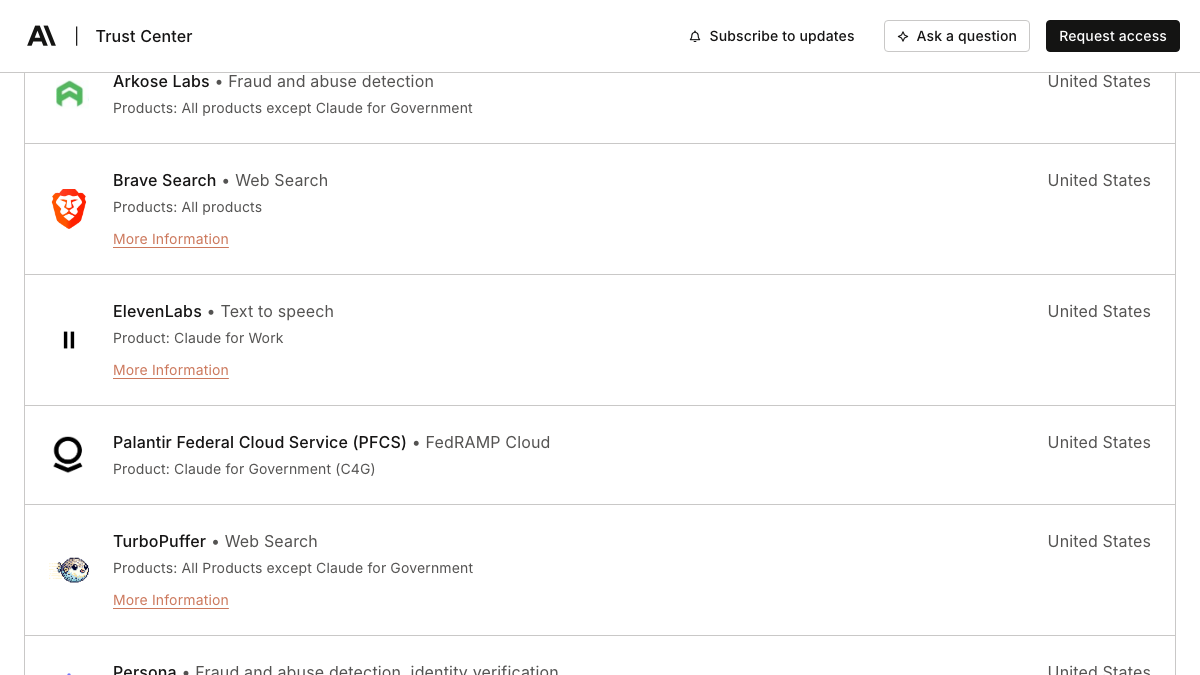
| Claude | Three partners and its own bot | Claude-SearchBot, Brave Search, TurboPuffer, Parallel |
| Perplexity | Its own index | PerplexityBot |
| Apple Siri and Spotlight | Apple's own | Applebot |
| DuckDuckGo | Mostly Bing for links, plus its own crawler | DuckDuckBot |
Two rows differ from what you'll read elsewhere. When I asked Google's AI Overview whether ChatGPT uses Bing, it said Bing is the primary provider. OpenAI's bot page says OAI-SearchBot feeds ChatGPT search. Its help pages that name partners were behind a bot check for me, so I can't tell you the mix. Our ChatGPT and Bing post covers that argument.
And Claude isn't only Brave. Anthropic's Trust Center lists three web-search providers. Perplexity's Photon post says it builds its full web index in a single-digit number of hours.
Some fetches skip the index. ChatGPT-User, Perplexity-User, Claude-User and Meta's fetcher read a page when someone asks, and their docs say they may ignore robots.txt. Our ClaudeBot guide and Perplexity tracking guide cover two of them.
Know exactly what AI says about your competitors.
RankControl's Recon Agent monitors competitor citations across ChatGPT, Perplexity, Claude, Gemini, Grok, Google AI Mode, and Google AI Overviews. See where they show up and you don't.

How many fresh pages are in each index?
I tested it. I drew pages at random from public feed lists, mostly small independent blogs, with 35 of the 40 from that group. Each was the only page I took from its site, published two to ten days before, with a 200 status, no noindex, robots.txt open to Googlebot and Bingbot, and a self-referencing canonical. A page counted as findable if a search for its exact title, limited to its own site, returned its URL on page one.
| Bing | ||
|---|---|---|
| Fresh pages findable, out of 40 | 35 (88%) | 18 (45%) |
| Older post on the same site, out of 31 sites | 27 (87%) | 22 (71%) |
| Fresh page on those same 31 sites | 26 (84%) | 12 (39%) |
Google had 17 pages that Bing lacked, and both had 18. Five pages were in neither. Bing had nothing that Google lacked.
| Days since publishing | Pages | Bing | |
|---|---|---|---|
| 2 to 4 | 13 | 10 (77%) | 6 (46%) |
| 5 to 7 | 14 | 12 (86%) | 6 (43%) |
| 8 to 10 | 13 | 13 (100%) | 6 (46%) |
Bing's share didn't climb with time, so waiting isn't obviously the fix there. And on 13 sites, the older post was in Bing while the new one wasn't. For AI visibility, a page that Google has and Bing lacks can't be seen by Bing-fed surfaces like Copilot.
An r/bigseo poster described exactly this, a new site indexed in Google with impressions while Bing said "Discovered but not crawled."
Indexed in Google but not in Bing
I am facing a strange problem. One of my website is indexed in Google and getting impressions, few clicks here and there which is fine because it is basically a new website. But to my utmost surprise, I see the website is not indexed in bin...
The limits are real. It's 40 pages on one day, with a hobby-blog skew. Scraped lookups can miss indexed pages, a site search isn't an index API, and Bing results came through a third-party search API and not bing.com. Brave couldn't be tested, since its robots.txt blocks automated searches and no cheap endpoint exists. "Findable" also isn't ranking or being cited.
26 content formats. Published on your domain. Matched to your brand.
Guides, comparisons, listicles, case studies, and more. RankControl generates content that gets cited by ChatGPT, Perplexity, Claude, Gemini, Grok, Google AI Mode, and Google AI Overviews.

What can you do to get into each index?
| Index | Levers that work |
|---|---|
| Links from pages it already crawls, a sitemap, Request indexing within its quota, server-rendered content, no IndexNow | |
| Bing and Copilot | IndexNow, sitemaps with accurate lastmod dates, crawlable links, Bing Webmaster Tools, and avoiding content hidden behind client-side rendering |
| Brave, one of the three search providers Anthropic lists for Claude | Let Googlebot crawl you, since Brave follows it, and use its submit-URL form |
| OpenAI and Perplexity | Allow OAI-SearchBot or PerplexityBot in robots.txt and at your firewall, which takes up to 24 hours |
| Claude | Allow Claude-SearchBot, and use noindex, which reaches its search partners |
| Apple | Allow Applebot, which powers Siri, Spotlight and Safari search. Noindex works, and Applebot-Extended is the training opt-out |
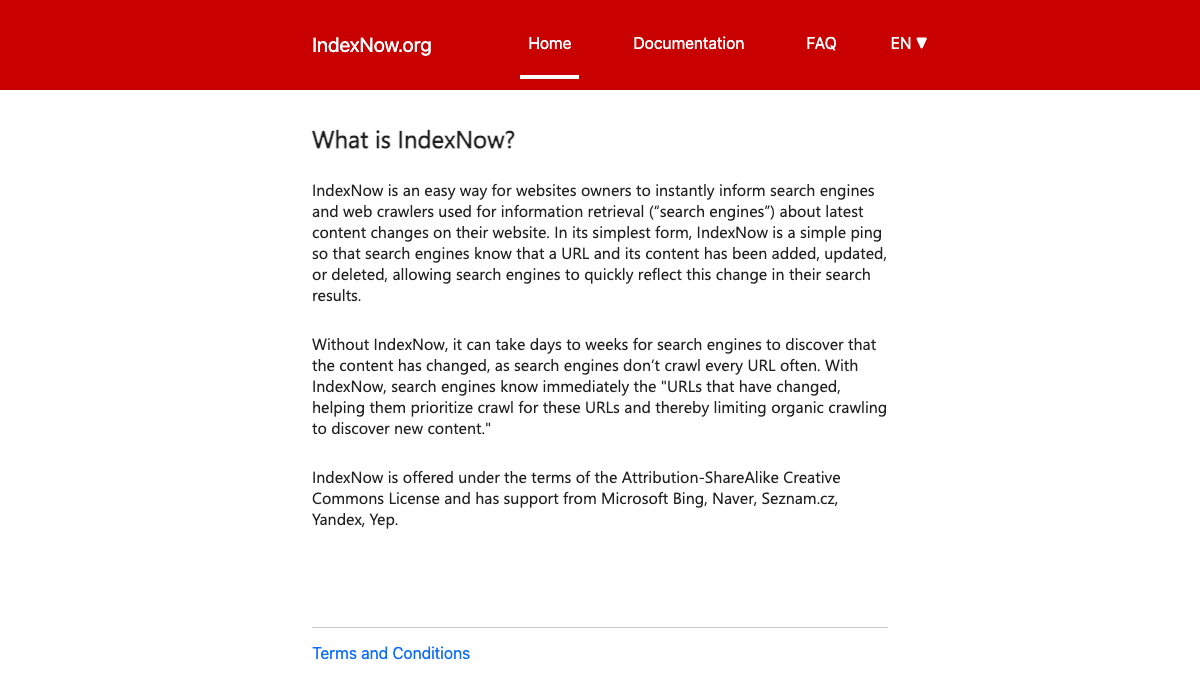
IndexNow is the lever people misread. It's a ping that tells participating engines a URL was added, updated or deleted. IndexNow takes a GET request or a POST of up to 10,000 URLs, and you host a key file at your root. Google isn't on the supporter list, and a 200 response only means the URL was received. IndexNow's own FAQ says it doesn't guarantee indexing.
An r/SEO poster who pinged on every build saw about 100 of 700 pages in Bing against 600-plus in Google Search Console a month later.
IndexNow - is pinging it too often considered abuse
I’ve set up my CI/CD pipeline to ping indexnow on every build. It doesn’t seem to help though - I’m currently at ~100 indexed pages on Bing (out of ~700) vs 600+ in GSC - it’s been a month or so. Does pinging indexnow too often actually mak...
Rendering matters too. Google runs JavaScript, and Bing's guidelines warn against hiding critical content behind client-side rendering. I found no primary doc saying whether OAI-SearchBot, PerplexityBot or Claude-SearchBot run JavaScript, so put your key content in the HTML.
Microsoft is joining industry peers in announcing a shared AI training preference in robots.txt - and going further with granular page-level training preferences and a separate grounding preference for publishers and site owners. See: https://t.co/ZV1oq5ML27
 Microsoft Bing Webmaster Team@BingWMCOct 30, 2026
Microsoft's Bing team announced on October 30 a grounding preference, separate from indexing, that applies from February 2027. Bing Webmaster Tools also has an AI Performance report, in public preview since February 10, that counts citations in Copilot and Bing's AI summaries. Our Bing and Copilot playbook covers the rest.
Blocking is a lever as well. The HTTP Archive's 2025 Web Almanac found robots.txt files naming GPTBot on 4.5% of desktop sites, up from 2.9% in 2024, and ClaudeBot on 3.6%, up from 1.9%. Check that yours doesn't name a search bot by accident.
What do explainers get wrong?
| Claim | What the primary sources say |
|---|---|
| ChatGPT search is Bing | OpenAI runs OAI-SearchBot, and the full partner mix isn't published |
| Claude is Brave | Anthropic lists Brave, TurboPuffer and Parallel |
| IndexNow gets you indexed everywhere | Google isn't a participant, and a 200 means received |
| Googlebot reads 15MB | Google's current doc says 2MB |
| "Crawled - currently not indexed" means a quality problem | Google reworded it on November 3 as a common message |
RankControl publishes each article as a native post on your own domain, and our AI visibility tracking checks your questions every week on seven engines. We mark each as mentioned, cited or both, which is the test that matters after indexing.
You can run the lookups yourself with site searches and a spreadsheet. Or RankControl's agents can write, publish and track the pages every month while you work on your product.

Your competitors are getting cited by AI. You're not.
Every day without citation tracking is a day your competitors pull ahead in ChatGPT, Perplexity, and Claude.