
Type "what are the four types of SEO" into Google and the first thing you'll read is an AI Overview, sitting above every website. We ran that search on September 27, 2026. The Overview listed technical, on-page, off-page and local SEO, with 14 sources cited to back it up. I like that as a starting point, because an answer about SEO came from the very feature that's making people rethink SEO.
It also shows you both halves of what follows. The four types still explain how pages get found. On top of them now sits a second reader, the AI answer, which picks from whatever the four types built. I'll take each type in plain terms, note what AI answers change, and finish with where generative engine optimization belongs.
Even the sources disagree on the count
The number four is a teaching device, and the guides ranking for this search don't fully agree on it. Where they do agree is the list itself. Every page we read that names exactly four picks technical, on-page, off-page and local.
The argument is about the count. One large SEO suite's article makes the case for three core types and moves local into a specialty. An agency guide goes to five by adding international SEO, and the longest lists reach 12 or 14 once video, voice and ecommerce SEO get their own entries.
You'll see content SEO on some of those long lists. None of the four-type guides we checked promoted it to the fourth slot, though, and most of them treat good content as something every type relies on.
I'll stick with the common four here, and GEO gets a fifth question of its own further down. What I find more useful than the count is that each type answers one question a search engine has about your page:
| Type | The question it answers | Classic work |
|---|---|---|
| Technical | Can we reach and read this page? | Crawling, indexing, speed, mobile |
| On-page | What is this page about? | Titles, headings, content, internal links |
| Off-page | Does anyone else vouch for it? | Links, mentions, reviews |
| Local | Where does it apply? | Business Profile, local listings, reviews |
Technical SEO: can we reach it?
Technical SEO decides whether search engines can reach and read your pages at all. Google's explanation of how Search works says its crawlers "automatically visit publicly accessible webpages and follow links on those pages," and that once a page is found, its systems "render the content of the page, just as a browser does." A page that's blocked, broken or buried never gets that far, and nothing else in this guide can help it.
AI answers put two more items on your technical list. The first is crawler access. AI search engines send their own crawlers, and your robots.txt rules apply to each of them separately. OpenAI's documentation says sites that opt out of its search crawler, OAI-SearchBot, "will not be shown in ChatGPT search answers." I'd check this early, because a rule someone wrote years ago to keep out unknown bots can shut you out without anyone noticing.
The second is rendering. Vercel and MERJ published a study in December 2024 that found "none of the major AI crawlers currently render JavaScript." Google renders your pages, but most AI crawlers only read the HTML your server sends back. So if your prices or product details load through JavaScript, those crawlers may never see them.
On-page SEO: what is it about?
On-page SEO covers everything on the page itself that tells a search engine what the page is about. Google's SEO Starter Guide keeps the basics short: "A good title is unique to the page, clear and concise, and accurately describes the contents of the page." Your headings, your opening paragraph and the internal links that tie a page to the rest of your site work on the same principle.
AI changes less here than most checklists would have you believe. Google's generative AI optimization guide says that for its search, "you can ignore tactics like 'chunking' content, creating unnecessary AI text files (like llms.txt), or pursuing inauthentic mentions." It does recommend semantic HTML, since that helps readers and machines parse a page, and it states plainly that your code doesn't have to be perfect.
What does change is how much plain facts count. AI answers quote specific statements, so if your page spells out its price, integrations and limits in full sentences, you've given them something to use. We looked behind 12 buyer questions in September and found ChatGPT ran 198 searches for them. Of those, 135 included the word "official." ChatGPT goes looking for a vendor's own pages to confirm the details.
200+ SaaS teams already track their AI citations.
They know exactly when ChatGPT mentions their brand, and when it stops. Do you?

Off-page SEO: who vouches for it?
Off-page SEO is what the rest of the web says about you, from links and mentions to reviews and coverage. Google's spam policies are clear about where the line sits. Link spam, in their words, is "the practice of creating links to or from a site primarily for the purpose of manipulating search rankings," and a paid link is only allowed if it's marked rel="sponsored" or rel="nofollow".
AI answers make this type matter more than it used to, and in a slightly different way. Links still count, but AI engines also read what's written about you on review sites, forums and comparison posts, and they often cite those pages directly. When we checked AI Overviews for B2B software questions this fall, Reddit threads and YouTube videos kept turning up among the sources.
Before you go hunting for mentions, read Google's warning. Its guide says "seeking inauthentic 'mentions' across the web isn't as helpful as it might seem," because the systems that rank content are the same ones that block spam, so earned coverage still wins. Our guide to off-page SEO in 2026 goes through what to keep doing and what to stop.
Local SEO: where does it apply?
Local SEO covers any search that has a place attached, like "accountant near me" or "coworking space in Austin." Google's Business Profile help page boils local ranking down to three factors. The first, relevance, means "how well a Business Profile matches what someone is searching for," and distance is simply how far the business is from whoever's searching. Prominence, the third, is "how well-known a business is."
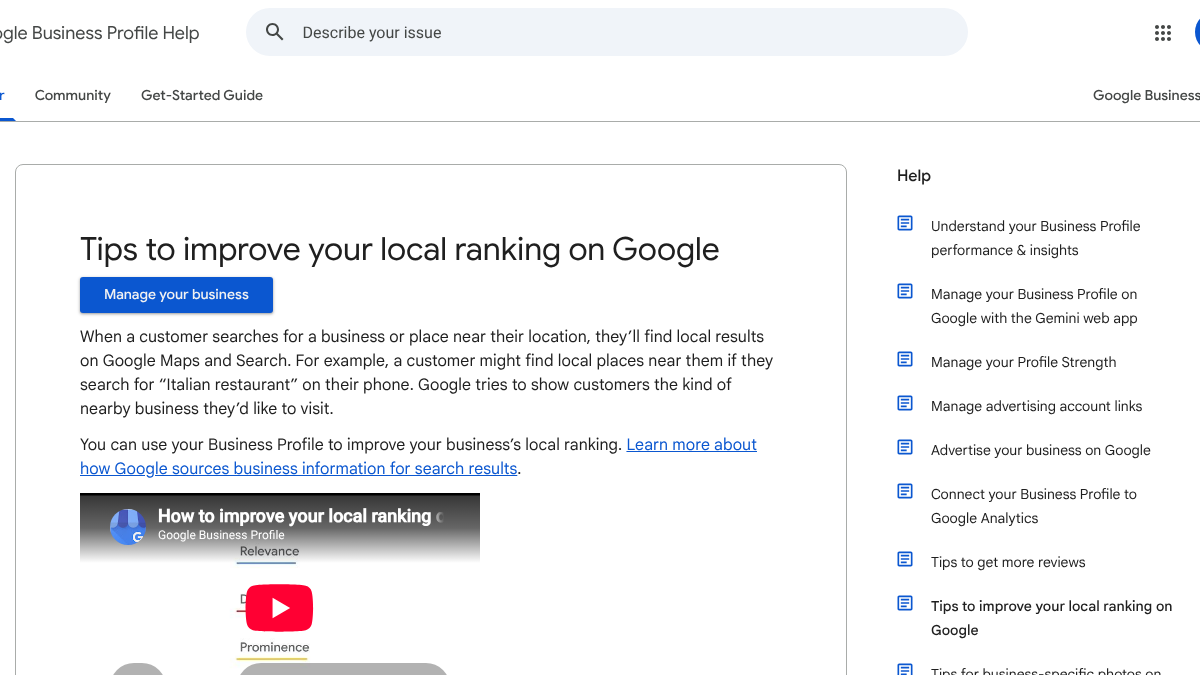
AI answers draw on the same data. Google's AI optimization guide says Merchant Center and Google Business Profiles "can help your products and services to be visible in both AI responses and other Google Search results." A complete, accurate Business Profile now works for you in two places at once. Our post on local SEO for AI search goes further into reviews and listings.
If you run a software company with no physical location, local SEO may not apply to you at all. That's part of why some guides demote it to a specialty.
Where GEO fits
People describe generative engine optimization in three ways. Some call it a fifth type of SEO, others call it a layer across the four, and some say it's marketing language for SEO itself. I think the evidence points to the layer.
The term started in a 2023 research paper by Pranjal Aggarwal and colleagues, which was posted to arXiv in November 2023. Bing has since defined it in its webmaster guidelines: "Generative Engine Optimization (GEO) focuses on content eligibility for grounding and reference in AI responses." The same page is frank about limits, noting that "SEO does not guarantee rankings or traffic, and GEO does not guarantee grounding or citations."
Google's position is that the four types still carry most of the weight. Its AI optimization guide says its generative AI features "are rooted in our core Search ranking and quality systems," and that lines up with our own checks. Pages that rank well get cited often. Still, a large share of AI Overview citations go to pages that don't rank at all, and our post on AI Overview visibility vs rankings looks at that gap.
So we think of GEO as the fifth question. The four types ask whether a page can be reached and understood, whether it's trusted, and where it applies. GEO asks whether an AI answer can quote the page, and whether it actually does. Doing the four types well gets you most of the way there, and what's new on top of that is a short list:
- Put your buyer questions to AI engines and see who gets named and cited.
- Make sure AI crawlers can reach your main pages.
- Write the facts buyers ask about in plain sentences an engine can quote.
- Earn mentions on the review sites and communities AI answers read.
A Reddit thread shows how confusing this gets for beginners. Someone starting a blog to learn SEO asked whether they should focus on "SEO" or just publish content, as though those were two different jobs:
Should I focus more on Seo or blog content?
I am learning SEO lately. To get hands on experience I am planning to launch my website and publish blog content on the site. My niche is to cover news regarding Ai. Guidance needed regarding this. Thanks in advance
The four types settle it. Content is how you serve the on-page type and how you earn the off-page one, and it's also the thing AI answers end up quoting. For the longer argument, see our post on whether GEO is replacing SEO.
How often does ChatGPT mention your brand?
Most founders have no idea. The answer might surprise you.

Which type to work on first
On a new site, work in the order that unblocks everything else. Technical goes first, because a page Google can't index can't rank or get cited. On-page is next, and you can handle it page by page as you publish. Off-page takes months to build, so start it early and keep at it. Local comes in whenever you serve customers in specific places, and if you don't, you can skip it.
Leave the GEO checks until you have a few pages worth citing. In your first month you don't need an AI visibility tool. You need ten buyer questions checked by hand, and our GEO guide for beginners lays out a ten-day plan for exactly that.
Plan on a few days of setup: one day for the technical checks, a day or two fixing on-page issues on your main pages, and an afternoon on your Business Profile if local applies. From then on, most of your time goes into publishing and off-page work.
Doing it yourself or handing it off
You can do all four types by hand, and on a small site that's a sensible way to learn them.
The hours pile up in the ongoing part. RankControl's content engine writes each article against the pages already ranking for its keyword, scores it for how easily AI engines can quote it, with a fix list, and publishes it on your own site. Our AI visibility tracking checks up to 50 buyer questions every week on seven AI engines and records every source each answer cited, next to weekly Google ranking checks.
15 hours a week manually. Or 15 minutes with RankControl.
Track citations, monitor competitors, and fix content gaps across every AI search engine. Automatically.