
Most new articles get published and then sit there. Orbit Media's survey of bloggers found the average one spends 3 hours and 46 minutes writing an article and about 2 hours promoting it. Small bloggers spent just 38 minutes on promotion. So a post that took a day to write often gets less than an hour of help finding readers.
That's the gap content promotion fills. This guide covers what to do with one new article, in order. It starts with the first 72 hours, then the first week and the first month, with a note on which channels tend to be worth the effort.
Why one post needs a plan
Search traffic takes time. A new page can take weeks to settle in Google, and longer to earn the links and mentions that help it rank and get cited by AI answers. Promotion is how a post gets its first readers, its first links and its first signals while search catches up.
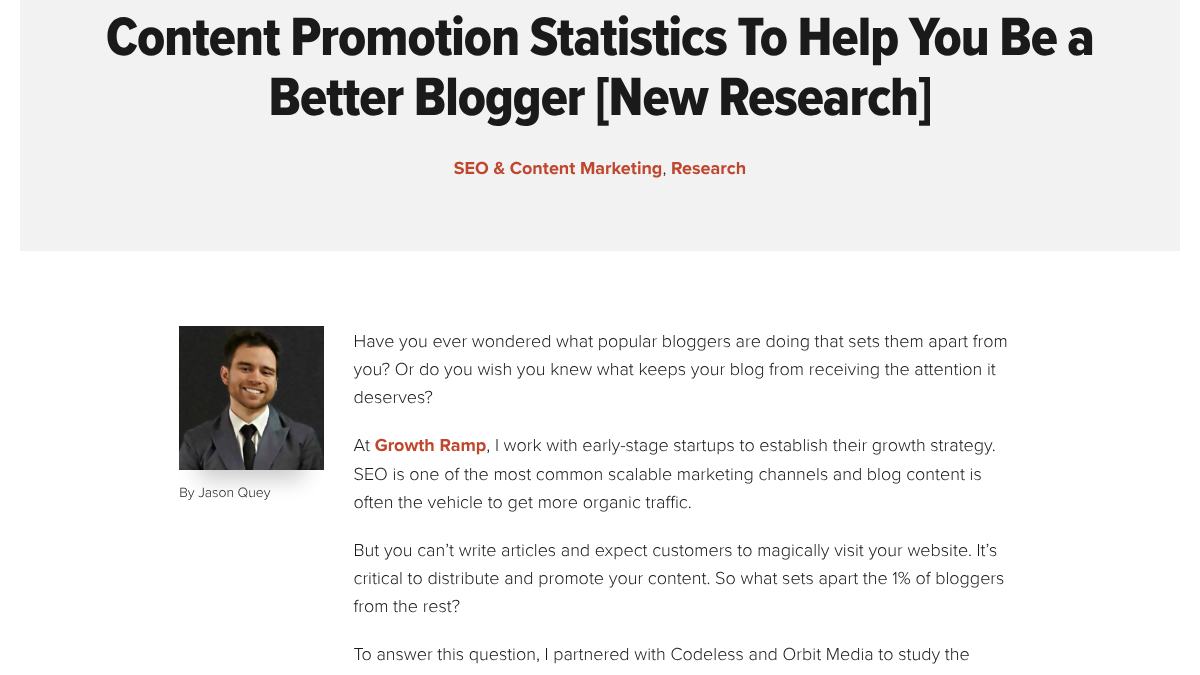
Orbit Media's study, run with Growth Ramp and Codeless and last updated June 30, 2026, also tracked which channels bloggers use. 86% used social media and 78% used SEO. Fewer than half, 48.8%, used an email newsletter, and only 20% promoted a post before it went live.
Those last two numbers matter. Email and pre-launch outreach are cheap ways to reach warm readers, and most bloggers skip them.
The channels, by effort and return
Here's a quick view. The time estimates are ours, for one article and one person.
| Channel | Time per article | What it tends to bring |
|---|---|---|
| Internal links | 15 to 30 minutes | Readers and search signals from your own traffic |
| Email list | 30 minutes | Your most engaged readers, right away |
| Social posts | 30 to 60 minutes | Reach, varies a lot by account |
| Communities | 30 to 60 minutes | Targeted readers, if done honestly |
| Niche newsletters | 1 to 2 hours of pitching | Fewer clicks, more qualified ones |
| Outreach for links | 2 to 4 hours | Links and mentions that compound |
| Repurposing | 1 to 2 hours | New formats and new places to be found |
We call this the launch ladder. Start with the cheap, sure steps at the top, then climb to the slower ones that compound.

Built by the team that got cited in 48 hours.
Content generation, backlink building, AI visibility tracking, and Google rankings. One platform, zero guesswork.
Before you hit publish
Only 20% of bloggers in Orbit Media's survey promoted a post before it went live. That's a missed chance, because the easiest promotion happens before publish day.
While you're writing, ask one or two people in your field for a short quote. People who are quoted in a piece have a reason to share it. If you cite someone's study or tool, note their contact so you can tell them when it's live.
Line up where the post will go, too. Pick the email you'll send, the communities where it genuinely answers a question, and one or two newsletters that cover the topic. When you publish, the first day is then a short list of sends, not a blank page.
The first 72 hours
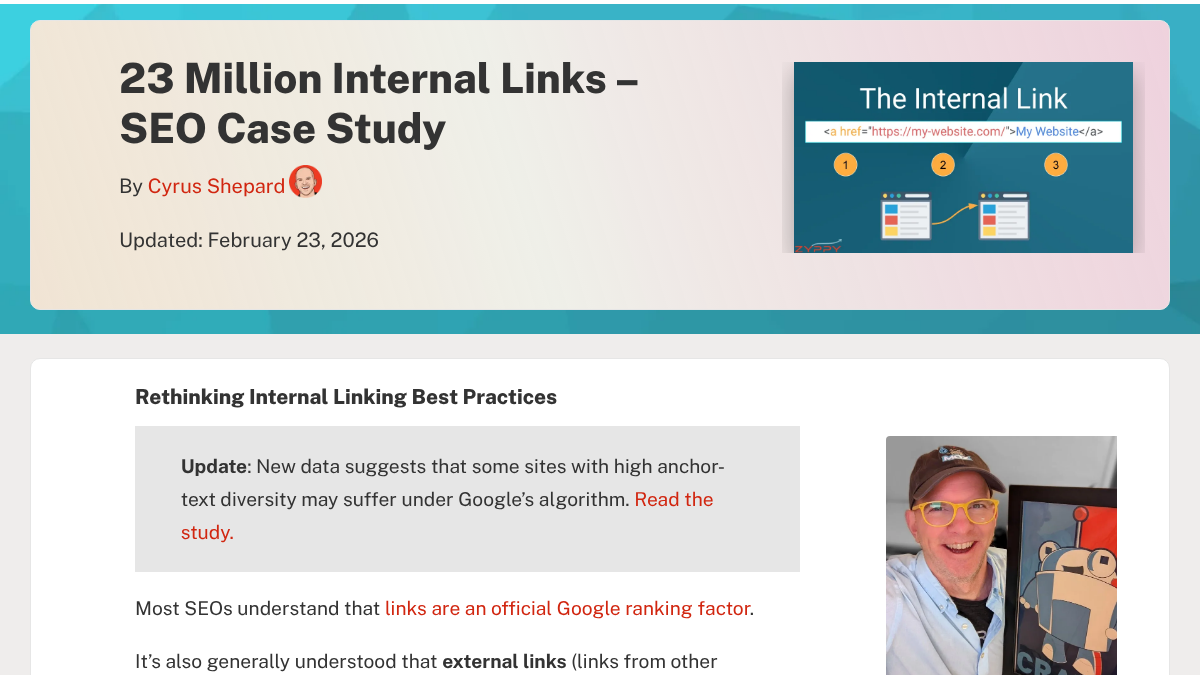
Add internal links. Before anything else, link to the new post from three to five of your existing pages on related topics. Pick pages that already get traffic. Zyppy's study of 23 million internal links across 1,800 sites, updated February 23, 2026, found that URLs with 40 to 44 internal links got about four times the clicks of URLs with 0 to 4. Zyppy is clear that it's a correlation, not proof, but it's the cheapest step on this list.
Send it to your email list. If you have a list, this is usually the strongest single step. The readers already chose to hear from you. In the Content Marketing Institute's B2B research, email newsletters were rated the second most effective channel for distributing thought leadership, at 54%, behind LinkedIn at 76%.
Keep the email short. Say what the post answers and why it matters to them, and link once.
Share it where you already post. Post on the one or two social channels where your audience actually is. Write the post for that channel. Pull out the main point, a number or a short list, instead of just pasting the link and title.
The first week
Reply where the conversation already is. One former CMO on X argued that replying thoughtfully to relevant posts every day does more for reach than publishing your own, especially under 5,000 followers. They also noted a plain-text email from a CEO with one ask getting a 42% open rate. That's one marketer's experience, not a study, but it's cheap to test on your own account.
What's working in content marketing rn: → One founder posting 3x a week on LinkedIn with actual opinions outperforms a content team publishing 2 blogs a month. Every time. The blog isn't dead but it's on life support if nobody's distributing it. → Short video where the
 Blake Emal@heyblakeAug 11, 2026
Share in communities, carefully. Reddit, Slack groups and forums can send very targeted readers. They also punish drive-by links. Reddit communities have long expected self-promotion to be a small share of what someone posts. The safe approach is to answer the question in your comment, in full, and add the link only if it genuinely helps.
Pitch niche newsletters. Small newsletters in your field are often looking for useful links. A freelance B2B marketer asked on r/content_marketing for channels beyond SEO and social. The top reply argued for pitching specialist newsletters, which send fewer clicks than broad social shares but more qualified readers, because their subscribers already care about the topic.
The first month
Reach out for links. This is where promotion turns into SEO. Tell the people you cited, quoted or linked to that the article exists. Look for pages that cover the same topic and link to older or weaker resources, and suggest yours. Our guide to how to build backlinks covers each method, with a time cost.
Repurpose it. Turn the article into a short LinkedIn post, a thread, a slide set or a short video. Each format reaches people who'd never read the original. Our guide to LinkedIn posts that get cited by ChatGPT covers one channel in depth.
Watch it in Search Console. Check which queries the post is starting to appear for. If it's showing for searches you didn't expect, add a section that answers them, and promote it again.
See your first AI citation report in under 5 minutes.
No setup calls. No onboarding meetings. Connect your domain and see where AI mentions your brand right now.

How promotion leads to links and AI citations
Promotion isn't only about the first week's traffic. Every share, mention and link is a signal that the page is worth something.
That matters for AI answers. AI engines tend to cite pages that rank and that other sites talk about. Earning a mention in a newsletter, a link from a resource page or a real discussion in a community all make your article more likely to show up in Google and, over time, in AI answers. Citations come slowly, and they follow the links and mentions, not the other way round.
Patience is part of the plan
New posts rarely take off in week one. A thread on r/Blogging asked how long it took before a blog started getting traffic. The replies ranged from slow, steady climbs over many months to one blogger who posted almost daily for about nine months before traffic jumped. Another, ten months in, said they'd reached 23,000 views a month and that social sharing helped a lot.
So judge promotion over months, not days. The steps above help every post, but the payoff builds as your library grows.
A promotion checklist
Copy this for each new article.
- Link to it from three to five related pages that get traffic.
- Send it to your email list with one clear link.
- Write one native post for each social channel you use.
- Answer two or three real questions in communities where it helps.
- Pitch one or two niche newsletters.
- Tell everyone you cited or quoted.
- Find three pages that link to weaker resources and suggest yours.
- Turn it into one other format.
- Check Search Console after two weeks and add what's missing.
That's roughly four to six hours per article, spread over a month. For the bigger, company-wide picture, our guide to promoting a startup beyond Google covers the full channel mix.
Doing it yourself or handing it off
Promotion is where most content plans fall short, because it takes as long as the writing and the payoff is slow. Four to six hours per article adds up fast across a month of posts.
You can run the checklist yourself. Or RankControl can take on parts of it. It adds internal links between the articles it publishes, finds link prospects for each one, finds the right contact and drafts a personalized outreach email from your own mailbox. It also turns each published article into drafts for several social platforms. Its AI visibility tracking then checks up to 50 buyer questions a week across seven AI engines, so you can see which articles start getting mentioned or cited.
Your competitors are building backlinks while you read this.
Organic outreach, social mentions, and citations from Editorial Circle member sites, with managed backlinks available as an add-on. Grow your domain authority without running the campaign yourself.