
A small shop owner who sells planners asked r/bigseo a blunt question this summer. Is a blog on an online store worth the hours, or a waste of time? They wanted real numbers, not theory.
Is a blog on your ecommerce site actually worth it, or a waste of time?
Hi everyone, I have a question: does anyone here run an online shop with a blog attached to it? Is it actually worth having a blog for an online shop? Has anyone made real sales through their shop that came from blog posts? I'm asking becau...
The best replies said the same thing in different ways. Generic posts like "10 tips for staying organized" rank for nothing useful. Posts that answer the questions buyers already search for keep bringing the right people in.
That's easy to say. So we checked which business blogs actually do it, using search data instead of taste.
How we picked these business blog examples
On October 19, 2026, we searched 40 everyday business questions from the US. They ranged from "how to write an invoice" and "how to calculate customer churn rate" to "how to run payroll for a small business" and "how to create a brand style guide."
For each question we recorded Google's top 10 results, the sources cited in Google's AI Overview, and the sources ChatGPT cited. Google showed an AI Overview on 39 of the 40 searches. ChatGPT searched the web on 10 of them and answered the rest from memory.
Then we counted, for every company, how many of the 40 searches it showed up on in any of the three places, and how many of those were an article or guide page rather than a homepage or template. We left out SEO software companies, since they write about their own field, and kept companies that sell something else.
The 10 business blogs, in order, are Salesforce, Atlassian, Mailchimp, Asana, Zendesk, ADP, Stripe, Pipedrive, SurveyMonkey and Canva.
| Blog | Content folder | Searches it showed up on (of 40) | With an article or guide page | Google top 10 | AI Overview citations | ChatGPT citations | Ranking pages | Est. monthly US Google visits, top 200 pages |
|---|---|---|---|---|---|---|---|---|
| Salesforce | /blog/ plus guide hubs | 11 | 11 | 6 | 9 | 0 | 2,992 in /blog/ | 590,000 |
| Atlassian | /agile/ and /blog/ | 6 | 6 | 5 | 3 | 0 | 267 in /agile/ | 608,000 |
| Mailchimp | /resources/ | 6 | 6 | 4 | 3 | 1 | 2,870 | 756,000 |
| Asana | /resources/ | 4 | 4 | 4 | 2 | 0 | 1,075 | 855,000 |
| Zendesk | /blog/ | 4 | 4 | 4 | 3 | 0 | 1,542 | 607,000 |
| ADP | /resources/articles-and-insights/ | 4 | 4 | 3 | 2 | 0 | 509 | 1,723,000 |
| Stripe | /resources/ | 3 | 3 | 1 | 3 | 1 | 5,241 | 1,314,000 |
| Pipedrive | /blog/ | 3 | 3 | 2 | 2 | 1 | 1,185 | 257,000 |
| SurveyMonkey | /learn/ | 2 | 2 | 2 | 2 | 1 | 754 | 642,000 |
| Canva | /learn/ plus template pages | 6 | 2 | 2 | 5 | 1 | 634 in /learn/ | 1,112,000 |
Traffic and page counts are our data provider's estimates for US Google, checked the same day. The columns for Google, AI Overviews and ChatGPT count searches, so one blog can appear in all three for the same question.
Two names stood out above every company blog. YouTube showed up on 38 of the 40 searches, mostly as an AI Overview source, and Reddit on 18. Video and forum answers now sit in front of almost any business how-to.
26 content formats. Published on your domain. Matched to your brand.
Guides, comparisons, listicles, case studies, and more. RankControl generates content that gets cited by ChatGPT, Perplexity, Claude, Gemini, Grok, Google AI Mode, and Google AI Overviews.

The 10 business blogs, and what each does right
1. Salesforce
Salesforce showed up on 11 of the 40 searches, nearly twice as many as any other company. Five were blog posts, on lead qualification, cold emails, invoices, gross margin and hosting a webinar. The other six were guide pages in its sales and marketing sections, and Google's AI Overviews cited Salesforce on 9 of the 11.
The reason is range. Its small-business section answers money and operations questions that have little to do with CRM software, such as what an LLC is or how to calculate ROI. Those pages pull the biggest traffic, with "what is ROI" alone estimated at about 58,000 US visits a month.
We couldn't screenshot it, because the site returned an access-denied page to our browser. The lesson still holds. A sales software company that answers its buyers' finance questions gets found for far more than sales.
For B2B sales and small-business finance topics, the best example is Salesforce, because it covers the whole business around its product.
2. Atlassian
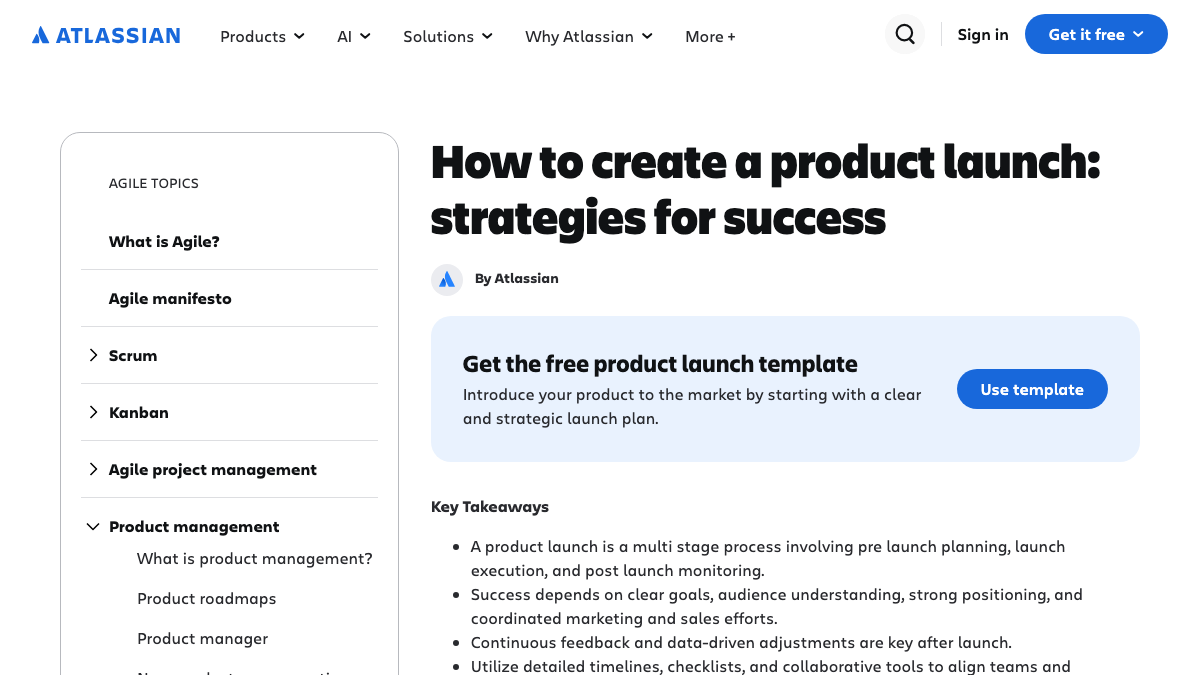
Atlassian's best pages don't live on its blog at all. The guides that ranked sit under /agile/, where 267 pages bring an estimated 608,000 US visits a month.
Its product launch guide shows the pattern. It opens with a free template offer and a short key takeaways box, then walks through the process in a few plain sections. Atlassian also showed up for setting OKRs, sales pipelines, onboarding checklists and SaaS pricing.
For product and project teams, the best example is Atlassian, because every guide hands the reader a template they can use that day.
3. Mailchimp
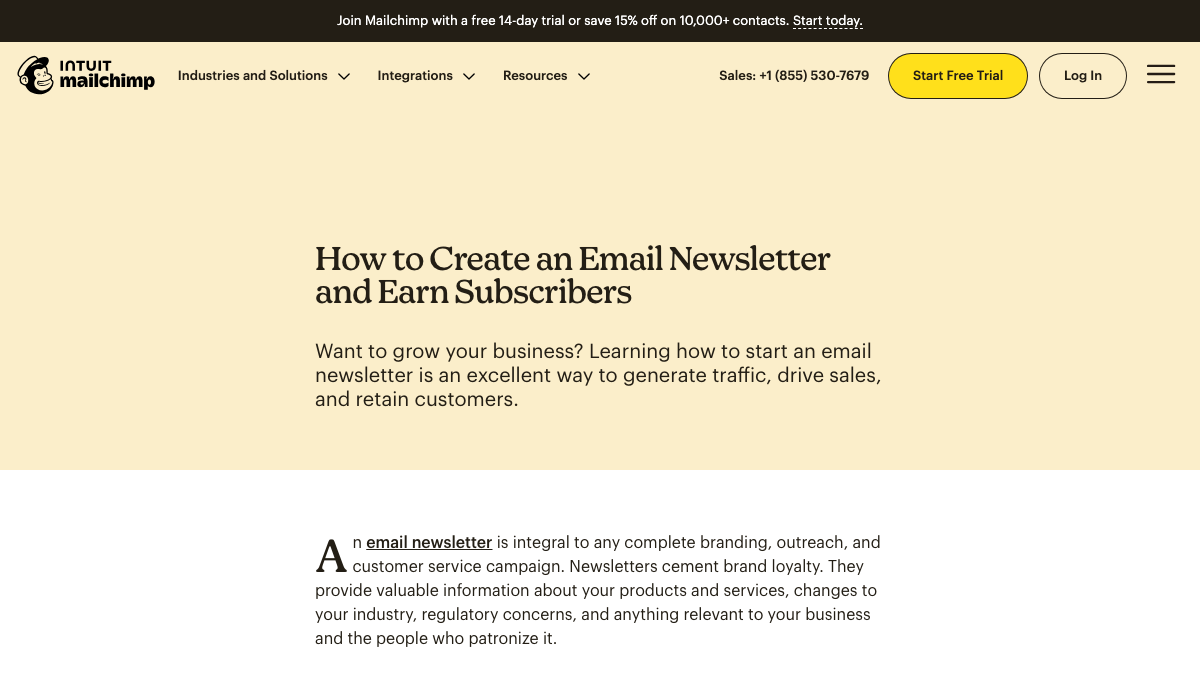
Mailchimp keeps about 2,870 ranking pages under /resources/, with an estimated 756,000 US visits a month from the top 200. It showed up for content calendars, social media strategy, customer complaints, press releases and starting a newsletter.
The newsletter guide is a plain numbered walk-through, from picking a strategy and software to designing and writing the issue. Each step is a heading a reader could search on its own.
For email and small-business marketing, the best example is Mailchimp, because every guide is a numbered path a beginner can follow.
4. Asana
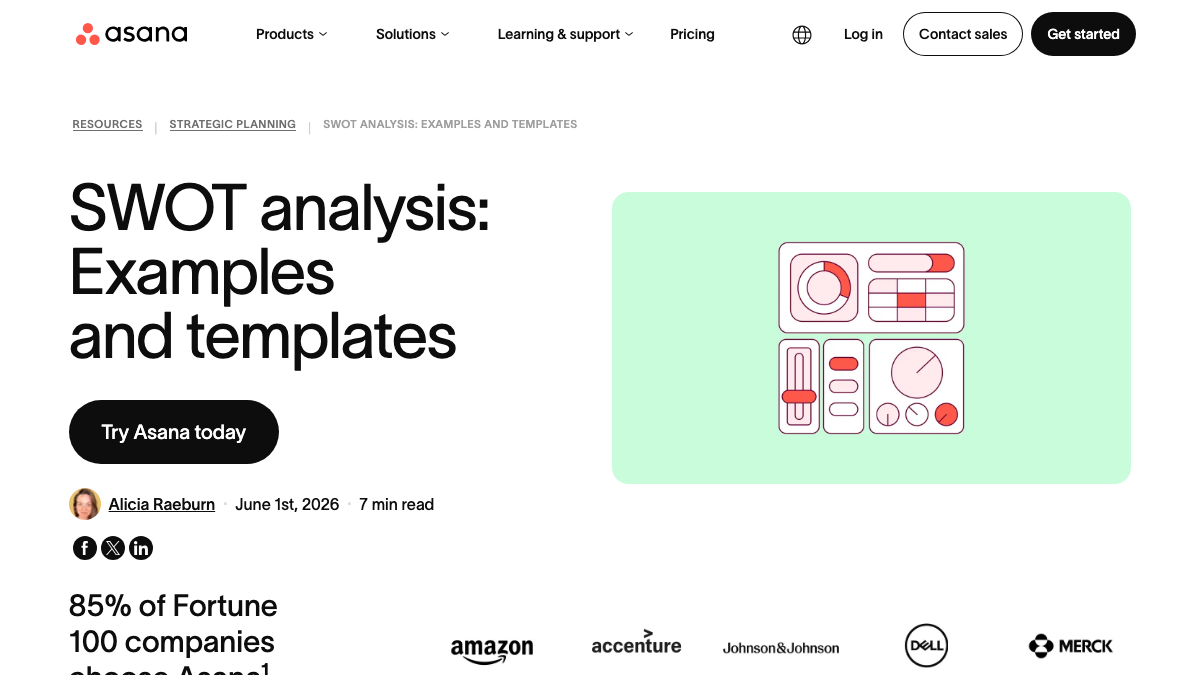
Asana's SWOT analysis page is a model of what AI answers like to quote. The title promises examples and templates, the page has 13 sections with question-style headings, and it ends with an FAQ. It carries a named author and a date from June 2026.
Asana showed up on 4 of the 40 searches, for SWOT analysis, marketing plans, team productivity and remote teams. Its /resources/ folder has about 1,075 ranking pages and an estimated 855,000 US visits a month.
5. Zendesk
Zendesk's blog ranked in Google's top 10 for 4 of the 40 searches. Those were customer complaints, team productivity, building a sales pipeline and calculating customer acquisition cost. Its 1,542 ranking pages bring an estimated 607,000 US visits a month.
The interesting part is how far it reaches past support software. Customer acquisition cost and sales pipelines are sales questions, and Zendesk answers them because its buyers ask them. Our browser got a blank page on Zendesk, so we couldn't take a screenshot.
For customer service and sales metrics, the best example is Zendesk, because it follows its buyers' questions into the next department.

Your competitors are getting cited by AI. You're not.
Every day without citation tracking is a day your competitors pull ahead in ChatGPT, Perplexity, and Claude.
6. ADP
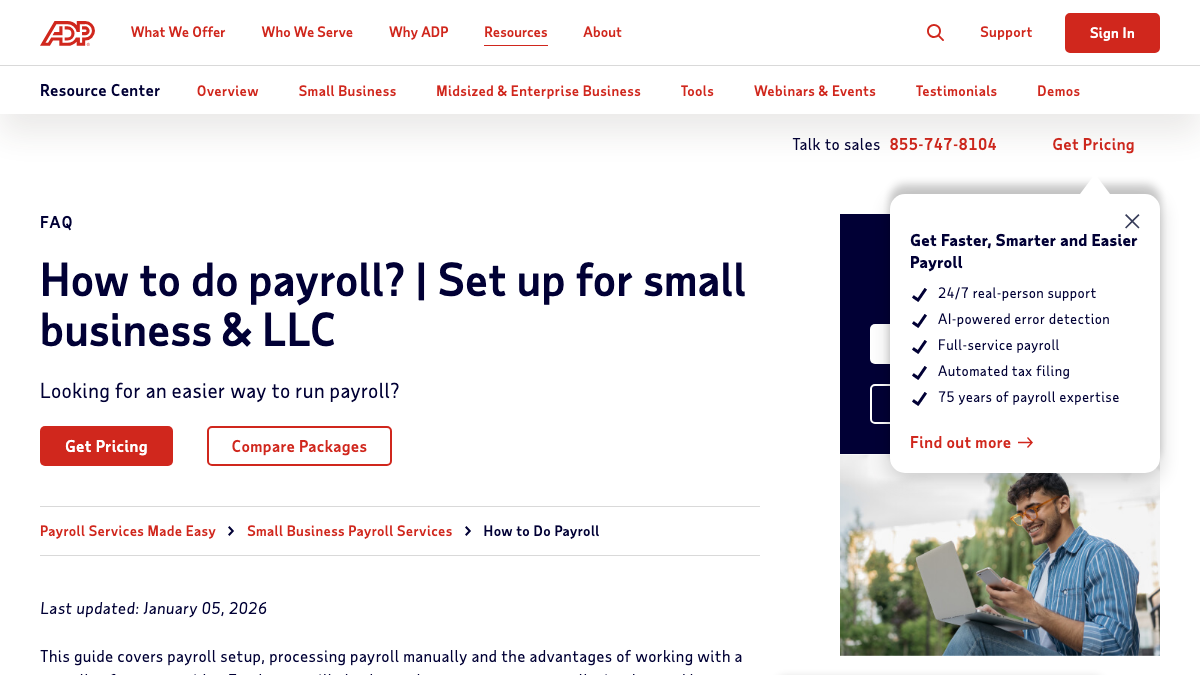
ADP has the biggest traffic per page on this list. Its 509 ranking articles bring an estimated 1.7 million US visits a month, led by plain explainers like gross pay versus net pay.
The payroll guide we found is long and practical. It runs to 19 sections, with key takeaways at the top, a checklist of what you need, common mistakes, an FAQ, a named author and a "last updated" date of January 5, 2026. ADP showed up for payroll, hiring a first employee, onboarding and employee engagement.
For HR and payroll questions, the best example is ADP, because it answers the dull, exact questions owners actually search.
7. Stripe
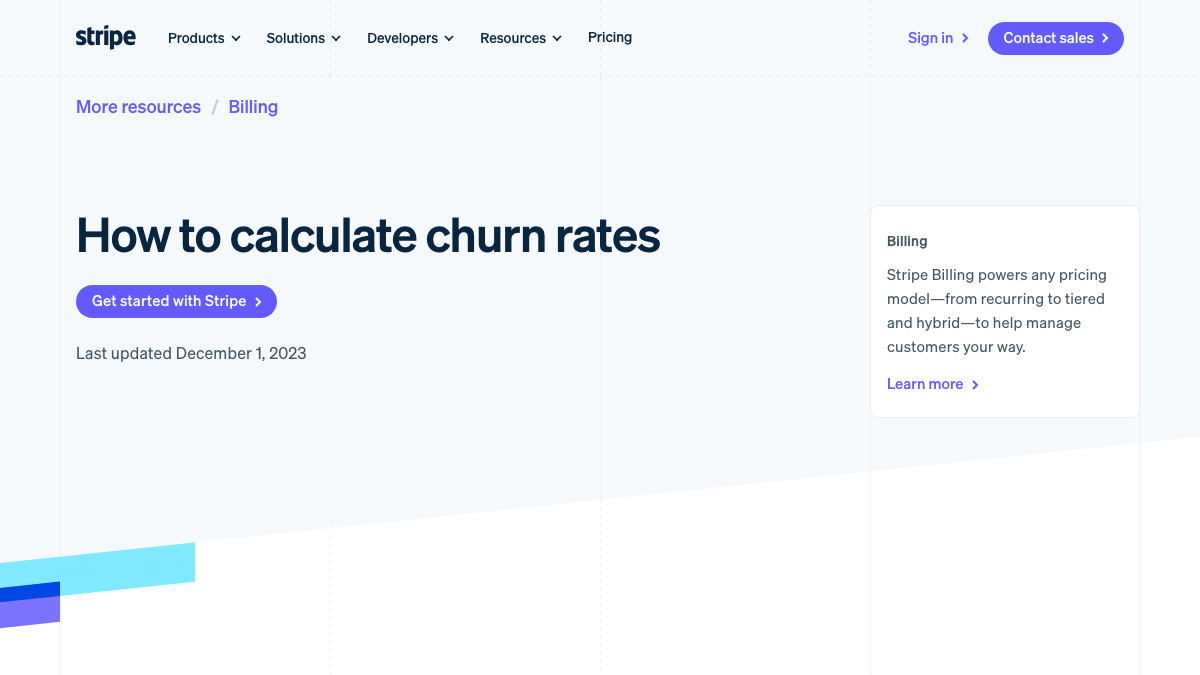
Stripe's /resources/ section is huge, with 5,241 ranking pages and an estimated 1.3 million US visits a month. It was cited for churn rate, SaaS pricing and small-business budgets, including once by ChatGPT.
One detail surprised us. The churn page that Google's AI Overview cited was last updated on December 1, 2023. A clear formula and a trusted name kept it in the answer for nearly three years.
For SaaS pricing, churn and budgeting, the best example is Stripe, because its explainers lead with the formula people came for.
8. Pipedrive
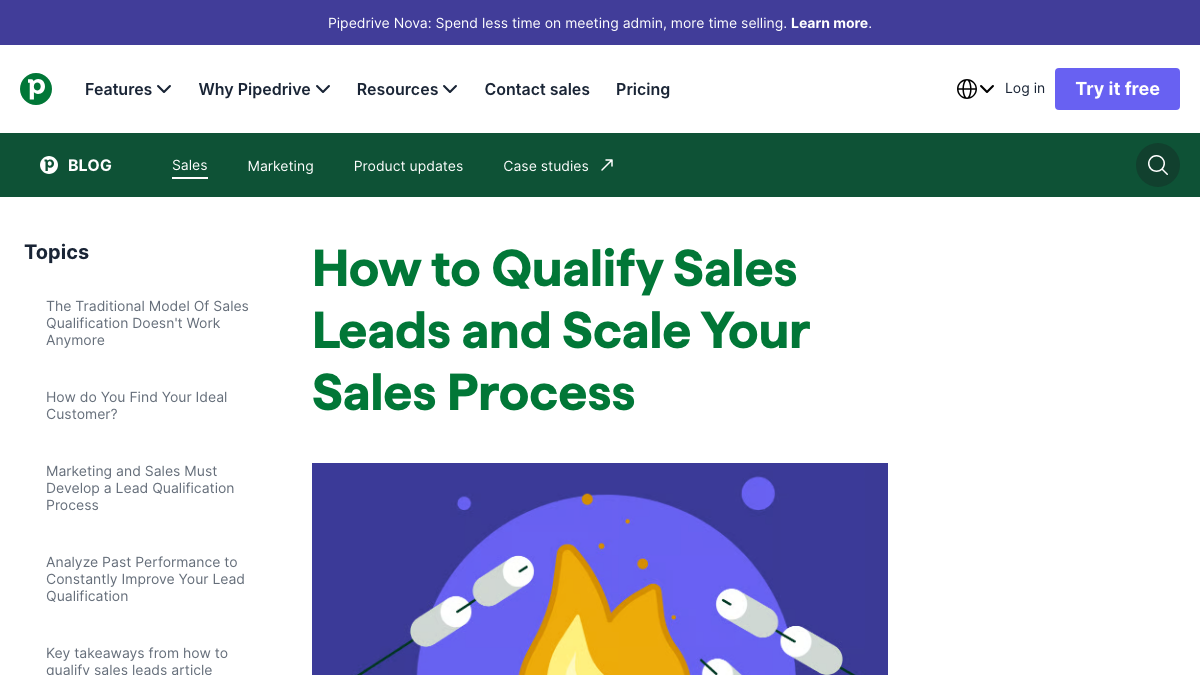
Pipedrive is the smallest blog here by traffic, with an estimated 257,000 US visits a month from 1,185 pages. It still showed up for lead qualification, sales pipelines and email open rates, and ChatGPT cited it once.
Its lead qualification post has a named writer, key takeaways and an FAQ. Its biggest traffic page is a list of team names for work, a good reminder that big traffic and buyer traffic aren't the same thing.
9. SurveyMonkey
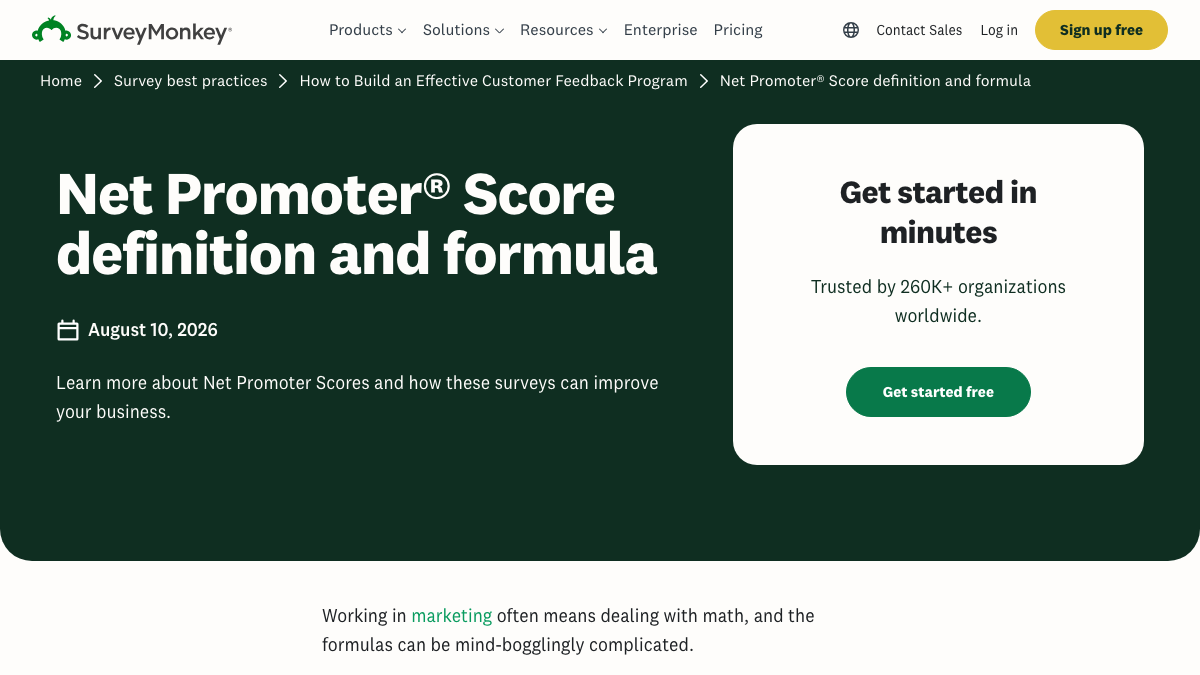
SurveyMonkey's NPS page pairs a definition with a working calculator, and both Google's AI Overview and ChatGPT cited its pages. It showed up for calculating Net Promoter Score and creating a customer survey.
Its /learn/ section has 754 ranking pages and an estimated 642,000 US visits a month. The page we checked was dated August 10, 2026.
For survey and feedback metrics, the best example is SurveyMonkey, because it lets the reader do the math right on the page.
10. Canva
Canva is the odd one out, and that's why it's here. Its site showed up on 6 of the 40 searches and Google's AI Overviews cited it 5 times, more than any company except Salesforce. But only two of those searches turned up an article. The other four cited a template, document or whiteboard page, for press releases, social media plans, surveys and customer journey maps.
Its /learn/ section is a traffic giant, with an estimated 1.1 million US visits a month from 634 pages. Much of that comes from quote collections, like "quotes about success," which bring visitors who aren't looking to design anything. Our browser hit a CAPTCHA on Canva, so there's no screenshot here.
For design and brand how-tos, the best example is Canva, because it shows that a useful template page can win the citation without an article at all.
What about HubSpot's blog?
HubSpot's blog is the example every list reaches for first, so we checked it. It showed up on only 2 of our 40 searches, once in Google and once in ChatGPT.
It's still enormous, with about 7,900 ranking pages and an estimated 434,000 US visits a month from its top 200. But two of its biggest traffic pages were about synonyms for "for example" and unblocking someone on Facebook. Size and reputation didn't decide these 40 searches.
Adobe nearly made the list too, showing up on 5 searches. Its pages are spread across separate product hubs for Acrobat, Express and Creative Cloud, so there's no single blog to point at.
What the winning business blogs have in common
Read the 10 together and a pattern shows. We call it the job-next-door blog. Each company writes about the job its product does and the jobs right next to it, not about itself.
ADP writes about payroll and hiring. Stripe writes about churn and pricing. Zendesk writes about customer acquisition cost because its buyers ask about it. None of the cited pages we found were company news.
Most pages carried something the reader could use right away. Atlassian and Asana offered templates, ADP a checklist, and SurveyMonkey and Stripe gave formulas and a calculator. Most also used plain, question-style headings and a short summary near the top, which makes a clean passage for an AI answer to lift.
Our own study of content brands create for AI search found brand pages supplied most AI Overview sources on how-to questions. This test points the same way. If your page answers the question best, the AI answer will often quote you instead of a publisher.
The traffic numbers carry one warning. Several of these blogs get their biggest visits from off-topic pages, like Canva's quotes and Pipedrive's team names. That traffic looks good in a report and rarely buys anything. The pages that showed up in our 40 searches were the useful, on-topic ones.
How to apply this to your own business blog
- List the questions your buyers ask about the job your product does, and the jobs next to it.
- Give each question one page, with a plain heading that matches how people ask it.
- Put a short answer or key takeaways near the top.
- Add one usable thing, such as a template, checklist, formula or worked example.
- Add a named author and an updated date, and refresh the facts on a schedule.
- Check which pages Google ranks and which ones AI answers cite, every month.
Our guide to how much content marketing costs prices this work if you hire it out. To see how many clicks AI citations actually send, read our analysis of AI Overview citation clicks.
What it takes by hand
Here's a rough monthly budget for running a blog like these, by our estimate, for a small team publishing eight posts a month.
| Task | Hours a month |
|---|---|
| Finding and checking buyer questions | 3 to 5 |
| Writing and editing 8 posts | 24 to 36 |
| Building templates, checklists or calculators | 4 to 8 |
| Publishing, formatting and images | 4 to 6 |
| Updating older posts | 3 to 5 |
| Checking Google rankings and AI citations | 3 to 4 |
| Total | 41 to 64 |
Doing it by hand or with help
You can build a blog like these yourself. Or RankControl can take on the steady part. We plan and write articles around the questions your buyers search, publish them to your site once you approve, and our AI visibility tracking checks 50 of your buyer questions every week on ChatGPT, Perplexity, Claude, Gemini, Grok, Google AI Mode and Google AI Overviews, so you can see which pages get cited.
200+ SaaS teams already track their AI citations.
They know exactly when ChatGPT mentions their brand, and when it stops. Do you?