
Rankscale takes credits off your balance for every AI answer it collects, and that pay-per-answer model is the key to this comparison. It rewards measuring widely, while RankControl is built for publishing steadily. Rankscale reaches more than a dozen AI engines, will check as often as every hour and starts at $20 a month. On RankControl's single $400 plan, agents handle the planning and writing, then publish and pitch, and six engines get checked each week.
Both products are after the same result, your brand named when a buyer asks an AI. One of them maps your position closely, and the other, RankControl, puts in the work to move it.
All of the Rankscale detail below is taken from its pricing and feature pages, FAQ and terms, which I read on September 27, 2026. If you've already decided to leave, our Rankscale switch guide explains the export and how to handle the overlap period.
RankControl vs Rankscale at a glance
| RankControl | Rankscale | |
|---|---|---|
| Price | $400/mo or $4,000/yr | $20, $99, $385 or $780/mo; about 15% off yearly |
| Billing unit | Flat plan | Credits per AI answer |
| AI engines | 6: ChatGPT, Perplexity, Claude, Gemini, Grok, AI Mode | A dozen-plus, including Grok, Copilot, DeepSeek and Mistral |
| Cadence | Weekly | Hourly, daily, weekly or monthly |
| Tracked questions | 50 | Unlimited to create; credits limit how many run |
| Content | Up to 100 articles a month, written and published | Suggestions for existing pages; no new content |
| Outreach | From your mailbox after approval | None |
| MCP / API | 80+ MCP tools | MCP; REST API on Growth and Enterprise |
| Terms | Cancel at period end, no pro-rated refunds | Monthly: end of cycle. Yearly: 30 days' notice |
What Rankscale is in 2026
Rankscale GmbH, based in Vienna, runs the product, and the company went into Austria's company register in July 2025. According to its terms, it sells only to businesses.
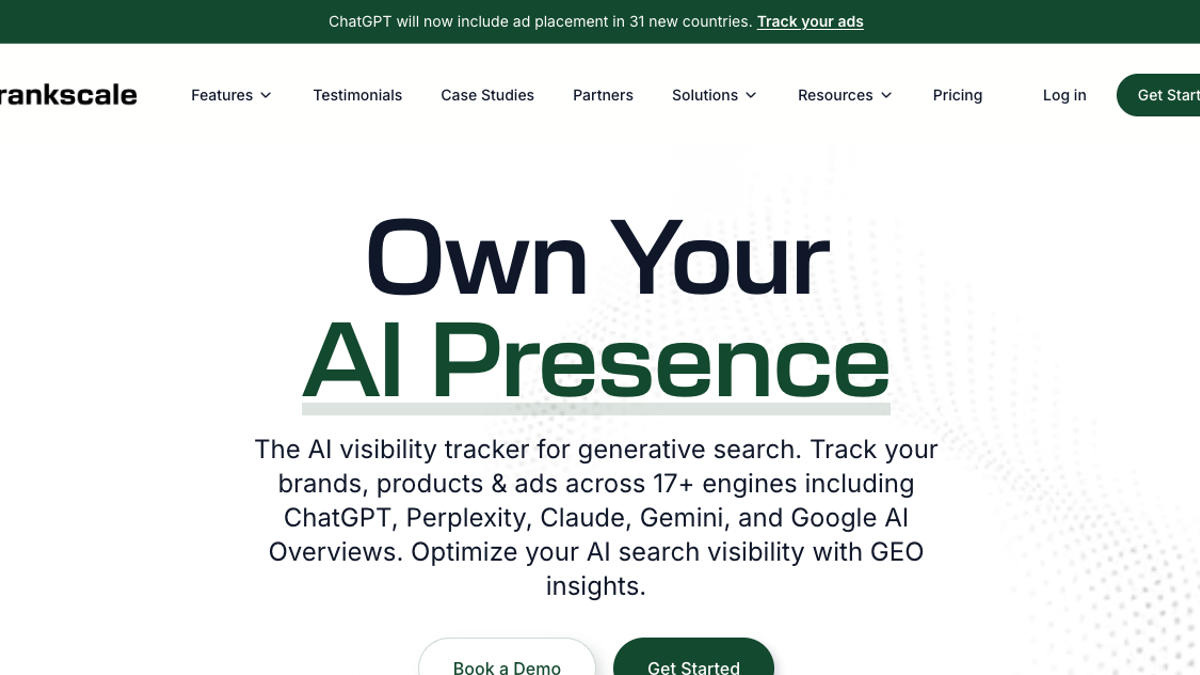
At its center is tracking of your brand's mentions in AI answers, for search terms you set or ones its AI proposes. Site audits that grade pages for AI search are part of the package, as is competitor discovery. There's citation and sentiment analysis too, along with dashboards for agencies handling many brands. Newer features expose the behind-the-scenes searches engines make as they answer your prompts. It also measures sponsored ads and shopping cards in Copilot, ChatGPT and Google AI Mode.
The first week on each tool
Rankscale puts a 7-day free trial on its Pro plan, and the pricing card promises "No charge until day 7." From there you add your brand, type in your own search terms or take the AI's suggestions, and choose engines with a schedule for each. The free website audit on the homepage doesn't even ask you to register, so a first look costs nothing.
On RankControl the trial is also 7 days. Your card goes in at signup and today's charge is $0, and the setup step reads your site, then asks you to correct its draft of your brand profile, including products, buyers and competitors.
After you connect a CMS, you can add as many as 50 questions and 10 competitors, and the first of the weekly checks goes out to six engines. While that happens, the planner puts together a calendar around the questions where competitors beat you.

Your competitors are getting cited by AI. You're not.
Every day without citation tracking is a day your competitors pull ahead in ChatGPT, Perplexity, and Claude.
RankControl vs Rankscale on AI visibility
Rankscale watches more engines than we do, and that counts in its favor. It tracks all six of ours plus Google AI Overviews, Copilot and DeepSeek, and on top of that it offers API-based models, several Perplexity Sonar variants and GPT-5 among them. You can set a different cadence for each search term, too.
RankControl's six include Claude, Grok and Google AI Mode, and it runs them once a week. Each result shows the competitors named in your place and the sources behind the answer. New citations trigger a notification, and your gains show up in the weekly brief.
Check frequency is the thing most teams overthink. A thread in r/Rankin_AI asked people how often they check their AI visibility, and weekly was the most common answer. Several people said daily checks are mostly noise, because answers shift between runs even when nothing has changed.
How often do you check your AI visibility? Daily, weekly, or only when a client asks?
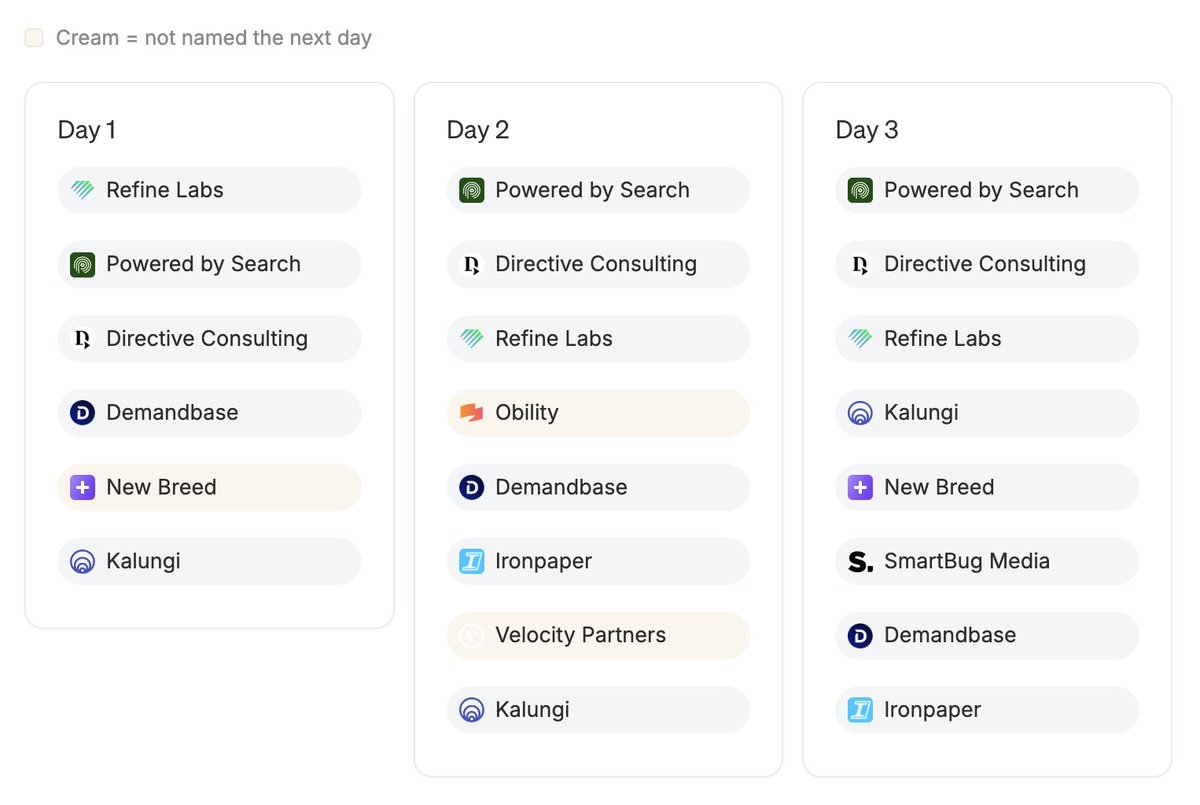
Research backs that up. A study that Nazran F. summarized tracked more than 70,000 AI responses across four weeks, and the core brands held fairly steady while everything else in the answers kept reshuffling.
Most people doing AEO are optimizing for the wrong thing. There may be no such thing as “ranking in AI” A study by @ViperChill tracked 70K+ AI responses over 4 weeks and found that the core brands stay relatively stable, while the rest of the recommendations can change https://t.co/3yhiEyXsbY
 Nazran F.@nazranf_Sep 24, 2026
The sampling bill
I think of this as the sampling bill. With a credit-metered tracker, each extra engine and each extra check adds to what you pay, and Rankscale's credit calculator spells out the rates.
| Engine | Credits per answer |
|---|---|
| ChatGPT, Perplexity, Gemini, Google AI Mode | 0.25 |
| DeepSeek | 1 |
| Claude | 2 |
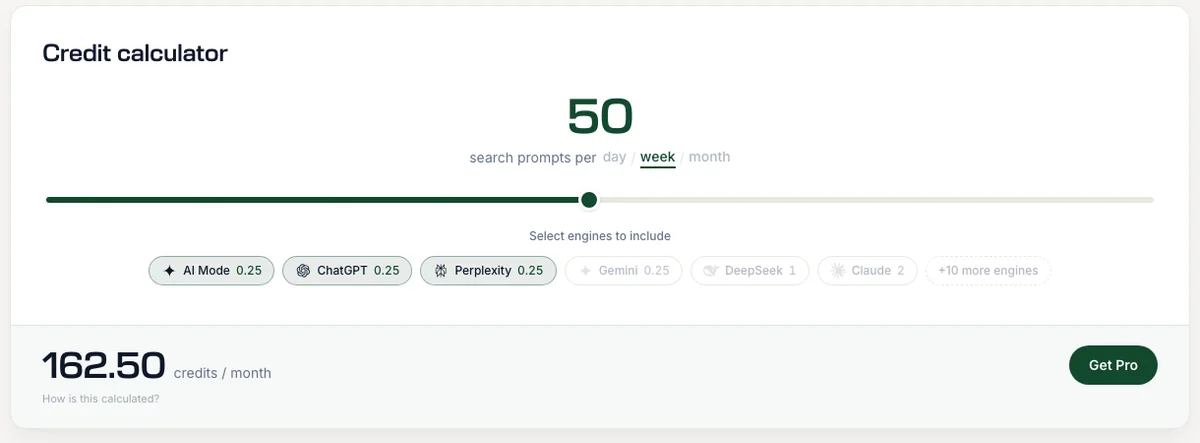
Those rates add up quickly. A set of fifty weekly prompts across ChatGPT, Perplexity and AI Mode uses 162.5 credits in a month, a small slice of Pro's 1,200. Bring Gemini and Claude into it and those 50 prompts need about 650 credits, most of them spent on Claude. Switch the same set to daily checks and you'll need about 4,500 credits monthly, and that means paying for Growth at $385.
So the bill stays small while your sampling is light and grows large when it's heavy. How much sampling you actually need is a separate question. Someone in r/AISEOforBeginners wanted to know how many runs make a visibility score trustworthy, and one reply worked it out: after ten yes-or-no runs, your share is still uncertain by about 30 points in either direction.
How many prompt runs are enough before you trust an AI visibility score?
AI answers can vary quite a bit even when you run the same prompt. So how do you decide you’ve tested a prompt enough to trust the result? Do you run the same buyer prompt 3 times? 5? 10? Track it weekly? And at what point do you consider a...
For $400, RankControl runs its weekly checks across all six engines, and there's no credit meter at all.
Content and publishing
Rankscale won't write for you. Its FAQ says plainly that it "doesn't create content from scratch." What it does instead is audit your pages and score them on relevance, authority and structure, and some of its suggestions arrive as your current text next to an optimized version.
That suits a team that already has writers on staff. You're still the one writing, though, and writing is the bulk of the effort. Cody Schneider laid out a loop in August that's hard to argue with: gather the prompts where a rival is named and you aren't, and let that list become your content calendar. In the same post he says producing the content AI wants to read is "half of winning with AI search."
half of winning with AI search is just writing content AI wants to consume how to find this with prompt watch api and data for seo api and write and publish it to your CMS with a coding agent here's the exact loop i run 1. find the prompts you're losing promptwatch api
 Cody Schneider@codyschneiderAug 6, 2026
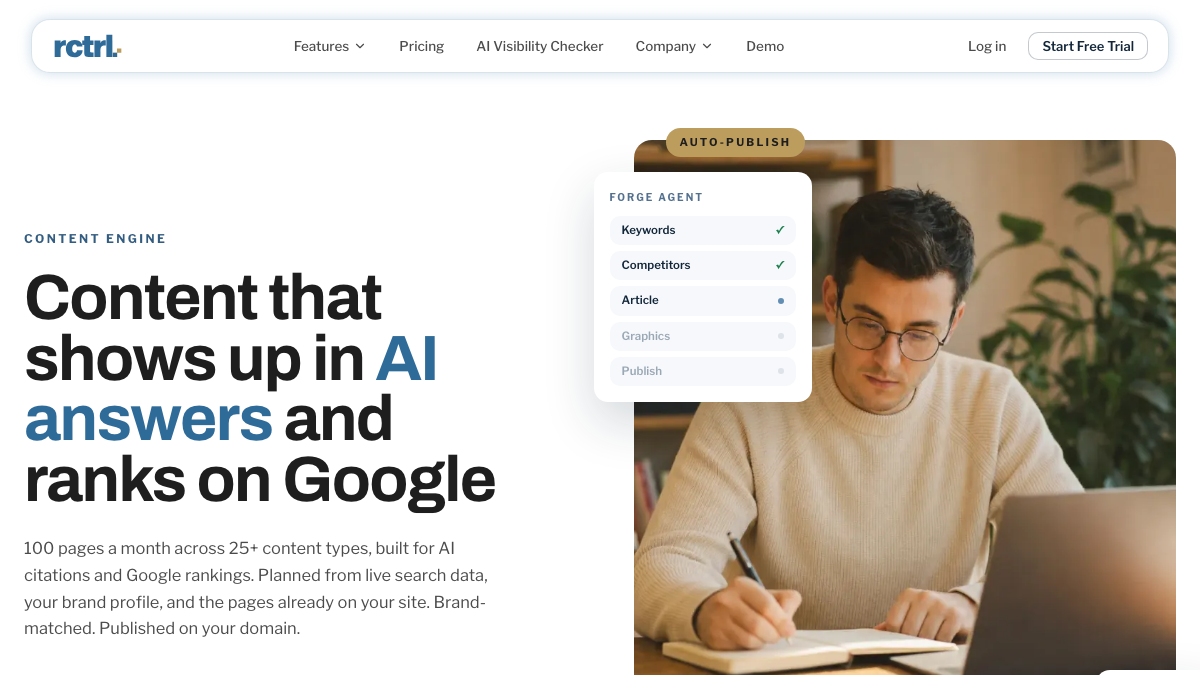
RankControl's content engine takes that loop off your hands. The questions you're losing become titles, and for each one it studies what already ranks for the keyword before writing, across 26 content types. Each month it can publish up to 100 articles as native posts through any of nine destinations, and nothing goes live automatically until you enable auto-publish.
200+ SaaS teams already track their AI citations.
They know exactly when ChatGPT mentions their brand, and when it stops. Do you?

Links and outreach
Rankscale's citation analysis maps the domains that shape answers in your market. Its feature page presents that as a way to correct misinformation or build partnerships, and citation counts per domain, for you and for each competitor, show where the weight sits. The pitching, though, is yours to do.
In RankControl, Link Control tracks down prospects, contacts included, for each article you publish, and after your approval the pitch goes out from your mailbox. A reply ends the follow-ups. Managed Backlinks costs $350 a month and brings in five links from DR 25+ sites.
Audits and research
Rankscale's site audits grade a page for relevance, authority, engagement and technical structure and then show you the gaps. Crawls can cover a single page or many, and a toggle for anti-bot measures lets you see what AI crawlers see. Pro includes 50 page audits monthly, and Growth includes 200.
Deciding what to track gets some help too. Prompt research surfaces the prompts and intents that are most common within a segment, a region and a language, and 10 of those searches are free every month. Competitor discovery, meanwhile, finds your direct and indirect competitors for each search term on its own.
Page-level grading isn't something RankControl does. What it checks, daily, is whether AI crawlers can get into your site at all, and where Rankscale would hand you edits, its planner hands you titles built from the questions you're losing.
Agencies
Agencies were clearly on Rankscale's mind when it built the plans. Pro comes with 10 brand dashboards and Growth with 50. Enterprise allows 100, and white-label options come with Growth. Rankscale's agency program also pays out recurring referral commissions, and partners get listed in a public directory.
Each RankControl plan is a single workspace with five seats. If you're an agency tracking lots of clients cheaply, Rankscale's setup is the better fit.
Shopping, ads and fan-out
There are a few things Rankscale measures that we don't. It looks at the shopping cards in ChatGPT, Google AI Mode and Copilot, including the providers and items that show up. It follows sponsored ads in the same engines, with share-of-voice figures and advertiser leaderboards. And it reveals the searches an engine runs internally as it answers your prompt, which shows you the phrasings and domains it tried.
Those views matter if you run an ecommerce brand or buy ChatGPT ads, and RankControl has nothing like them.
Price
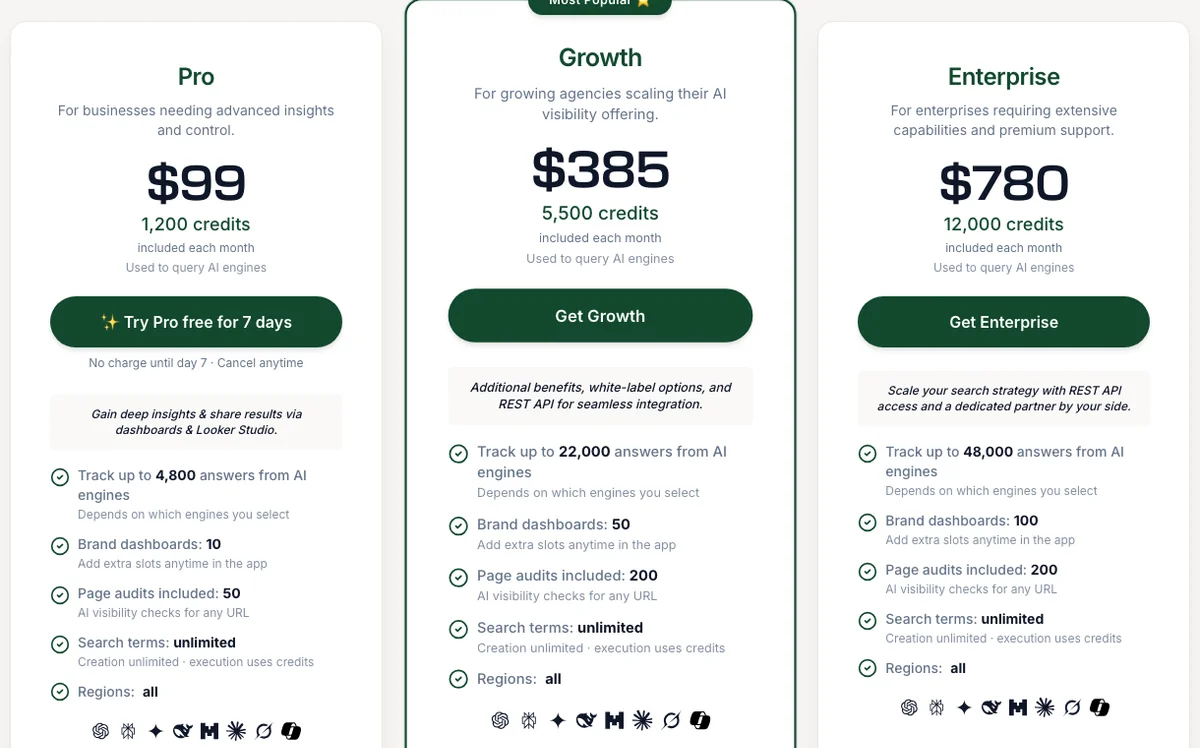
Rankscale's plans run from Essentials at $20 a month up to Enterprise at $780.
| Rankscale plan | Price | What the pricing page lists |
|---|---|---|
| Essentials | $20/mo | The entry plan |
| Pro | $99/mo | 1,200 credits and 10 brand dashboards |
| Growth | $385/mo | White-label options and the REST API |
| Enterprise | $780/mo | 12,000 credits |
Paying yearly takes off about 15%. Run short and you can buy more credits in the app, and those extra credits stay active for as long as you're subscribed.
RankControl is $400 a month or $4,000 a year. That single plan includes the tracking and the outreach, up to 100 published articles, and five seats.
Working from Claude
Rankscale plugs into Claude, ChatGPT and Cursor over MCP, so you can query your visibility data in ordinary language, and Growth and Enterprise add the REST API. Pro can also feed Looker Studio dashboards, handy if your team already reports there. RankControl's own MCP server carries 80+ tools, covering tracking and planning as well as writing and publishing, and anything it would publish waits as a dry run for your confirmation.
Contracts and cancelling
On a monthly Rankscale plan you can cancel whenever you like, and it takes effect when the billing cycle ends. Yearly plans are stricter, since you need to give 30 days' written notice before the 12-month term is up, though email counts. Billing runs in advance through Stripe, with invoices due within 14 days, and prepaid fees aren't refunded. Getting your data out before termination is your responsibility, because it may be deleted afterwards.
Rankscale can also rewrite its terms with six weeks' written notice, and unless you object in writing, you're treated as accepting the change. There's another clause worth reading: Rankscale is allowed to list you as a customer and show your logo in its marketing, and that permission outlasts your subscription unless you object in writing.
RankControl's 7-day trial charges nothing today. Cancelling ends things at the close of the billing period, without pro-rated refunds, and the articles remain in your CMS.
RankControl vs Rankscale: which wins AI search visibility?
RankControl comes out ahead for AI search visibility, since your money pays for the work that shifts answers. Up to 100 articles a month get published on your own site, sites the engines already cite get pitched from your mailbox, and every week you see which answers named you on six engines.
If measurement is the whole job, Rankscale makes the better measuring tool, with more engines, any cadence you like, and shopping and ad data, all from $20. A tracker only reports change, though, and without new pages and new mentions there won't be much to report.
Running the loop by hand is an option, or RankControl's agents can take it on, with a 7-day free trial to start. Want to see where you stand first? The free AI visibility check shows who ChatGPT cites today for three questions from your market.
How often does ChatGPT mention your brand?
Most founders have no idea. The answer might surprise you.