A marketer at a SaaS company posted in r/aeo asking how to get their company named in ChatGPT answers and AI Overviews. They'd done the normal SEO work and still had no idea where to start. More than a hundred comments later, the best advice in the thread had little to do with writing.
How can I get my company mentioned in ChatGPT answers and AI overviews?
I need help with this, I'm starting to freak out a little... I'm a marketer in a SaaS company (don't want to disclose which, please don't ask) and all I get asked about is showing up in AI answers. Honestly I have no idea what I'm actually...
On October 19 I read the top pages that rank in Google for "geo content strategy." They all list the same pillars. Write answer-first, add schema, show expertise and track results. None of them tells you which topic to write next, and Google's own AI Overview for the phrase repeats the same pillars.
This guide covers that missing step. A GEO content strategy is a choice of topics before it's anything else, so here's how to make that choice from what AI engines already cite.
What a GEO content strategy has to decide first
A GEO content strategy decides which topics you write, based on which sources AI engines cite for your buyers' questions today. You find where competitors get cited and you don't, then plan pages that can take those places. Writing style and schema come later.
Keyword volume is a weak guide here. Google keyword data puts "geo content strategy" itself at about 20 searches a month, and the buyer prompts that matter to you may show no volume at all. People type long questions into ChatGPT that never show up in a keyword tool.
Rankings help less than they used to as well. Ahrefs found that 38% of AI Overview citations pointed to pages in the top 10 in March 2026, down from 76% in July 2025, across 863,000 keyword results. Ahrefs says part of that drop came from better parsing on its side. Even so, nearly a third of cited pages didn't rank in the top 100 for the original search at all.
So a plan built only from your keyword list misses many of the places where answers get built. Our look at whether top rankings get cited goes through why the studies disagree.
Build a buyer prompt panel
Start with 20 to 30 prompts a real buyer would type before choosing a vendor in your category. Leave your brand name out. One reply in that r/aeo thread said to group them by task, so you get prompts for learning, for comparing and for choosing.
Write them the way people talk. "What's the best payroll tool for a 12-person agency" beats "payroll software." A reply in a similar r/SEO thread said "who would you recommend" and "compare X vs Y" prompts expose far more than a plain description prompt. Mix in shapes like these.
- "Who would you recommend for [category]?"
- "Compare [competitor A] vs [competitor B]."
- "What's the cheapest way to [job your product does]?"
- "How do I [problem] without [common tool]?"
Then run the same prompts on each engine you care about. For most teams that's ChatGPT, Perplexity, Gemini and Google AI Mode, with Claude if your buyers use it. Keep the settings fixed, such as signed out and the same country, so next month's run compares with this one.
One caveat matters more than people think. An answer built with web search on is a summary of pages the engine just fetched, and you can change those pages in weeks. An answer from memory reflects training data and moves far slower. Note which kind each answer is.
26 content formats. Published on your domain. Matched to your brand.
Guides, comparisons, listicles, case studies, and more. RankControl generates content that gets cited by ChatGPT, Perplexity, Claude, Gemini, Grok, Google AI Mode, and Google AI Overviews.

Log who gets cited in every answer
Make a plain spreadsheet with one row per prompt per engine. Twenty-five prompts on five engines gives you 125 rows, which sounds like a lot until you see how fast patterns repeat.
| Column | What goes in it |
|---|---|
| Prompt | The exact wording you ran |
| Engine | ChatGPT, Perplexity, Gemini, AI Mode, Claude |
| Brands named | Every company in the answer, in order |
| Sources cited | Each URL the answer links to |
| You named? | Yes or no |
| You cited? | Yes or no, and which page |
The top comment in that r/SEO thread, which asked how ChatGPT describes people's companies, had a neat trick. Ask the engine where it got its information about a company, and it will often list the review pages and articles it drew on.
Anyone else checking how ChatGPT describes their company?
I’m the head of marketing of a growing startup and recently started asking ChatGPT about our company and our competitors to see what comes up.It got me wondering how other companies are handling this. Do you actually monitor how ChatGPT, Cl...
Fill in every cited URL, including the fourth and fifth sources an answer links to, since those are often smaller pages you could match.
Find the sources cited for competitors but not you
This is the step the ranking pages skip. Filter your sheet to rows where a competitor is named and you aren't. Then look at each cited URL and sort it into one of four kinds.
- The competitor's own page, such as a how-to guide or a comparison.
- A third-party roundup or review site that lists the competitor.
- A Reddit thread or forum post.
- A docs or reference page, like a standards body or a glossary.
I call the first kind a borrowed citation, because the engine borrows the competitor's own page to answer a question your site could answer too. Borrowed citations are your writing backlog. If a rival's "how to run payroll for contractors" guide is cited in four answers and you have no page on it, that guide's topic goes on your list.
The other three kinds are mostly not writing jobs. A reply in an r/OpenAI thread on how ChatGPT picks businesses put it plainly. If the cited pages mention three competitors and not you, your own site can't fix that alone. Those rows go to outreach and PR.
Be picky about which gaps you chase. Another commenter in that r/SEO thread pointed out that bigger rivals usually hold the broad "best software for X" prompts. A startup has better odds on narrow prompts about integrations or a specific problem. A pet store, for example, will win "allergy-friendly dog shampoo" long before "best dog breeds for apartments."
Expand each topic with query fan-out
A topic on your list isn't one question. Google explained in a March 2025 post on AI Mode that it uses query fan-out, "breaking down your question into subtopics and issuing a multitude of queries simultaneously." Your page has to be findable for those subtopics as well as the main prompt.
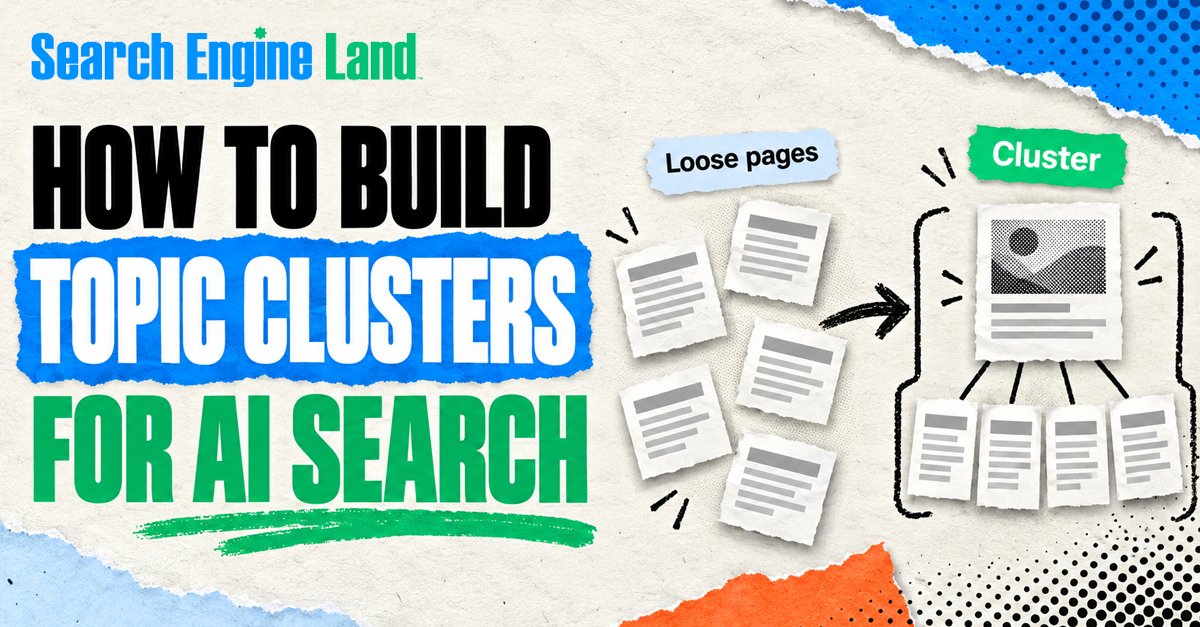
The payoff shows up in the data. A December 2025 study of about 173,000 URLs, covered by Search Engine Land, found pages that also ranked for a question's fan-out searches were 161% more likely to be cited in AI Overviews.
Ranking for the main query isn't enough. Pages that also ranked for a fan-out query were 161% more likely to be cited in AI Overviews. Here's how to build #SEO clusters that cover both: https://t.co/MMxHFetXCO https://t.co/AiAWrrZCoY
 Search Engine Land@senginelandOct 5, 2026
The same study found only about 27% of fan-out queries came back across repeat runs, so don't treat any list of sub-queries as fixed. Use it to make sure the page covers the topic's natural follow-ups.
For each topic, write down five to ten likely sub-questions. Pull them from places you already have. The answers in your prompt panel show which sub-points engines cover, and Google's People Also Ask boxes show related wording. Your Search Console queries and sales calls show what buyers ask next. For a payroll topic, that might mean contractor rules, pricing per head, tax forms and switching from a spreadsheet.
If one topic yields 15 sub-questions, it may be two pages, which our guide to topic clusters for AI search covers.
Pick the format for each topic
Once you know the topic, the prompt shape tells you the format. Engines lift answers from pages shaped like the question.
| Prompt shape | Format to write | Why it fits |
|---|---|---|
| "Best X for Y" | Numbered list with a verdict per item | Engines can lift one entry at a time |
| "X vs Y" or "X or Y?" | Comparison page with one table | Same columns for every option |
| "How do I..." | Step guide | Steps map to the sub-questions |
| "How much does..." | Pricing explainer | A direct number near the top |
| "What are the stats on..." | Data roundup with sources | Engines cite numbers with names |
Masset's analysis of AI citations backs the list format. It found listicles take about 21.9% of citations, with a 25% citation rate against 11% for opinion pieces. Articles came in at 16.7% and product pages at 13.7%. That's one vendor's dataset, and Masset doesn't publish enough of its method to check it, so I'd use it as a tiebreaker when two formats both fit.
For the two shapes that get cited most, we've written up how to build comparison pages that rank in ChatGPT and statistics roundups AI engines return to.

Your competitors are getting cited by AI. You're not.
Every day without citation tracking is a day your competitors pull ahead in ChatGPT, Perplexity, and Claude.
Rank the backlog into your next 10 topics
By now you have a list of borrowed-citation topics, each with sub-questions and a format. Score each one from 1 to 3 on four things and add them up.
- Gap size. How many answers cite a competitor's page on this topic while skipping you?
- Odds. Are the cited pages owned by rivals you can outwrite, or by big review sites?
- Depth. How many real sub-questions does the topic carry?
- Value. Would a buyer reading this page be close to choosing?
Take the top 10. Practitioners say this kind of coverage work pays off. In the SEOFOMO survey run by Aleyda Solis in August 2026, 105 of 171 search pros had tried expanding content to cover more questions and topics, and 80 of them said it paid off. The survey had support from SEO tool makers and it's self-reported, but no other tactic in it scored as well. Our breakdown of which GEO tactics marketers say work has the full table.
Then take each of the 10 topics into the next step, turning its questions into a tracked set. Our guide on finding buyer questions AI assistants answer covers that part.
How long this takes, and when to redo it
Here's a rough count for one pass. Running and logging 25 prompts on five engines takes about four hours. Sorting the gap rows takes two or three more, and fan-out lists plus formats for 10 topics take another two. Call it eight to ten hours for the first plan. Those are my rough estimates, so time your own first pass.
Building the plan once is the easy half. The harder half is knowing when the cited sources change, because the answers move every week. A rival publishes a new guide, or a roundup quietly drops you. Run the prompt panel weekly and rebuild the full plan each quarter.
You can do all of this by hand with a sheet and an afternoon a week. Or RankControl can do it for you. Radar finds the questions your buyers ask and plans titles onto your calendar. The content engine writes and publishes up to 100 pages a month on your own site. Weekly AI visibility checks on seven engines show who is cited in each answer, with your competitors named. RankControl is $400/mo with a 7-day trial.
200+ SaaS teams already track their AI citations.
They know exactly when ChatGPT mentions their brand, and when it stops. Do you?