
In July, a founder running a B2B software firm in London posted in r/smallbusiness about their brand's AI Overview. Back in 2021, a rough server migration had led one client to post a scathing review. The problem was fixed within 48 hours and the client stayed. Years later, the AI Overview for the company's name summarized it as having "recurring technical instabilities and data reliability issues."
Google’s AI Overview is using a 3-year-old negative review as the "summary" for my business. Help?
I run a specialized B2B software firm based in London. We had a pretty rough week back in 2021 during a major server migration - it was a mess, and one frustrated client posted a scathing review about "unreliable service" and "data loss con...
The founder said the summary was hurting enterprise deals before a first call ever happened. The overview wasn't making anything up. It was leaning on one old page and ignoring everything newer.
That's the kind of unreliability that matters to brands. This post covers what it looks like in September 2026, from our own checks of software searches, why it happens and how to protect your search visibility. Sources were checked on September 27, 2026.
Better than last year, and still wrong often enough to matter
AI Overviews have improved. In April, The New York Times published an analysis finding they answered about 91% of benchmark questions correctly, up from about 85% with an earlier model. That still leaves roughly one wrong answer in ten.
Some failures are obvious. In September, a post in r/mildlyinfuriating showed AI Overviews inserting random words mid-sentence, including one that called the Sahara "the world's largest hot britannica." It drew more than 4,000 upvotes:
Google’s AI Overview is just inserting random words into sentences now
Garbled sentences are easy to spot. Plausible wrong facts about a product are not, and those are the ones buyers act on.
How often does ChatGPT mention your brand?
Most founders have no idea. The answer might surprise you.

What we found in 12 software searches
On September 27 we pulled Google's US AI Overviews for 12 searches buyers run about software, such as "quickbooks online pricing" and "hubspot crm free plan limits." We ran each search twice, a few minutes apart, then checked the claims against the vendors' own pages. Every search showed an overview.
Three answers had problems:
| Search | What the overview said | What the vendor's page says |
|---|---|---|
| quickbooks online pricing | Essentials $75, Plus $115 and Advanced $275 a month | Essentials $85, Plus $140 and Advanced $340 a month |
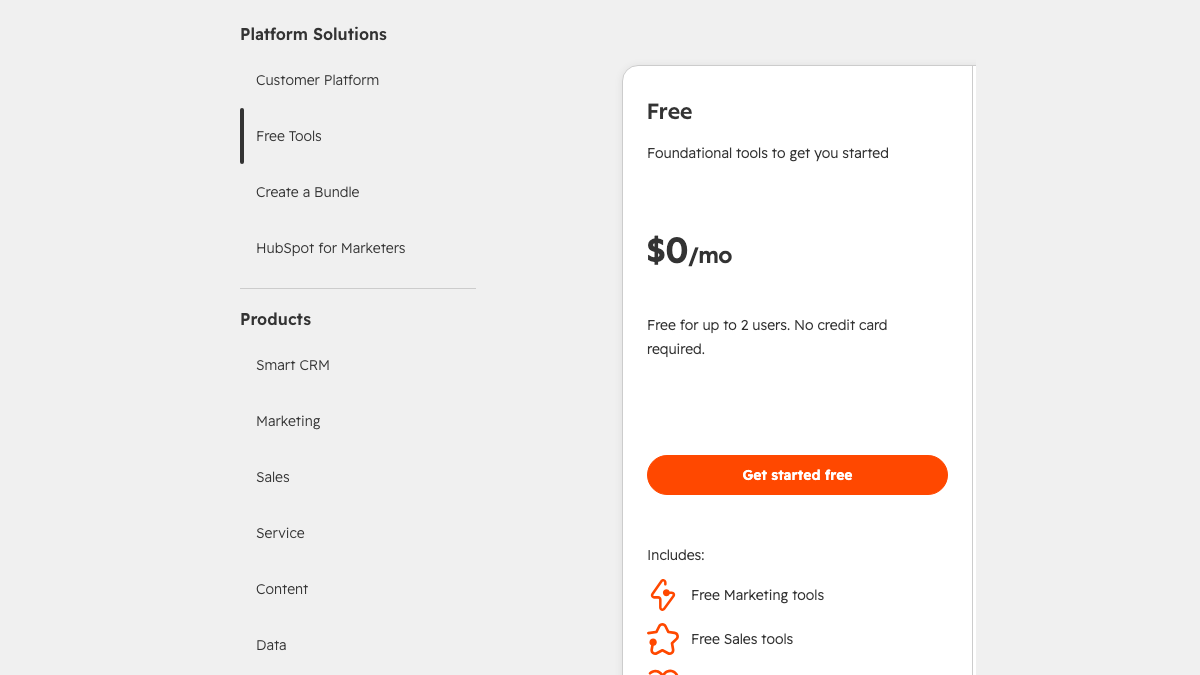
| hubspot crm free plan limits | First run: up to 2 users. Second run: unlimited users | "Free for up to 2 users" |
| help scout pricing | $25, $45 and $75 per user per month, with no mention of billing | Those are annual-billing prices, and monthly billing costs more |
The QuickBooks answer linked to QuickBooks' own pricing page at the top. The plan prices themselves came from third-party reviews and a video, and all three paid-plan prices beyond Simple Start were out of date.
The HubSpot result is the more unsettling one. The first overview cited HubSpot's pricing page and help documentation and got the user limit right. When we ran the same search minutes later, Google had generated a new overview. It shared none of the first one's pages, leaned mainly on four small third-party blogs, and said the free plan supports unlimited users. HubSpot's own page says otherwise:
The other 11 overviews were word-for-word identical on the second run, so most answers are stable over short periods. When one is regenerated, though, the new version can change both its sources and its facts.
The own-source share
We looked at where the answers came from for the eight searches about one brand's pricing or plans. Across those eight, the brand's own site supplied 18 of the 48 sources in the first run, about 38%. We call this the own-source share: the fraction of an AI answer's sources that come from your own site.
The rest came from other people. For "zendesk pricing," Zendesk's site supplied 2 of the 9 sources. Six of the remaining seven were pages from other support software companies, several of them selling Zendesk alternatives. QuickBooks' own site supplied 1 of 5.
A low own-source share doesn't mean the answer is wrong. It does mean the answer about your product is partly written by review sites, bloggers and competitors, on their schedule. Our Perplexity citation audit found Perplexity repeating third-party pricing errors in the same way.
Work out your own-source share
You can measure this for your brand in under an hour:
- List five searches about your product: pricing, free plan or trial, reviews, alternatives and your brand against your closest competitor.
- Run each one in Google while signed out, and open the sources behind the overview.
- Count how many sources are pages on your own site, then divide by the total.
- Note which outside pages appear, and whether each one states your current facts.
Repeat it monthly. A share that falls while outside pages carry old facts is an early warning, often before any buyer mentions a wrong answer on a call. The outside pages you note are also your fix list for later.
15 hours a week manually. Or 15 minutes with RankControl.
Track citations, monitor competitors, and fix content gaps across every AI search engine. Automatically.

Why AI Overviews go wrong about brands
The errors we found had ordinary causes.
Third-party pages go stale. Review sites and roundups rarely update prices when vendors change them. An overview built from those pages repeats old numbers, even when the vendor's page is also in its source list.
Promotions add to the confusion. QuickBooks' pricing page shows its regular prices struck through next to a three-month discount. The overview mentioned that Intuit often runs promotions, then listed prices that matched neither the regular nor the discounted figures.
Key details sit where the answer misses them. Help Scout's billing period lives in a toggle above its pricing table, and the overview dropped it.
Old pages carry weight. The London founder's 2021 review was still indexed, still specific and still the most detailed source about that problem. Our piece on AI Overviews and liability for false answers found reputation searches leaning heavily on complaint sites and law firm pages.
Answers get regenerated. Most overviews hold still for a while, but a regenerated answer can pull a different set of pages. A correct overview this week isn't a promise about next week.
How to protect your search visibility
You can't edit an AI Overview directly. You can change what it's built from, and you can catch problems early.
Check the searches that matter to buyers
List the searches a buyer runs before signing: your brand plus pricing, free plan, reviews, alternatives, and "vs" your two closest competitors. Check the overview for each one every week or two, and write down its sources. Search Console's Generative AI report shows which of your pages appear in AI Overviews, though not the queries or what the answer said. Our guide to AI citation tracking covers how to set up a repeatable list.
Make your own page the clearest source
Put prices, plan limits and billing periods in plain text, next to each other, with a "last updated" date. HubSpot does this, and its page still lost out once in our check, which is why the next step matters too.
Fix the third-party pages behind the errors
When an overview gets a fact wrong, open its sources and find the page it came from. Ask review sites and directories to update your listing, and update any profiles you control. Old press releases and help articles on your own site count too. Our guide to correcting false information in AI Overviews walks through tracing and reporting an error step by step.
Publish the pages competitors are writing about you
If other companies are ranking with pages about your pricing or your alternatives, your own versions belong in the sources too. A clear pricing explainer and fair comparison pages give the overview an accurate, current option. Our piece on comparison pages covers how to write them.
Keep your organic listings strong
The blue links still sit under the overview, and your pricing page ranking first is a correction readers can see. Report the two separately, since an overview can change while your ranking holds, and the reverse.
Where RankControl fits
Done by hand, checking 50 questions on seven engines takes about six hours a week, and publishing eight solid articles a month takes 16 to 24 hours more. Those are rough estimates.
RankControl's AI visibility tracking runs your 50 questions every week on seven engines, marks each one as mentioned, cited or both, and records which competitors and sources each engine used. We track your Google and Bing rankings too. The content engine writes each article against the pages already ranking for its keyword and publishes it on your own domain.
You can protect your brand's answers yourself with a weekly list of searches and a spreadsheet of sources. Or RankControl's agents can run the weekly checks and publishing while your team fixes the pages behind the errors.
AI search traffic grew 835% this year. Is your content ready?
RankControl generates 26 content formats optimized for ChatGPT, Claude, and Perplexity. Published on your domain, matched to your brand.