You've pitched the resource pages, swapped a few guest posts and fixed the dead links you could find. Links still come in, just slower each quarter. That's usually when people search for advanced link building techniques and find a list of 200 tactics they've mostly tried.
This guide covers eight techniques that sites past the basics tend to skip, with who each suits and what it takes. For some, the payoff is smaller than most guides suggest. Sources were checked on October 19, 2026.
The basics this guide skips
If you haven't done these yet, start there.
- Links to a single post start with a fit test, covered in how to get backlinks to blog posts.
- Pitching reporters with data and quotes is in our guide to digital PR backlinks.
- Links that arrive with no outreach are in natural backlinks.
- Curated link lists on niche and .edu sites are in resource page link building.
- Replacing dead pages on other people's sites is in broken link building.
Eight advanced link building techniques at a glance
| Technique | Effort | Real payoff |
|---|---|---|
| Link reclamation | A day, then an hour a month | Links you already earned, working again |
| Image link building | A few hours per batch | Small, steady credit links |
| Original data and surveys | Weeks | The most links per page, if the number is new |
| Free tools and calculators | Weeks to build | Links that keep coming for years |
| Competitor link gap | An afternoon per run | A prospect list, not links |
| Podcasts and expert spots | Hours per show | Referral traffic more than link equity |
| Partner and integration pages | Hours per partner | Mostly nofollow links, real clicks |
| Internal links to money pages | A few days | Fast, and fully in your control |
Effort is my rough estimate.
1. Link reclamation gets back links you already earned
Link reclamation recovers links that used to point at your own pages and now don't work. It runs the other way from broken link building, where you hunt dead pages on other sites. Here the dead page is yours, usually after a redesign or a blog that moved folders.
- Pull every old URL you can find, from old sitemaps and the Wayback Machine.
- Run them through a link tool. Ahrefs, for example, has a Broken backlinks report for links to your pages that now return errors.
- Add a 301 redirect from each dead URL with real links to the closest live page, not the homepage.
- Fix redirect chains so each old link reaches its page in one hop.
- If someone removed your link from a live page, email the editor once and ask why.
A first pass takes about a day on a mid-size site. These links were editorial when someone placed them, so they're worth more per minute than anything else here. If you launched last year, skip it.
2. Image link building with reverse image search
If you make your own charts or photos, other sites are probably using some without credit. A thread in r/SEO_Xpert this October laid out the usual fix.
Post original images where people grab them, such as Pexels, then run a reverse image search and ask each site using one to credit you with a link. Two replies added a point people miss. For an image link, Google reads the alt text the way it reads anchor text, so write it for the page you want to rank.
Google's reverse image search now runs through Lens, and lots of users say it got worse at finding where an image first appeared. A July thread in r/NonPoliticalTwitter called "R.I.P reverse image search you used to work" passed 3,000 upvotes, and one reply said Yandex is "miles better than TinEye or Google." I'd use Yandex and TinEye first, with Lens as a third check.
Backlinko's Brian Dean says the tactic earned "500+ links from images" on his blog alone. That's one owner's count on a widely shared site, so expect a handful per batch.

Your competitors are getting cited by AI. You're not.
Every day without citation tracking is a day your competitors pull ahead in ChatGPT, Perplexity, and Claude.
3. Original data and surveys
A number nobody else has is still the strongest link magnet here. Writers who quote your stat have to cite where it came from, and they keep quoting it for years.
It's also the one most likely to flop. Backlinko's study with BuzzSumo of 912 million posts found 94% had no external links at all, so a page earns nothing just by existing. What gets a stat cited is mostly the page around it. Give each finding a sentence a writer can paste, and explain the method in plain words with sample size and dates.
You don't always need a paid panel. Product data you already hold, grouped so no customer can be identified, often beats a survey. In r/linkbuilding in October, one poster described niche "stats and studies" roundups that gather the latest published studies and answer each question a reader might have. They said those pages earn "hundreds, sometimes thousands" of natural links over time. That's one person's report, though the format is cheap to test.
Expect weeks for a real study, plus the pitching covered in the digital PR guide above.
4. Free tools and calculators
People link a free tool because they keep using it. In our linkable assets check in October, a free color palette tool had more than 14,000 referring domains and a free headline analyzer more than 4,000.
A calculator for a niche question earns a small share of that. Pick a sum your buyers do by hand, such as payroll cost per hire or what a missed call costs. Answer one question fast, show the formula under the result and give it its own URL. Skip the email gate, because writers link to tools they can open. Building one takes weeks with a developer, and the links keep arriving for years after.
5. Competitor link gap analysis
A link gap analysis lists sites that link to two or three of your competitors but not to you. I think of it as the already-yes list, since every site on it has linked to your category before.
Ahrefs calls its version Link Intersect. You enter competitor domains under "Show me who is linking to these domains or URLs," add your site under "But doesn't link to," and it returns the overlap.
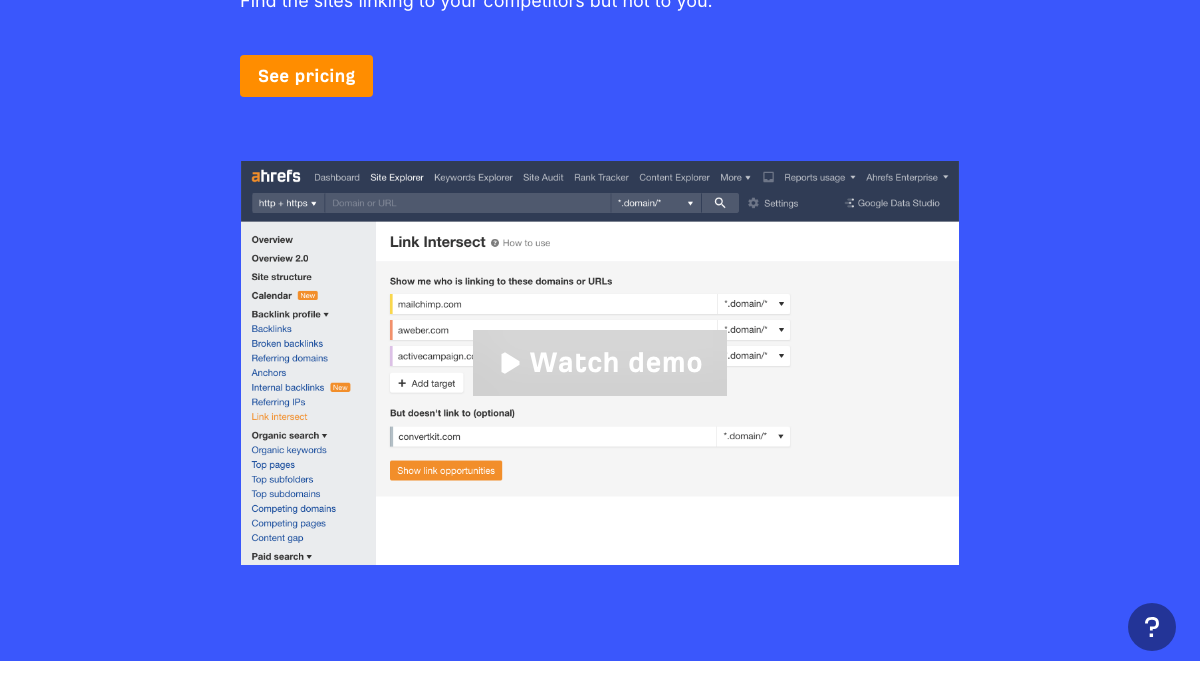
The output is a prospect list, not links, and every row still needs a reason and a pitch. Sort by relevance before authority. In an r/linkbuilding thread on link building pain, one reply said "DA is a Moz score, not a Google score" and that chasing it does nothing if the page isn't relevant.
An afternoon gets you a sorted list, and it suits anyone already paying for a link tool.
200+ SaaS teams already track their AI citations.
They know exactly when ChatGPT mentions their brand, and when it stops. Do you?
6. Podcast and expert appearances
Podcast guesting earns links, but the link is the smallest part of what you get. An r/SEO thread from July asked exactly this.
Is podcast guesting actually worth it for SEO?
For a long time, I’ve been thinking about trying to get myself booked on other people’s podcasts as a way to support my website but I’m not sure whether it’s actually a wise use of my time. I’ve seen services that help connect you with podc...
The poster worried the links come from show notes pages or small sites with little traffic. The top reply called guesting "more general PR than SEO." Another said the real payoff is referral traffic and trust from the right listeners, so it's worth doing on shows that match your niche rather than as a volume play. A third noted that Gemini can read YouTube transcripts, so a video episode is text an AI engine can see.
The big numbers come from sellers. Respona, which sells outreach software, says it booked over 100 shows from about 1,000 pitches, and Brian Dean says he got a link from almost every one of his 50-plus podcasts. Treat both as a ceiling.
It suits founders who can talk well about one topic, at a few hours per show.
7. Partnership and integration pages
If your software connects to other tools, their app directories are an easy place to get listed. When I checked on October 19, 2026, Zapier's listing for Stripe linked to Stripe's site with rel="nofollow noopener noreferrer". The Shopify App Store's listing for Judge.me linked out with rel="nofollow noopener". Two pages aren't a policy, but they set the expectation for the big directories.
The value is referral clicks from buyers close to buying. Smaller partners who write their own setup guide may link normally, so ask.
Google's spam policies, last updated August 28, 2026, list "partner pages exclusively for the sake of cross-linking" as link spam, next to excessive link exchanges.
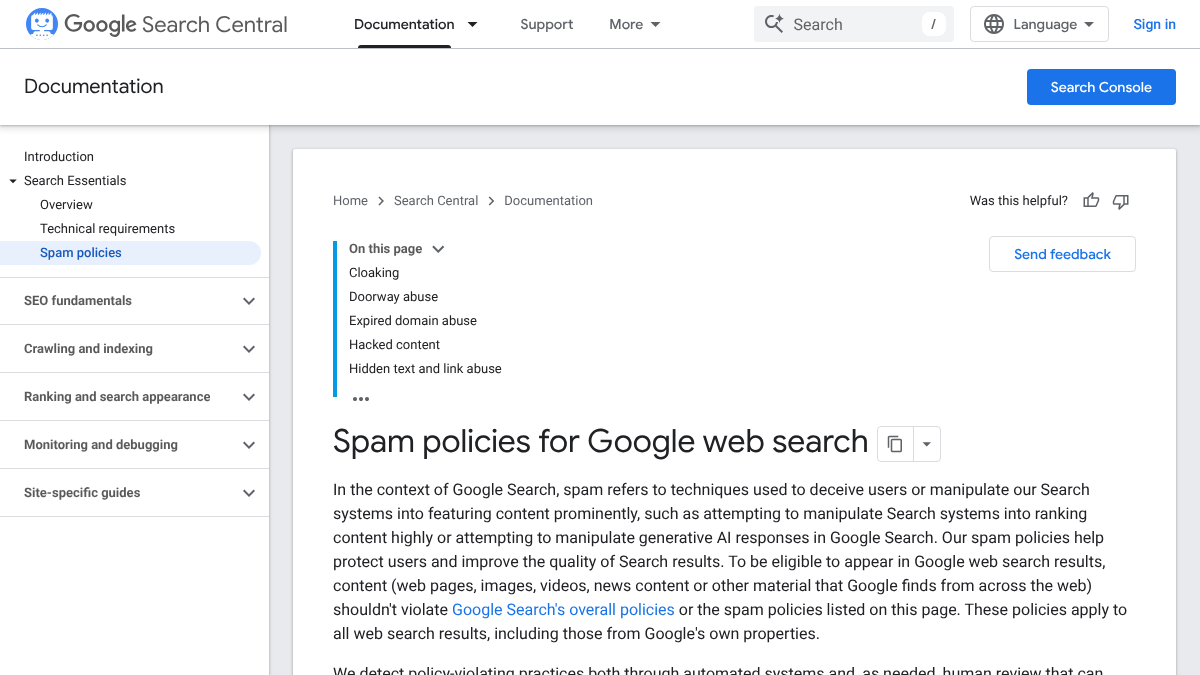
A page that explains a real integration is fine. A wall of logos built to swap links is what Google names. Plan on a few hours per partner.
8. Internal links to money pages
The fastest technique here needs nobody's permission. Your internal links decide how much of your posts' link value reaches the pages that make money.
Google's links documentation, updated December 10, 2025, says "every page you care about should have a link from at least one other page on your site." It also says Google uses links as a signal when it judges how relevant pages are.
In a May post in r/SEO_Xpert, an agency described a 400-page store stuck on page 2 for eight months despite new backlinks. They picked its 12 top revenue pages and added about 340 internal links to them from 180 posts over six weeks. The post gives no before-and-after numbers, so treat it as a pattern, not proof.
- List your money pages, such as pricing, top products and anything stuck on page 2.
- Find the posts with the most backlinks, from your link tool or the Search Console Links report.
- Link from each one to the closest money page, in the body, with anchor text that says what the page is.
- Check rankings again in six weeks.
For the wider setup, see our guide to internal link structure. This takes a few days.
Which technique to run first
Start with reclamation and internal links, since both use links you already have. Then pick one asset, data or a tool, depending on whether you have data or developers, and run the outreach techniques alongside it.
For the first quarter, plan on a week for the first two and two to four weeks for one study or tool. After that, expect 5 to 10 hours a month of pitching and upkeep, by my rough estimate.
Doing it yourself or handing part of it off
Every technique above works by hand, and the outreach is where the hours pile up. RankControl's outreach takes that part for the articles we publish. For each one, our outreach finds link prospects and their contacts, then drafts personal emails sent from your own mailbox, and follow-ups stop as soon as someone replies. We find the prospects ourselves, so there's no list to import. We don't run reclamation audits or image searches, so those stay with you. It's one plan at $400/mo with a 7-day free trial.
You can run all eight techniques yourself. Or RankControl's agents can handle the articles and their outreach every month while you work on the studies and podcast spots only you can do.
How often does ChatGPT mention your brand?
Most founders have no idea. The answer might surprise you.