A Shopify store owner asked r/shopify this month whether anyone else was seeing rapid growth in agentic sales. The answers were more measured than the question. One store said 2.5% of its sales in the past 30 days were credited to Shopify's agentic channel. An agency running a dozen stores said a few clients got under 1% of revenue from it, and the rest got next to nothing.
Agentic Sales
Anyone else seeing rapid growth with agentic sales?
That's where agentic commerce sits in late 2026. It's real and growing, and still small for most stores. Here's what it is, how the pieces fit together, and which stores AI shopping answers actually pointed to when we tested them.
What is agentic commerce?
Agentic commerce is shopping where an AI assistant does part of the work for the buyer. The shopper describes what they want, and the AI finds products, compares them and points to where to buy. In some setups, it can also check out on the shopper's behalf.
Google defined it in its January 2026 retail announcement as commerce where AI completes tasks on people's behalf. In practice, most of what you see today is the first half of that, finding and comparing, and the purchase still often happens on the store's own site.
The search term is new and growing. "Agentic commerce" gets about 5,400 US searches a month, and "what is agentic commerce" about 1,600, according to a data provider's estimates for October 2026.
The three protocols you'll hear about
Agents need a way to read store catalogs and, sometimes, to pay. Three systems matter most right now.
| System | Who's behind it | What it does |
|---|---|---|
| Agentic Commerce Protocol (ACP) | OpenAI, built with Stripe | Lets ChatGPT read merchant catalogs and inventory, with checkout for approved partners |
| Universal Commerce Protocol (UCP) | Google, with Shopify, Etsy, Wayfair, Target and Walmart | Lets shoppers buy inside AI Mode and Gemini, with the retailer as seller of record |
| Shopify Agentic Storefronts | Shopify | Sends a store's products to ChatGPT, Google AI Mode, Gemini, Copilot and Meta |
OpenAI's ACP docs describe it as the connective layer between merchants and ChatGPT users. It lets ChatGPT "ingest structured catalog data, understand merchant inventory, and surface relevant products in context." Its production guide says Instant Checkout in ChatGPT is open to approved partners only.
That checkout piece changed this year. In March, OpenAI said its first version of Instant Checkout didn't give merchants enough flexibility, so it would let merchants use their own checkout while it focused on product discovery, as Digital Commerce 360 reported.
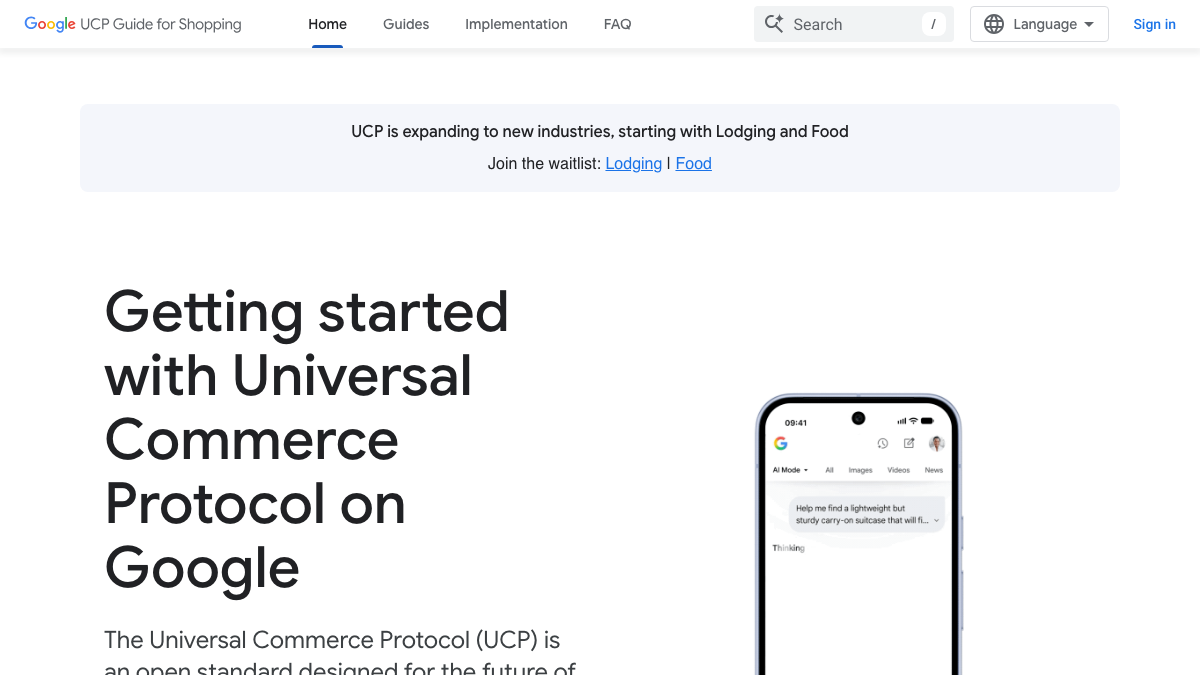
Google launched UCP on January 11, 2026. According to Google's announcement, it was built with retailers including Shopify, Etsy, Wayfair, Target and Walmart, and works alongside Google's earlier Agent Payments Protocol. Google's UCP guide now says it's expanding beyond shopping, starting with lodging and food.

Built by the team that got cited in 48 hours.
Content generation, backlink building, AI visibility tracking, and Google rankings. One platform, zero guesswork.
How Shopify stores get into AI answers
For Shopify stores, much of this happens without any setup. Shopify's help center says agentic storefronts are active by default for eligible stores. Products reach AI channels through Shopify Catalog, or through Google Merchant Center for Google AI Mode and Gemini.
The channels work differently. Shopify says ChatGPT acts as a discovery-focused referrer, so shoppers finish buying on your own checkout, in ChatGPT's in-app browser or a new tab. On Google AI Mode, Gemini, Copilot and Meta, stores with direct checkout turned on can let shoppers buy without leaving the AI channel.
If you sell on Shopify, it's worth opening Sales channels and then Agentic in your admin to see which AI channels your products are already listed on. You can turn channels on or off there.
We asked 16 shopping questions to see which stores AI picks
On October 19, 2026, we ran 16 everyday shopping questions through ChatGPT and Google AI Mode. They ranged from "best running shoes for flat feet under $150" to "buy a 6 person camping tent" and "where can I buy a cast iron skillet." Then we looked at where each answer sent shoppers.
| What we measured | ChatGPT | Google AI Mode |
|---|---|---|
| Answers with product listings | 11 of 16 (product cards) | 12 of 16 (product links) |
| Where product links pointed | 16 different stores | Google's own Shopping listings, 71 links |
| Most cited source | Walmart, 13 citations | The New York Times' Wirecutter, 15 links |
The two engines took very different paths to the same job.
How ChatGPT picked stores
ChatGPT showed 27 product cards across 11 answers, and 23 of them had a price. The cards pointed to 16 different stores, plus a few media pages.
| Type of store | Product cards |
|---|---|
| Big retailers like Walmart, Best Buy, Dick's and REI | 14 |
| A brand's own store, like Brooks or Woom | 7 |
| A specialty shop | 1 |
| Media sites or no link | 5 |
Walmart was also the source ChatGPT cited most, 13 times across the 16 answers, followed by Home Depot and Best Buy at 7 each. Retailer product pages did a lot of the work, alongside review sites like RTINGS.
Amazon was close to absent, with one product card in the whole test. Its robots.txt file, which we checked the same day, blocks OpenAI's search crawler and the ChatGPT-User agent. An AI that can't read a store's pages has little reason to send shoppers there.
The brand stores are the hopeful part. Seven of the 27 cards went straight to a maker's own site, like Brooks for running shoes and Woom for a kids' bike. You don't need to be Walmart to get a card.
How Google AI Mode picked stores
AI Mode handled products differently. In 12 of the 16 answers, it linked product names to Google's own Shopping listings, 71 links in total, not to a store. Those listings come from Merchant Center feeds, so on Google, your feed is your storefront.
For the reasoning behind its picks, AI Mode leaned on reviewers. The New York Times' Wirecutter was linked 15 times, with RTINGS and OutdoorGearLab next. A store that wants to show up in AI Mode needs both a clean Merchant Center feed and a place in the reviews AI Mode trusts.
Our post on winning AI product recommendations covers the review side in more depth.
See your first AI citation report in under 5 minutes.
No setup calls. No onboarding meetings. Connect your domain and see where AI mentions your brand right now.
What store owners are seeing
A candle and diffuser shop owner asked r/ecommercemarketing in September whether anyone was really getting orders from ChatGPT. When they asked ChatGPT about their own products, the answers were all over the place. Sometimes their shop showed up, mostly competitors did, and once ChatGPT described them with details about a year old.
Is anyone actually getting orders from ChatGPT?
Small Shopify store, candles and diffusers, 3 years in, just me and one part timer. Organic has been going down for us like a few people posted about and meta has been unreliable all year so I have been looking at everything lately. Everyon...
The replies were mixed. An industrial manufacturer said it had about 150 visitors from ChatGPT in September, confirmed in GA4, and had just taken a single order worth over $9,000. Another reply gave a simple first step, running 15 buying questions in ChatGPT and Perplexity and noting which brands get named and whether your details are current.
How to get your store picked
Put the docs and our test side by side, and a short list decides whether an AI shopping agent can pick your store.
- Keep your product feed complete. Google says it's adding new Merchant Center attributes for conversational shopping, and ACP reads structured catalog data.
- Let AI crawlers read your product pages. Check robots.txt for blocks on OpenAI, Perplexity and Google crawlers, unless you've chosen to block them.
- Put price, stock and shipping on the page in plain text. 23 of ChatGPT's 27 cards showed a price, so it's looking for one.
- Get into the reviews. Wirecutter, RTINGS and category specialists shaped both engines' answers.
- Write the comparison content. Questions like "best X under $150" or "X for flat feet" pull in buying guides, and a guide on your own site gives AI something of yours to cite.
Doing this once won't hold for long. Prices, stock and reviews change every week, so the harder job is noticing when an AI stops recommending you. Our ecommerce SEO guide covers the search side of the same work.
What we'd watch next
Three changes are worth watching over the next few months. Google says UCP's roadmap includes multi-item carts, loyalty account linking and post-purchase tracking. OpenAI is still moving checkout between its own flow and merchants' sites. And Shopify's default-on setup means every eligible Shopify store is in AI channels whether it planned for it or not, which is why our ChatGPT shopping briefing for DTC founders is worth a read if you sell direct.
Limits of our test
We ran 16 questions once each, from the US, on one day. Shopping answers change with stock, prices and the shopper's location. We counted where links pointed, not what shoppers bought, and the Reddit sales figures above are self-reported by store owners.
What this takes by hand
Here's a rough monthly budget for keeping a store ready for agentic commerce, by our estimate.
| Task | Hours a month |
|---|---|
| Checking feeds and product data for errors | 2 to 4 |
| Running buying questions in ChatGPT and AI Mode | 2 to 3 |
| Writing one or two buying guides | 6 to 10 |
| Pitching reviewers and category sites | 2 to 4 |
| Total | 12 to 21 |
Doing it by hand or with help
You can run these checks and write the guides yourself. Or RankControl can take on the content side. Its content engine writes buying guides and comparisons and publishes them to your store, including Shopify, once you approve. Its AI visibility tracking checks 50 of your buyers' questions every week on ChatGPT, Perplexity, Claude, Gemini, Grok, Google AI Mode and Google AI Overviews.
Your competitors are building backlinks while you read this.
Organic outreach, social mentions, and citations from Editorial Circle member sites, with managed backlinks available as an add-on. Grow your domain authority without running the campaign yourself.