
A DTC founder's usual first contact with ecommerce AEO is an email: a customer mentions they found the product by asking ChatGPT what to buy. Nothing in the analytics predicted it, and nothing in the analytics recorded it either. The scale behind those emails is now measurable: Salsify's 2026 consumer research puts 22% of shoppers researching products through AI tools, while an audit of 1,000 enterprise domains found 81% of brands never get mentioned on unbranded category prompts. A fifth of your buyers are asking; four fifths of your competitors are silent. This guide covers how the engines actually pick products, the trap that makes brands recommend their own competitors, and the signal stack a DTC brand controls.
The Third Surface
Ecommerce visibility used to mean two battlegrounds: organic rankings and paid placements. There's a third now, and most DTC teams haven't staffed it:
There are now three ways to show up in search. Most ecommerce brands are only focused on one. 𝗦𝗘𝗢 is what you already know. Rank your product pages on Google. Keywords, backlinks, optimized descriptions. Still matters, but it's no longer enough on its own. 𝗔𝗘𝗢 is about https://t.co/sFIORSeYjz
 Chase Dimond | Email Marketing Nerd 📧@ecomchasedimondJun 22, 2026
Classic search, AI Overviews inside Google, and conversational recommendations inside ChatGPT and Perplexity are three different games with three different scoreboards. And the third one is being wired directly into checkout: Google keeps pushing agentic commerce across Search, Gemini, and YouTube, with a universal cart following purchase intent wherever it forms.
🛒 Google keeps moving toward agentic commerce: at Google I/O 2026, they announced Universal Cart, an AI-powered shopping cart designed to work across Google surfaces including Search, Gemini, YouTube and Gmail 👇 Users will be able to add products to a cart while browsing or https://t.co/CxJZ1OdT8E
 Aleyda Solis 🕊️@aleydaMay 20, 2026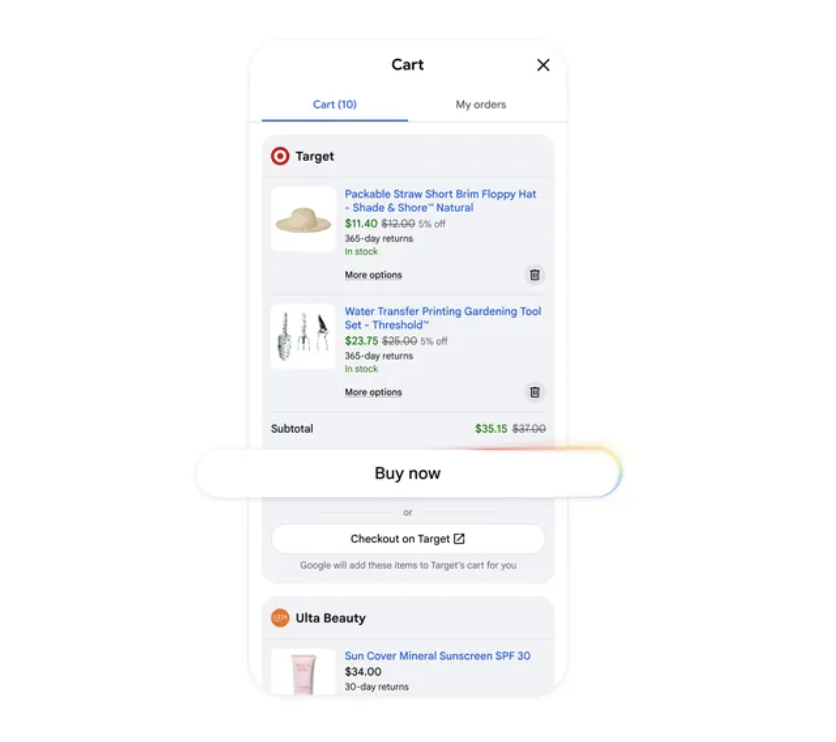
To be honest, the numbers still favor the skeptics on raw volume; only 14% of shoppers trust an AI recommendation enough to buy on it alone. The trajectory is the part you can't ignore: more than half of 18-to-24-year-olds worldwide say they're likely to research purchases through AI, and Statista projects 36 million US adults will treat generative AI as their first search stop by 2028. The channel is small the way mobile commerce was small. But the recommendation increasingly decides the shortlist, the shortlist decides the search, and the search shows up in your analytics wearing a disguise. More on that at the end.
How the Engines Pick Products Right Now
The mechanics stopped being guesswork this year. ChatGPT's shopping surface runs on live retrieval through OAI-SearchBot over a Bing-backed index, per Profound's citation-source analysis, assembling product cards from your structured data, your pricing, your availability, and what the rest of the internet says about you. Perplexity runs its own product cards for Pro subscribers off web crawl plus merchant data, and Google's AI Mode assembles product answers from the open web. Across all of them, four gates matter most:
- Machine-readable product data. Product schema with offers, ratings, and availability. Incomplete data doesn't get penalized; it gets skipped.
- Visible pricing. "Contact us for pricing" removes you from consideration entirely. The engine can't recommend what it can't price.
- Independent review mass. Analyses of the shopping surface converge on roughly 50 reviews at a 4.0+ average as the floor where third-party trust kicks in, on platforms the engine can crawl.
- Use-case fit. Engines match intent semantically. A product positioned for everyone matches no prompt in particular.
Here's the part that should reorganize your marketing budget: there is no paid lane. ChatGPT shopping has no ad placement, and Muck Rack's analysis of 25 million AI-cited links found earned media drives roughly 84% of citations while paid content manages 0.3%. Google's AI Mode leans hardest on Reddit, YouTube, and independent review sites for product answers. Every dollar moved from awareness ads to earning coverage on surfaces engines trust buys visibility ads literally cannot.

Your competitors are getting cited by AI. You're not.
Every day without citation tracking is a day your competitors pull ahead in ChatGPT, Perplexity, and Claude.
The Citation-Recommendation Gap
Before I lose you, quick sidebar, because this is the single most expensive misunderstanding in ecommerce AEO right now.
Getting cited and getting recommended are different events, and Lily Ray's analysis of 100 "best product" queries measured the gap: in 69% of cases where a brand's own listicle earned a citation, that brand was excluded from the actual recommendation, while competitors named in the list got recommended. The engine mined the brand's content for category knowledge, then discounted the author's self-placement as bias. Your beautifully optimized "10 Best [Your Category] Products" post can function as a competitor referral engine. We covered the same trap for SaaS in the alternatives-pages playbook, and the fix is identical: honest multi-brand coverage on your own pages, plus real effort getting into lists you don't write.
There's a second decoupling worth knowing: recommendations don't necessarily send traffic. ChatGPT routes product discovery through its own shopping cards, so a brand can win recommendations while seeing barely a ripple in referral numbers. Judge this channel by mentions and revenue, never by sessions.
The Signal Stack a DTC Brand Actually Controls
Strip out the platform mechanics and what's left is brand-level work. The practitioner conversation converges on a consistent stack:
How are people actually getting their product mentioned in ChatGPT?
I’m working on a SaaS and keep circling back to the same question: why do some products show up in ChatGPT answers and others don’t? I don’t think GEO replaces SEO, but it clearly overlaps with things like topical authority, indexing, and h...
That thread's consensus, ranked by how often independent voices repeat it:
- Use-case specificity first. The line practitioners keep repeating: if your product isn't tied to a specific use case, LLMs skip you entirely. "Best water bottle" is Wikipedia's fight. "Best insulated bottle for trail runners" is winnable, and it's what buyers type anyway.
- Documentation-style product pages. The pattern that pulls citations reads like docs: "Use this if you're X. Skip it if you're Y." One founder reported roughly half his inbound leads arriving via ChatGPT and Claude off the back of exactly one such page, with zero deliberate AEO work. Honest fit statements are extraction bait.
- Multi-site brand consistency. Independent mentions across comparison posts, category roundups, creator videos, and buying guides, with consistent brand description everywhere. Engines cross-check; contradictions read as noise.
- Bing indexing. The unglamorous lever: pages that never cracked Google's top ten still surface in ChatGPT answers once Bing picks them up. Submit the sitemap to Bing Webmaster Tools. Ten minutes, disproportionate payoff.
- Authentic community presence. Reddit threads carry heavy weight in product answers, and astroturfing them is a brand-ending gamble. Show up as a founder with a name, answer questions in your category, and let the threads accumulate.
200+ SaaS teams already track their AI citations.
They know exactly when ChatGPT mentions their brand, and when it stops. Do you?
The Plumbing Checklist
The technical floor is a Friday afternoon, not a quarter:
- Let the bots in. Allow
OAI-SearchBot,ChatGPT-User, andPerplexityBotin robots.txt, and check your CDN isn't silently blocking them at the edge. - Ship complete Product schema. Google's product structured data spec is the reference: name, brand, image, offers with price and availability, aggregateRating with review count, and the pros-and-cons fields almost nobody fills in.
- Keep price and specs in plain HTML. JavaScript-rendered pricing is invisible pricing.
- Platform specifics. If you're on Shopify, the feed-level setup, including the merchant program path, is in our Shopify AEO guide.
Does the plumbing actually move product placements? One DTC founder documented working their brand into ChatGPT's and Gemini's shoppable product cards, and the unlock was exactly this unglamorous: clean Product schema, a feed the agents could parse, and enough third-party "best X" mentions for the model to assign trust. No viral moment, no content sprint. Data hygiene plus earned mentions, and the cards followed.
Ranking on Google Doesn't Transfer
The hardest lesson in the practitioner threads comes from brands that assumed their SEO equity would carry over. One founder described ranking well on Google for their category for years, then learning from a customer that ChatGPT was recommending a competitor, with their own brand entirely absent. The gap wasn't content quality. It was structure: no schema, thin third-party coverage, JavaScript-hidden pricing, nothing indexed on Bing. After rebuilding one cornerstone page around use-case fit and adding markup, they started appearing within weeks.
The audit data says this story is the norm, since 62% of enterprise domains are technically invisible to AI models in some way. And the transfer gap cuts differently by category: gadgets and tools win through docs-style content and reviews, while fashion and beauty lean harder on structured feed data, because card-format surfaces have less editorial content to mine. Know which fight your category is in before copying anyone's playbook.
Measurement: The Channel That Hides From Analytics
The attribution reality, straight from the founders living it:
Are customers finding your product through ChatGPT? Let's talk AI product discovery
I've been digging into why some products consistently show up in ChatGPT recommendations while others get buried. This is after I realized one of our competitor has a 30% visibility score while us we had only 10% score and the data is eye-o...
Buyers get the AI recommendation, then Google your brand name, and the sale lands as branded organic or direct. Two fixes shrink the blind spot. First, the tooling caught up this spring: GA4 shipped a native AI Assistant channel group in May 2026, and ChatGPT appends utm_source=chatgpt.com, so the direct clicks now classify cleanly. Second, ask every customer how they found you, on the post-purchase survey and on support calls, because the recommended-then-searched path never touches a UTM.
For the recommendation side itself, run the panel: 15 to 20 real buying prompts, weekly, across ChatGPT, Perplexity, and Google AI Mode, logged-out, several runs each, tracking whether you appear and who appears instead. Practitioners doing this manually report it's the only method that survives the week-to-week drift. It's also a few hours every week forever, which is why RankControl runs share-of-recommendation tracking across six engines every week, and pairs it with AI traffic attribution that credits each referred visit to the assistant that sent it.
How often does ChatGPT mention your brand?
Most founders have no idea. The answer might surprise you.

The window here looks like early Google circa 2004: four in five brands invisible, no paid lane to buy your way in, and trust signals that compound for whoever builds them first. Your category's AI shortlist is being written now, mostly from reviews, threads, feeds, and lists your competitors haven't noticed matter yet. Get on it while it's still cheap.