
Leadership wants AI visibility in the quarterly report. You ask ChatGPT a few buyer questions, and it names your company in two of them. There's no link to your site, and nothing shows up in GA4. So does that count?
It does. A brand mention with no source link still shapes which vendors a buyer considers, and buyer research backs that up. It just isn't the same thing as a citation, and it shouldn't be added to one. The rest of this post covers why engines name brands without linking them, what that kind of mention is worth, and a simple way to put it in a report without inflating anything.
The short answer
Count unlinked mentions, on their own line. Keep three things separate in any AI visibility report:
| What happened | What to call it | Can you trace a visit? |
|---|---|---|
| The answer names your brand, no link to your site | Mention | No |
| The answer links a page on your site as a source | Citation | Sometimes |
| Someone clicks through to your site | AI-referred visit | Yes, if the referrer survives |
We call the first row an orphan mention: your name is in the answer, but nothing in it leads back to you. They're common, and they're the easiest of the three to overcount or to ignore.
Why so many AI mentions come without a link
Engines don't promise a link every time. Google says so plainly on its Gemini help page: "Not all responses include related links or sources."
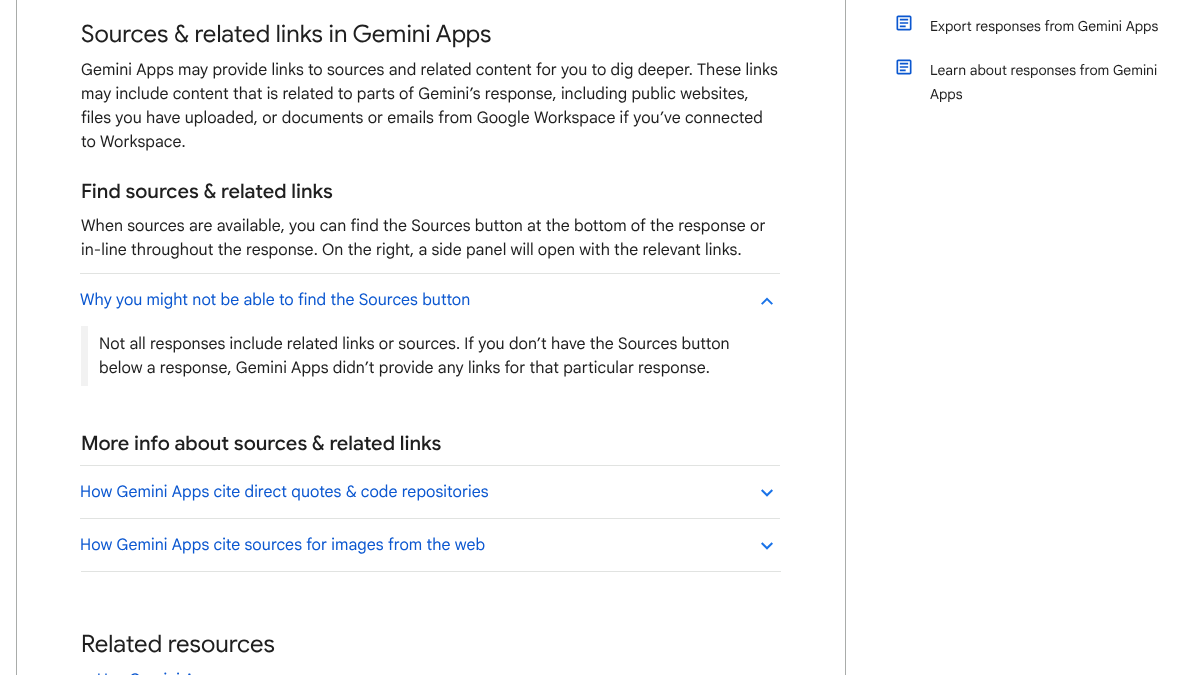
OpenAI's wording is softer but says the same thing. Its ChatGPT search help page says responses that use web search "may include citations," and the Sources panel shows up "when available." Answers that don't use search come from what the model learned in training, so there's nothing to link.
How big is the gap in practice? Bill Widmer, an SEO consultant, ran 72 buyer questions for three B2B brands through four AI tools every week over the summer and published the results on the Orbit Media blog in September 2026. Across 13,184 citations, brands were named far more often than they were linked:
| Engine | Brand mentioned | Brand cited | Gap |
|---|---|---|---|
| Claude | 70% | 40% | 30 points |
| Gemini | 72% | 41% | 31 points |
| Perplexity | 67% | 44% | 23 points |
| ChatGPT | 56% | 47% | 8 points |
The reverse almost never happened. Out of 1,052 query runs, only 17 cited a brand's page without naming the brand, so citations are nearly always a subset of mentions. ChatGPT's small gap has a simple cause: Widmer ran it with web search forced on. Three brands is a small sample, one of them his own site, so read the numbers as directional. The pattern matches what we found, though.
What we saw when we asked 12 buyer questions
On September 27, we asked 12 buyer questions about password managers, webinar platforms and invoicing software. Each question went to OpenAI's model through its API twice, once with web search on and once with it off, and once to Perplexity. For every brand an answer named, we checked whether the brand's own website appeared among that answer's sources.
| Setup | Brands named | Own site cited | Share |
|---|---|---|---|
| OpenAI, web search on | 54 | 47 | 87% |
| OpenAI, web search off | 59 | 0 | 0% |
| Perplexity | 36 | 19 | 53% |
The search-off row is the one to remember. The model named more brands without search than with it, and it linked none of them, because a memory answer has no sources at all. ChatGPT decides for itself when to search, so a real share of the answers your buyers see work this way.
Perplexity cited plenty of pages, just not always the brand's own. Asked which invoicing software handles international payments best, it opened with "Stripe Invoicing is the strongest all-around choice," then listed 10 sources. None were on stripe.com. They were roundups and blog posts from CNBC, Wise, Airwallex, G2 and others.
Third-party pages also stood in for brands with search on. For a question about webinar tools that integrate with HubSpot and Marketo, three of the named platforms were cited through their HubSpot marketplace listings rather than their own sites.
One more detail worth knowing: a citation isn't always good news. The same model advised against LastPass for a new deployment because of its 2022 breach, and it cited LastPass's own blog post about the incident to make the point.
15 hours a week manually. Or 15 minutes with RankControl.
Track citations, monitor competitors, and fix content gaps across every AI search engine. Automatically.

Why an unlinked mention still counts
The case for counting orphan mentions comes from what buyers do after reading an answer. G2's April 2026 buyer research found that 85% of buyers think more highly of a vendor when AI includes it in an answer. It also found 69% chose a different vendor than they'd planned because the vendor was part of a chatbot's recommendation, and one in three bought from a vendor they'd never heard of before. None of that depends on a click.
The visits that follow a mention mostly don't look like AI traffic, either. Similarweb, which sells AI visibility measurement, studied AI-influenced journeys from July to December 2025 and found only 8.8% of those visits arrived as AI referrals. Most, 55.9%, came through search, and 19.9% came direct. A buyer reads a name, remembers it, and searches for it later. Our guide to tracking AI traffic with missing referrers covers how to spot that pattern in your analytics.
A PR lead at a small manufacturer described this exact problem in r/digital_marketing. ChatGPT mentioned the company, often without a link, so GA4 caught none of it, while leadership wanted the numbers in quarterly PR reports. One reply compared AI mentions to billboard impressions: real exposure, just not measurable the way rankings and clicks are.
How can I see brand mentions in ChatGPT? I have no official way to monitor this.
I’m in charge of PR and comms for a small manufacturing company in a niche market. Our executive team is currently obsessed with AI mentions. And they want to know if our brand is showing up when people ask chatGPT questions related to our...
Why it shouldn't count the same as a citation
An orphan mention is worth less than a citation. It can't send a click, and it can't be traced to a page, so you don't know what the engine read about you. If it came from a memory answer, it reflects what the web said about you when the model was trained, which you can't update.
Mentions can also be neutral or negative. The LastPass example is a citation, but the same thing happens with names: an answer can mention you as the option to avoid. A mention column without a note on tone will overstate good news.
The mirror image happens too. One r/SEO poster in September reported roughly 700 AI citations of their pages, most of them in ChatGPT, against only five times the site was named. Their content was being used, and the brand was nearly invisible. Counting citations alone would have made that site look far healthier than it was.
How to count orphan mentions
For each buyer question and each engine, record three yes-or-no answers:
- Named: does the answer name your brand?
- Cited: does it link a page on your site?
- Recommended: does it present you as a good choice, not a warning?
Then report the named rate and the cited rate side by side, and treat the difference as your orphan rate. A report might read "named in 31 of 50 answers, cited in 18, recommended in 24." That line shows what you can and can't trace, and where the work is.
Two rules keep the numbers clean. Never add mentions and citations into one visibility score, because you'd be counting the same answer twice. And ask each question more than once, since answers change from run to run and a single check can flip either way. Our post on mention tracking vs citation tracking goes deeper on reading the two together.
AI search traffic grew 835% this year. Is your content ready?
RankControl generates 26 content formats optimized for ChatGPT, Claude, and Perplexity. Published on your domain, matched to your brand.

Turning orphan mentions into citations
When an engine names you but cites someone else, it's telling you where it got its information. Look at the sources on those answers. If they're review sites, directories or marketplace listings, check that those pages describe you accurately and link your site, because the engine is reading them in place of your own pages.
Then check whether your site has a page that answers the question directly. The webinar answers cited HubSpot listings, which put each tool's integration details on one page. A clear integration page on your own domain, open to AI crawlers, gives the engine something of yours to cite next time. Our digital PR guide to unlinked mentions covers the off-site half, and why mentions don't become recommendations covers the step after being named.
Counting it yourself or letting it run
You can do all of this in a spreadsheet: pick 20 buyer questions, run each on a few engines every month, and log named, cited and recommended for each one. It takes about an afternoon a month once the list is set.
Or RankControl can keep the columns filled. Our AI visibility tracking checks up to 50 buyer questions every week across seven AI engines and records whether each answer named you, cited your site, or both, along with every source the answer used. For a quick look first, run the free AI visibility check.

Built by the team that got cited in 48 hours.
Content generation, backlink building, AI visibility tracking, and Google rankings. One platform, zero guesswork.