
Somewhere in your company, someone has said "we should be doing GEO instead of SEO." Maybe it was a board member who read about ChatGPT's user numbers. Maybe it was you, after a quarter of flat organic traffic. Either way, the request lands on a team that already has a full week.
We tested that premise against what the search and AI companies say, and against what their AI answers cite. The short version: you can't swap SEO out, because the engines build on it. But you can move a meaningful share of your hours. This guide lays out how, using what we call a fixed-hours ledger: every recurring task marked keep, cut or add, with the total staying the same.
If you're earlier than this and still sorting out the terms, our post on whether GEO is replacing SEO covers the bigger picture.
Can you do GEO instead of SEO?
The companies running the engines answer this directly, and they agree.
Google's generative AI optimization guide asks the question itself: "Is SEO still relevant for generative AI search?" Its answer is "In short, yes!" and the reason follows: "our generative AI features on Google Search are rooted in our core Search ranking and quality systems."
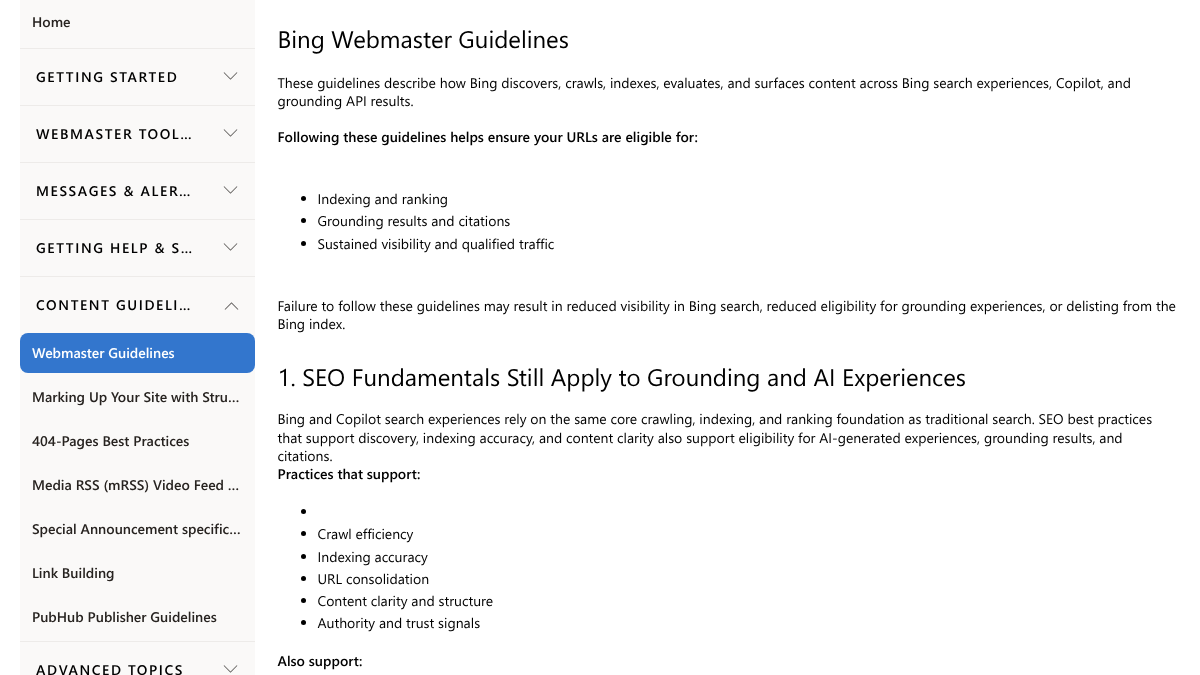
Bing is just as plain. Its webmaster guidelines open the AI section with this: "Bing and Copilot search experiences rely on the same core crawling, indexing, and ranking foundation as traditional search."
ChatGPT works the same way underneath. OpenAI's help center says ChatGPT search "sometimes partners with other search providers," rewriting your question into searches it sends them, and it lists Microsoft among those providers. It also says "Placement is not guaranteed."
The research lands in the same place. C-SEO Bench, a benchmark accepted at NeurIPS 2025, tested methods built specifically to win placement in AI answers. It found traditional SEO strategies "significantly more effective," and most of the purpose-built methods ineffective or harmful. Our look at LLM tricks that don't work covers what that means in practice.
So "instead of" fails. Every major AI engine starts from a search index, and SEO is how you get into the index in good shape. What passes the test is "rebalanced": the same budget, spent differently.
What AI answers pull from
To decide how much to move, it helps to see where AI answers get their sources. On September 27, 2026, we pulled Google's AI Overviews for four B2B SaaS searches, including "how to calculate customer acquisition cost" and "what is annual recurring revenue."
Across the four, the overviews cited 28 pages. Seventeen ranked in the top 10 for the same search, which is a strong case for keeping your ranking work. But 10 didn't rank in the top 20 at all. Those were mostly glossary pages from smaller SaaS companies, plus a LinkedIn post and two YouTube shorts.
Larger studies show a wider gap. Ahrefs' study of 863,000 keywords, published in March 2026, found 37.1% of AI Overview citations ranked in the top 10 and 36.7% didn't rank in the top 100. Our post on AI Overview visibility vs rankings explains why that happens.
Read together, the numbers say two things. Ranking still feeds a big share of citations. And a big share goes to pages and platforms that classic SEO never aimed at, which is the room GEO work fills.
The fixed-hours ledger
Most GEO advice adds work. A small team can't absorb that, so the ledger starts from a rule: the total doesn't change. List the recurring SEO tasks your team does in a typical week, with the hours each one takes. Then mark each one keep, cut or add.
Here's an example for one in-house SEO and content person spending 20 hours a week on search. Your numbers will differ, but the shape usually holds:
| Task | Before | After | Mark |
|---|---|---|---|
| New content production | 8 | 6 | Keep, reshaped |
| Technical SEO and site health | 2 | 2 | Keep |
| Links and digital PR | 3 | 3 | Keep |
| Keyword research | 3 | 1.5 | Cut back |
| Title, meta and density tweaks | 2 | 0.5 | Cut back |
| Rank tracking and reports | 2 | 1 | Cut back |
| AI crawler access checks | 0 | 0.5 | Add |
| Buyer-question checks in AI engines | 0 | 2 | Add |
| Pricing, comparison and integration pages | 0 | 2.5 | Add |
| Third-party presence | 0 | 1 | Add |
| Total | 20 | 20 |
The rest of this guide explains each mark, so you can adjust the numbers to your own week.
Know exactly what AI says about your competitors.
RankControl's Recon Agent monitors competitor citations across ChatGPT, Perplexity, Claude, Gemini, Grok, Google AI Mode, and Google AI Overviews. See where they show up and you don't.

Keep: the work AI engines still depend on
Technical SEO stays whole. Bing's guidelines list the practices that support eligibility for AI answers, and they read like an SEO audit. The list starts with crawl efficiency and indexing accuracy, then covers URL consolidation, content clarity and authority signals. A page that can't be crawled or indexed can't be cited either.
Link and PR work stays too, since authority signals are on that same list. So does content production, though it changes shape, as the add column shows.
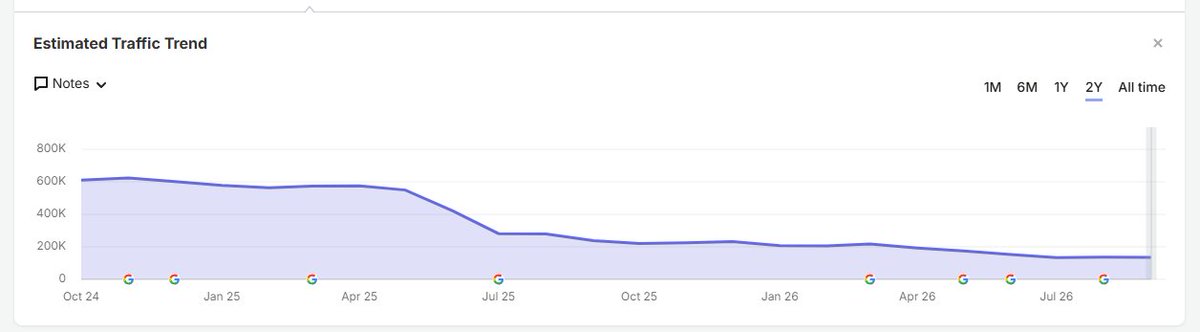
The risk of cutting ranking work too far is real. Glenn Gabe described a company that said it was focusing on AI Overviews more than the regular results, and then struggled with a core update:
Just read about a company that said they are focusing on AI Overviews more than 10-blue links (that makes no sense btw). They also said algorithm updates have been challenging for them. Uh, I'd say that... Well, hello June 2025 broad core update. Yep, that was a big one (and a https://t.co/jhu7CMaCBH
 Glenn Gabe@glenngabeSep 23, 2026
Cut back: the work that was already weak
Nothing in the cut column is zero. These are tasks where extra hours stopped paying off before AI search arrived, and AI search made that clearer.
Repeated title, meta and keyword-density tweaks are the first to trim. In the original GEO paper, keyword stuffing was the one tested method that did worse than doing nothing, and C-SEO Bench found that tricks aimed at language models often hurt ranking. Write titles well once, then leave them alone unless a page's topic changes.
Keyword research gets shorter because the most useful inputs change. Deep volume research on head terms matters less when buyers ask long, specific questions. The best source for those is your sales calls and support tickets, which you can mine in an hour a week.
Rank-only reporting shrinks as well. Position is still worth tracking for your core pages. But a report that only shows rankings misses the citations covered below, so spend part of that hour on a different scoreboard. Our post on what changes between SEO and AI search covers other habits that quietly stop working.
Add: the work SEO never covered
AI crawler access. Check that robots.txt and your CDN let the AI search crawlers in. OpenAI says sites that opt out of its search crawler "will not be shown in ChatGPT search answers." Half an hour a week scanning your logs catches a bad firewall change before it costs you months of citations.
Buyer-question checks. Run 20 or so real buyer questions through ChatGPT, Perplexity and Google, and record who's named and which pages get cited. Repeat the important ones, since answers change between runs. Our guide to checking ChatGPT citations covers how many runs to use and what to record.
Pricing, comparison and integration pages. This is where some of your content hours go. When buyers ask AI engines to pick a tool, the answer depends on facts it can read plainly. Aleyda Solis made the case that prices, plan logic, integrations and policies need to be explicit, or you can lose the pick even when you're visible:
🤖 Make commercial and transactional information machine-readable for AI search: Commercial and selection prompts depend on current, explicit information extractability: Price, availability, eligibility, plan logic, attributes, locations, integrations or policies are unclear, you https://t.co/vbTGgkgl7o
 Aleyda Solis 🕊️@aleydaSep 21, 2026

That matches what we saw behind ChatGPT's searches. Across 12 buyer questions we asked in September, it ran 198 searches, and 135 of them included the word "official." It goes looking for your own pages, so those pages need to state the facts.
Third-party presence. The citations in our check that came from outside the top 20 included a LinkedIn post and two YouTube shorts, and a Reddit thread was cited for the CRM search. An hour a week on accurate review profiles, relevant community answers and inclusion in independent comparisons covers the sources AI answers draw on that your own site can't. On r/digital_marketing, one commenter summed it up: SEOs now have to look beyond their own site to the platforms that both buyers and AI models read when researching a purchase.
How to tell if the new split is working
Give the ledger one quarter before judging it. Then check three things.
- Your core pages still rank where they did. If they slipped, you cut too deep on the keep column.
- Your buyer-question checks show more citations of your own pages, especially the pricing and comparison pages you added hours to.
- Google Search Console's generative AI report and Bing's AI Performance report show the same pages trending up.
If all three hold, move another hour or two. If rankings dropped, move them back. The ledger is meant to be rewritten each quarter. If you're starting from scratch with none of this in place, our GEO guide for beginners has a ten-day setup to run first.
26 content formats. Published on your domain. Matched to your brand.
Guides, comparisons, listicles, case studies, and more. RankControl generates content that gets cited by ChatGPT, Perplexity, Claude, Gemini, Grok, Google AI Mode, and Google AI Overviews.

Doing it yourself or handing it off
The ledger costs nothing to run. It needs a spreadsheet, a clear look at last month's calendar and a quarterly review.
The add column is where the hours go fastest, and RankControl can carry most of it. Our AI visibility tracking checks up to 50 buyer questions every week across seven AI engines, marks each answer as mentioned, cited or both, and records every source each answer used. Our content engine writes each article against the pages already ranking for its keyword, scores it for how easily AI engines can quote it with a fix list, and publishes it on your own site.
That leaves your hours for the keep column, where they still matter most.

Your competitors are getting cited by AI. You're not.
Every day without citation tracking is a day your competitors pull ahead in ChatGPT, Perplexity, and Claude.