
In September, someone starting out as an SEO and GEO freelancer asked r/SEO how they'd land their first three to five paying clients from zero. No audience, no agency name, no existing clients. They'd listed every option they could think of, from cold calls to a personal brand.
How would you get your first SEO/GEO clients as a freelancer in 2026?
I’m starting to offer SEO + GEO (getting businesses more visibility in Google and AI search results) as a freelance service.I’m at the point where I’d rather spend my time getting real clients than endlessly learning more SEO theory.The pro...
The most upvoted reply came from someone who'd grown an agency from its first year to ten times that five years later. Their early advice was blunt: actually rank. They started by ranking their own Google Business Profile for SEO in their city. Another reply was shorter still: SEO equals GEO.
We think both replies point at the same thing, and our own check of local AI answers this month backs it up. Here's how we'd approach the first clients in 2026, with what we found when we looked at what local AI answers are actually built from.
Sell the outcome, not the acronym
A dentist or a roofer doesn't wake up wanting GEO. They want the phone to ring when someone asks Google or ChatGPT who's good nearby.
The search data agrees. When we pulled US search volumes for our guide to budgeting for AEO, "ai seo agency" drew about 2,900 searches in August 2026, against 590 for "aeo agency." Buyers think of this as SEO that covers AI answers. So describe the service that way.
That doesn't mean GEO is empty. It means the pitch starts with the customer's problem, and the acronym can come later, if at all.
What local AI answers are built from
This is the part we didn't expect. On September 27, we checked Google's US results for eight "best [service] in [city]" searches. The list covered accountants and CPAs in Denver, a personal injury lawyer in Austin, a dentist in Charlotte and HVAC in Phoenix. It also covered roofing in Tampa, physical therapy in Portland and plumbing in Columbus.
| What we saw | Searches |
|---|---|
| An AI Overview appeared | 4 of 8 |
| The overview listed businesses with their Google ratings and review counts | 4 of those 4 |
| Most of the overview's sources were Google business listings | 3 of those 4 |
| Reddit on page one | 6 of 8 |
| Yelp on page one | 7 of 8 |
For roofing in Tampa, 24 of the overview's 26 sources were Google business listings. For plumbing in Columbus, it was 20 of 23. The Portland physical therapy overview named clinics with their ratings attached, such as one with a 5.0 rating from 406 reviews. The Denver accountant overview showed five firms as Business Profile cards, each with its rating, review count and address. The businesses' own websites were a small part of what these answers drew on.
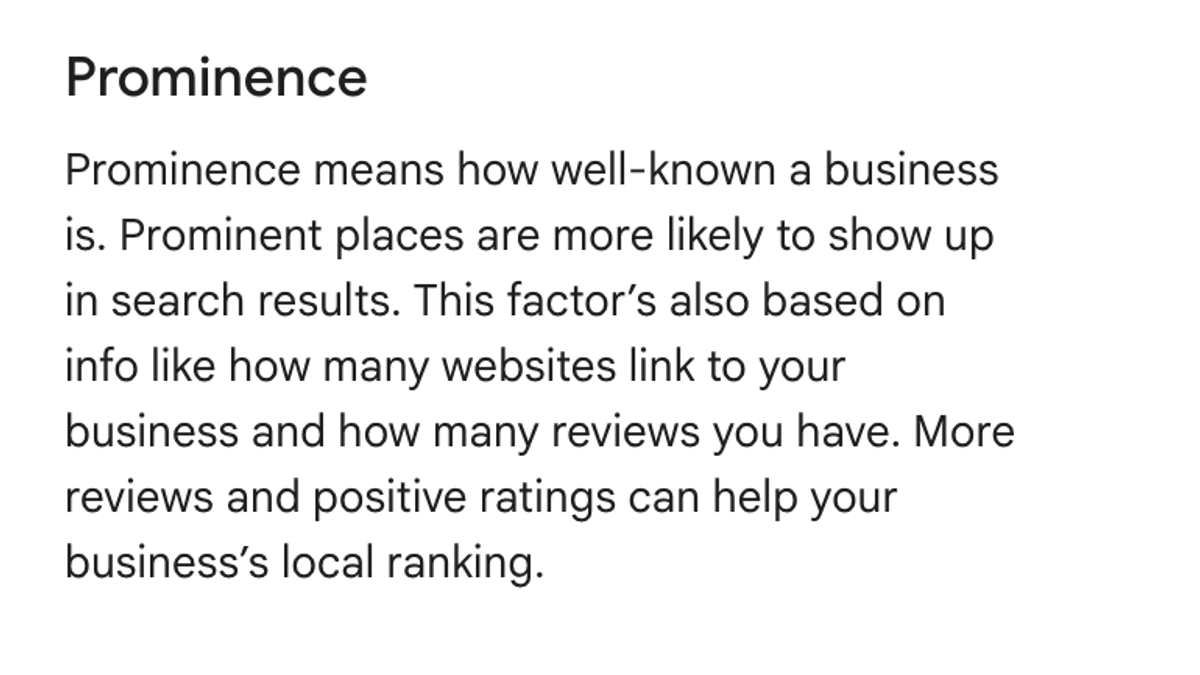
So for a local client, the first GEO project usually isn't a blog. It's the Business Profile, the reviews and the directories that sit on page one. Google's own help page on local ranking says as much:
That's a much easier first sale than "GEO." Every local owner understands reviews, and you can show them where they stand in five minutes.
How often does ChatGPT mention your brand?
Most founders have no idea. The answer might surprise you.

Pick one niche and one city
The fastest way to get good at this is to do the same audit twenty times. Pick one kind of business, such as dental practices or HVAC companies, in one city or region you know.
You'll learn which directories matter in that niche and what the top-rated competitors have in common. You'll also learn what owners in that trade worry about. By the fifth audit, you'll spot problems in a minute. By the tenth, you'll have examples to show the eleventh prospect.
The niche changes what matters, too. In our check, the Austin personal injury search had no AI Overview and pulled legal directories onto page one. The trades pulled Yelp, Angi and Thumbtack instead. A dentist and a roofer need different directory work, and you only learn which by specializing.
Build proof before the first client
The top reply in that thread had it right. If you sell visibility, your own visibility is the first case study. Set up and fill out your own Business Profile, publish a few useful pages for your niche, and get listed where local businesses look for help.
If you don't have a client yet, do the work for free for one or two businesses you know, with permission to share the results. A real before-and-after beats any portfolio mockup.
The audit that opens doors
One reply in the thread described what worked for them: find businesses with obvious problems and send a three to five minute screen recording of an audit. End with one fix they can make today. We'd build the audit around what the owner can see:
- Search "best [their service] in [their city]" and show what Google's AI Overview says, if there is one. Are they named? Who is?
- Ask ChatGPT the same question and show the answer.
- Compare their review count and rating with the three businesses named most often.
- Point out the gaps in their Business Profile, such as missing services, hours or photos.
- Give them one fix to do themselves, such as asking their last ten happy customers for reviews.
Keep it short and about their business. A recording that shows a competitor being recommended by name tends to get a reply.
Where the first clients come from
| Channel | Why it works early | Watch out for |
|---|---|---|
| Your own network | People already trust you | It runs out after a few clients |
| Local business groups and chambers | Owners meet you in person | Slow, but the referrals compound |
| Businesses already paying for weak SEO | They've already decided to spend | Be fair about their current provider |
| Web designers and accountants | They get asked for SEO help constantly | Agree how referrals work up front |
| Cold outreach with the audit | Specific and visual | Keep volume low and every message personal |
Start with the first two while you build proof, then add the audit outreach once you have a before-and-after to show. Whichever channel you use, send one follow-up with a new finding rather than a reminder. Owners are busy, and a new detail about their own listing gives them a reason to answer.
Pricing the first offer
A fixed-price starter project is an easier first sale than a monthly retainer. Something like a Business Profile cleanup, a review request plan and fixes to the top service pages, done in a few weeks. It gives the owner a result they can see before they commit to more.
After that, a retainer covers ongoing reviews, profile updates, content and reporting. In practitioner threads this year, small-business packages started around $500 a month, and B2B retainers ran from about $2,000. Price for your market and the work involved, not the acronym.
Whatever you charge, don't promise AI rankings. Nobody controls what an AI answer says, and results vary between runs. Our guide to offering GEO without overpromising covers how to word what you do promise.
15 hours a week manually. Or 15 minutes with RankControl.
Track citations, monitor competitors, and fix content gaps across every AI search engine. Automatically.

What to report each month
Local owners care about calls and customers, so lead with those:
- Calls, direction requests and website clicks from the Business Profile.
- Review count and average rating, against the same three competitors each month.
- Rankings for the five or ten searches that matter most.
- Whether they're named in AI answers to their customers' questions, checked the same way each month.
The last one is the part most local SEO reports skip, and it's the part that makes GEO visible to the owner. Our guide to AI citation tracking covers how to check it consistently. For more on local businesses in AI answers, see our piece on local SEO for AI search.
Done by hand, checking 50 questions on seven engines takes about six hours a week, and publishing eight solid articles a month takes 16 to 24 hours more. Those are rough estimates, and they add up quickly once you have several clients.
RankControl's AI visibility tracking runs your 50 questions every week on seven engines, marks each one as mentioned, cited or both, and records which competitors and sources each engine used. The content engine writes each article against the pages already ranking for its keyword and publishes it on your own domain.
You can run all of this by hand for your first few clients with a spreadsheet and a screen recorder. Once the client list grows, RankControl's agents can handle the tracking and publishing while you spend your time on audits and new clients.
AI search traffic grew 835% this year. Is your content ready?
RankControl generates 26 content formats optimized for ChatGPT, Claude, and Perplexity. Published on your domain, matched to your brand.