
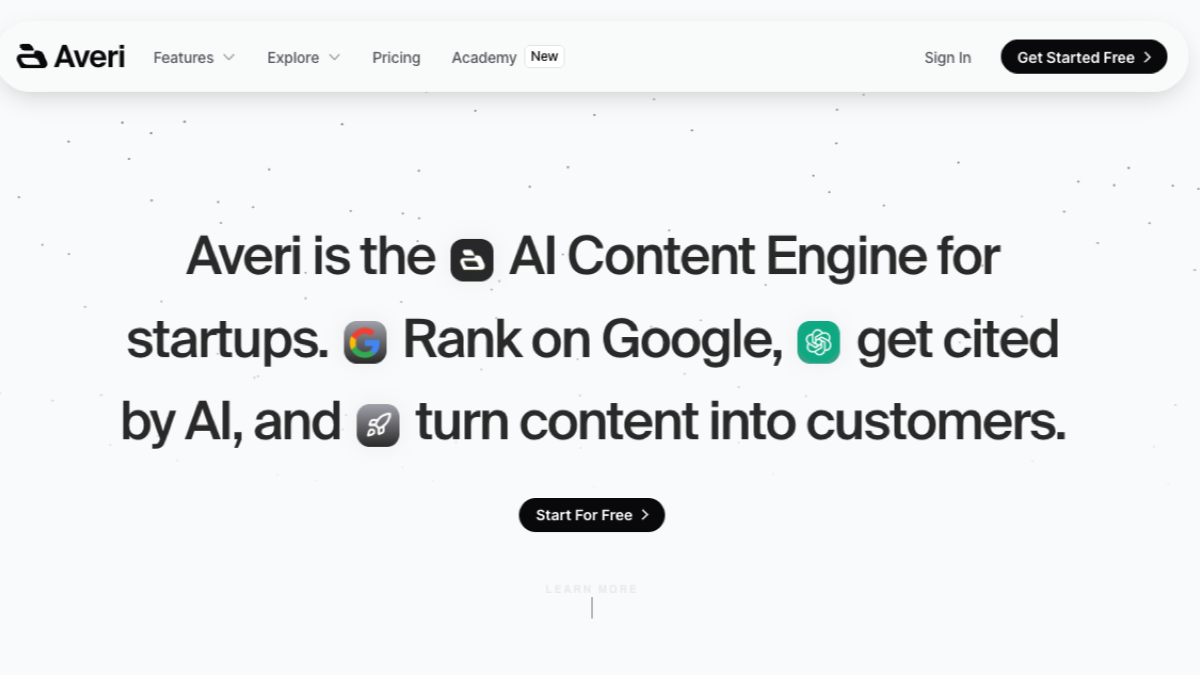
Switching from Averi to RankControl is one of the gentler migrations in this category, because the two products share a worldview: content should be planned from research, drafted in your voice, published natively to your own CMS, and reviewed by a human before it ships. Averi bills itself as the AI content engine for startups, and the engine part is real. The switch is about scope: moving from a content engine to a visibility pipeline that wraps the same content motion in measurement, outreach, social discovery, and the answer-side tracking that tells you whether any of it is working in AI search. This guide covers the exports, the mapping, the setup, and the honest trade.
What You're Actually Switching
Averi's workflow trains on your business once, company, ICPs, competitors, and voice, then suggests research-backed topics with competitive gap analysis attached, drafts in your voice for review, publishes to your CMS, and feeds analytics back into strategy. It's a focused product with a clear opinion: content is the growth engine, and the human stays in the review seat.
RankControl agrees with most of that opinion and extends the machine around it. The same brand-trained content calendar and native CMS publishing sit alongside weekly citation checks across ChatGPT, Perplexity, Claude, Gemini, Grok, and Google's AI surfaces, Google and Bing rank tracking, competitor monitoring, backlink outreach drafted from your own mailbox, social thread discovery, and repurposing, one flat $400/month plan for the lot.
| Averi | RankControl | |
|---|---|---|
| Content engine | Brand-trained topics, drafts, CMS publishing | Brand-trained calendar, drafts, native CMS publishing |
| AI visibility | Optimized-for-citation content | 50 queries checked weekly across 6 engines, per-engine history |
| Links | Out of scope | Outreach agent from your mailbox; Managed Backlinks add-on |
| Social | Out of scope | Thread discovery and repurposing drafts |
| Competitors | Used in gap analysis | Continuously monitored, fed into planning |
| Pricing | Free entry tier, paid plans | Flat $400/mo, 7-day trial, everything included |
The Good News First: Your Content Is Already Safe
The fear that keeps people paying for tools they've outgrown is losing the work. Here, the work is already yours. Averi publishes to your CMS, which means every article it ever produced is a page on your domain that keeps ranking, keeps earning citations, and needs precisely zero migration. Cancelling the subscription doesn't touch it.
What lives inside the app, and therefore needs exporting, is the thinking: the brand training you refined, the topic queue you built, drafts that never shipped, and the analytics views you'd want as a before-picture. That's the whole rescue list, and it fits in an afternoon.

Built by the team that got cited in 48 hours.
Content generation, backlink building, AI visibility tracking, and Google rankings. One platform, zero guesswork.
The Export List, In Order
- Brand material (15 minutes). Copy out your company description, ICP definitions, competitor list, and any voice guidance you tuned. Paste it into a doc. This is the highest-value export because it's the thing you actually iterated on.
- Topic queue and content plan (10 minutes). Export or copy the planned titles and their keyword targets, including anything the gap analysis suggested that you hadn't scheduled yet.
- Unpublished drafts (10 minutes). Anything in review or in progress, out to documents. Published pieces need nothing.
- Analytics baseline (15 minutes). Save or screenshot the performance views you'd want to compare against later, especially anything touching AI citations, since answer-side history can't be reconstructed after access ends.
Actually, one correction to that last point: your Search Console and GA4 history survive regardless, since they're your properties. What you're preserving is Averi's interpretation layer, the views that tell you what it thought was working.
Setting Up the Other Side
Connecting RankControl takes the same afternoon. The publishing integration hooks the same CMS Averi was pushing to, WordPress plugin, Webflow, Framer, Shopify, Ghost, Notion, Wix, webhooks, or the Content API for headless setups. At org creation the brand scrape drafts your profile automatically; paste in the exported ICPs and voice notes to carry your tuning across rather than re-deriving it. Then load the topic queue into the content calendar, where planned titles pick up cluster structure and internal links designed in before drafting.
The one genuinely new setup step is the measurement side: choose the 50 tracked queries that matter for your category, weighted toward the questions buyers actually ask rather than head terms. The first weekly check across all six engines runs within days and becomes your baseline, which is the instrument Averi's workflow never had: a weekly reading of what the engines actually say and cite when your buyers ask.
What Maps To What
| If you used Averi for... | The RankControl equivalent |
|---|---|
| Brand training (company, ICP, voice) | Brand Control profile, seeded by the setup scrape plus your exports |
| Topic suggestions with gap analysis | Query mining and planned titles on the calendar, competitor gaps included |
| Drafting in your voice | The content engine's drafts, reviewed in the same way |
| CMS publishing | Native publishing to the same integrations |
| Analytics feedback loop | Rankings, page analytics, and per-engine citation tracking in one dashboard |
Two honest notes on that table. Averi's free entry point has no RankControl equivalent; our plan is $400 a month with a 7-day trial, and a pre-revenue founder counting dollars may reasonably stay on a free tier until the math changes. And Averi's strategy-optimization loop, the part that adjusts your plan from performance, maps to a combination of our weekly tracking and your judgment; the pipeline surfaces what moved, and the reweighting call stays with you.
See your first AI citation report in under 5 minutes.
No setup calls. No onboarding meetings. Connect your domain and see where AI mentions your brand right now.

What a Good Before-Picture Contains
Since the whole point of the switch is gaining the answer-side instrument, spend twenty extra minutes making the before-picture worth comparing against. Four artifacts do it.
First, a manual engine snapshot: ask ChatGPT, Perplexity, Claude, and Gemini who your company is and what it's known for, signed out where possible, and save the answers verbatim. Description language drifts as your visibility changes, and the day-zero phrasing is the reference you'll wish you had. Second, a citation spot-check on your five most commercially important questions, noting per engine whether you appear at all and who gets cited instead; those names seed your competitor watchlist. Third, the analytics slice that touches AI referrals, however small it looks today, since the trickle is the trend's starting point. And fourth, your content inventory with dates, which the calendar uses to plan refreshes instead of duplicates.
None of this is Averi-specific, which is rather the point: the before-picture lives in the engines and your own properties, and it's the one part of the migration no export button covers. Teams that skip it can still see progress later; teams that take it can prove progress, which is a different sentence in a board meeting.
Reading Your First Weeks
Software-to-software switches invite day-three verdicts, so calibrate the comparison. Content output should feel continuous, since both products run a calendar into your CMS; if week one publishes on schedule, the engine transfer worked. The genuinely new data arrives with the citation checks, and the first baseline usually contains a surprise in one direction or the other, because most teams have never seen a per-engine map of where they're cited and where they're absent. Treat week four's trend as the first real reading rather than week one's snapshot, since cited sources churn between answer regenerations and a single check is a coin flip.
The comparison that matters at day 30: is the same content motion you had, now visibly connected to answer-side outcomes you can steer by? That connection, plus the outreach and social motions running alongside, is what the switch buys.
Who Should Stay
The honest list. Solo founders who want a content engine and nothing else, teams for whom the free tier is the budget, and anyone whose whole need is drafting help rather than a visibility operation. Averi is a well-shaped product for exactly the job it names. The switch pays when the job outgrows the name: when you need to know which engines cite you and which ignore you, when links and social threads should feed the same machine, when competitor moves belong in your plan automatically, and when one flat line on the budget should cover the whole motion.
The Afternoon, Summarized
Export the brand material, queue, drafts, and baseline views. Connect the same CMS on the RankControl side and paste your tuning into the brand profile. Load the queue, pick your 50 queries, and let the first weekly check land before judging anything. Total hands-on time is an afternoon, your published library never moves, and the thinking you built in Averi arrives intact. Start the free trial, run the first citation baseline, and see what your content has actually been earning in the answers.
Your competitors are building backlinks while you read this.
Organic outreach, social mentions, and link exchanges, with managed backlinks available as an add-on. Grow your domain authority without running the campaign yourself.