Perplexity put a router between your buyers and the internet. Hybrid Compute on Mac, launched September 1, splits Perplexity Computer's work between models running locally on the machine and cloud AI, with sensitive files and information staying on the device by design. Perplexity Hybrid Compute on Mac reads like a privacy feature, and it is one. It's also a quiet reorganization of search behavior, because from now on a piece of software decides, query by query, whether the internet gets consulted at all.
What Shipped, and the Runway Behind It
The September launch is the third beat of a drum Perplexity has pounded all year. The Mac app's Personal Computer mode already let Computer run continuously and locally, working web tools through the Comet browser. August brought Portable Computer on Nvidia hardware, the fully local workstation version. Hybrid Compute is the consumer-shaped middle: local models handle what they can, the cloud handles what they can't, and sensitive material never leaves the laptop.
The hybrid architecture matters more than the product it shipped in. Apple is building the same shape into its platforms, and the Nvidia partnership economics push every lab the same direction. On-device-first with cloud escalation is becoming the standard shape of consumer AI, which makes its effects on search behavior everyone's problem.
The Router Is the New Gatekeeper
Search used to have one path: query goes out, results come back, everything observable somewhere. Hybrid compute replaces that with a fork. A router weighs each task and either answers it locally, from what the small model already knows, or escalates to cloud AI with its retrieval and citations.
That fork creates what I'd call the escalation boundary, and it's the most underrated line in AI search right now. Land on the cloud side and your content can be fetched and cited. Land on the local side and the answer comes from frozen model knowledge: no retrieval, no citations, no live pages, no chance to compete at query time. The router's judgment about what needs the internet just became a visibility gate nobody's optimizing for, mostly because almost nobody has noticed it exists.
Your competitors are building backlinks while you read this.
Organic outreach, social mentions, and link exchanges, with managed backlinks available as an add-on. Grow your domain authority without running the campaign yourself.
Where the Boundary Sits Today
Nobody outside Perplexity can see the router's rules, but the architecture makes the split legible enough to plan around. Small local models are good at work over material already on the machine and at questions their training answered; they're structurally incapable of knowing this morning's news or fetching your new comparison page. Directionally:
| Likely stays local | Likely escalates to cloud |
|---|---|
| Summarizing and rewriting local files | Fresh information and news |
| Routine how-to and definition questions | Multi-source research tasks |
| Questions about known, stable subjects | Anything the user wants cited |
| Sensitive material, by explicit design | Tasks needing live web actions |
Two planning notes fall out of that table. Category education, the "what is X" layer of your content, increasingly gets answered from model memory, which raises the value of being in that memory and lowers the odds of a citation for it. And comparison-shopping tasks, the revenue-adjacent ones, still lean cloud because they want fresh, multi-source, verifiable answers, so the citable layer keeps deciding shortlists. The boundary will creep outward with every local-model release; Perplexity's own Portable benchmark scores show how fast that frontier moves.
The Sensitive-Query Blackout
Now follow the privacy promise to its marketing conclusion. What stays on-device by design? Sensitive things: health concerns, money questions, legal exposure, anything involving private files, the competitive analysis a buyer runs against your proposal. Which is to say, the highest-stakes commercial categories on the internet are precisely the ones the cloud will stop seeing.
Two effects land on marketers at once. The obvious one: those research moments become invisible, joining the dark research problem local agents already created, and the first attributable touch drifts even later in the deal.
The sneaky one: every query dataset you buy or benchmark against becomes a biased sample. Keyword tools, query-volume estimates, even platform-reported trends will increasingly describe the queries that happened to escalate, not the demand that exists. Fair warning though: nobody selling you that data will mention this. The confident dashboards will just slowly mean less, category by category, starting with the sensitive ones.
Playing Both Layers
OK, I skipped over something important a section back: the router is the architecture now, and no amount of optimizing routes around it. So the strategy has to assume two answer engines wearing one interface, with different rules on each side.
The local layer runs on memory. A distilled small model knows your brand only if the corpora it learned from did. That's a training-reach problem: broad and consistent crawlable presence across the open web, the same fundamentals that get you into training data, except now the payoff includes every on-device answer a router never escalates.
The cloud layer runs on retrieval. Extractable structure, verifiable claims, current pages, and clean rendering still decide who gets fetched and cited when a task does cross the boundary. Nothing about the hybrid era discounts that work; escalated queries are the high-complexity ones where citations matter most.
And the output side is the only audit. On-device answers leave nothing to inspect, so tracking how engines describe your brand weekly is the closest available proxy for both layers, since local models descend from the same lineages the cloud runs. RankControl's agents keep that watch across the major engines continuously, which matters more with every query the cloud stops seeing.
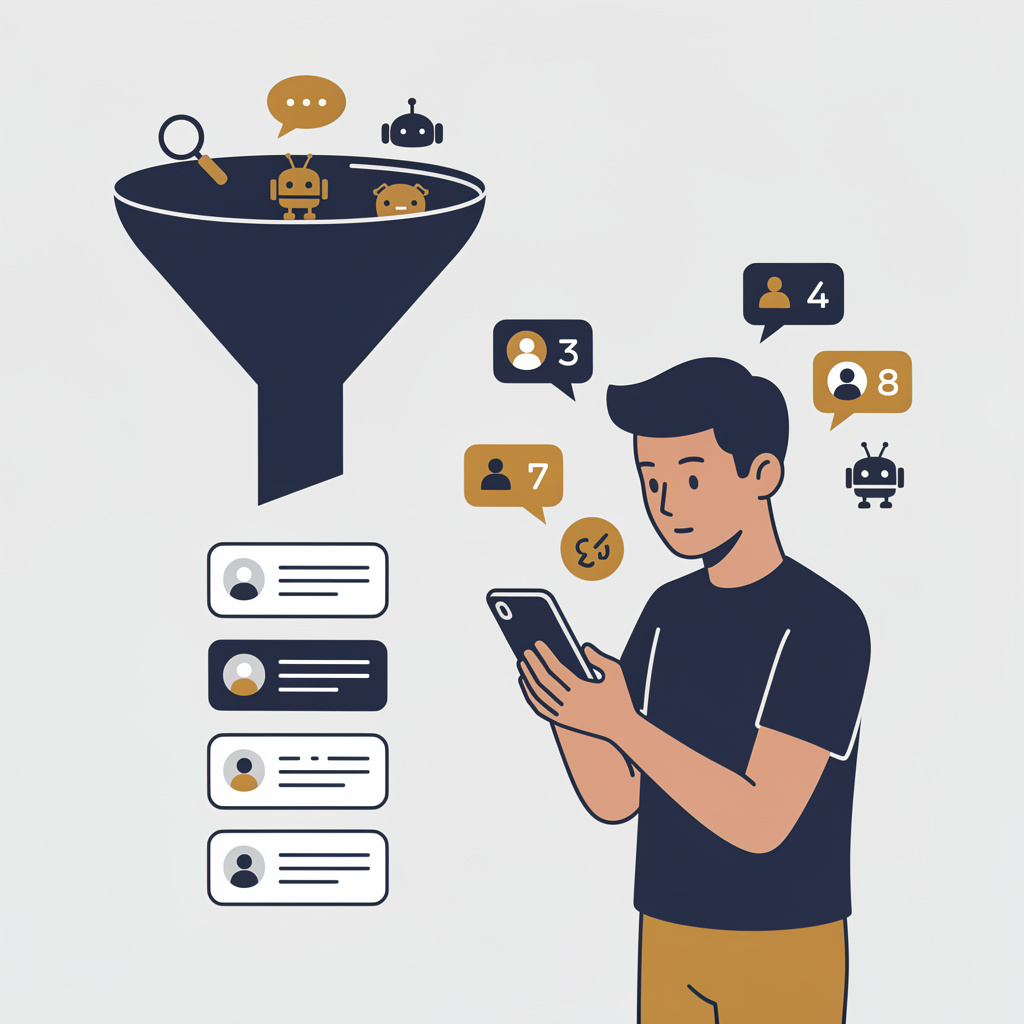
You're getting AI traffic. But do you know where it comes from?
RankControl credits every visit to the assistant that sent it: ChatGPT, Perplexity, Claude, Gemini, Copilot, or Grok. Full source attribution, next to your Google traffic.
The Behavior Shift Underneath It All
Step back far enough and hybrid compute is teaching users a habit: ask your machine first, and let it decide whether the world needs to know you asked. Every improvement to local models moves that boundary outward, and every boundary move shrinks the observable web a little more.
For brands, the right response is bookkeeping honesty rather than panic. Count on seeing less, earn your place in what the models remember, stay effortlessly fetchable for what escalates, and measure the answers instead of the traffic. The queries are going quiet. Your visibility doesn't have to.
We'll show you exactly where your brand stands in AI search.
No commitment. $0 due today, cancel anytime. See how ChatGPT, Perplexity, Claude, Gemini, Grok, and Google AI Mode talk about your brand today.