
The check hasn't cleared, and the signal already has. Reuters reported on August 24, citing The Information, that Nvidia is discussing an investment in Perplexity at a valuation above $30 billion, extending a bet it already holds. One day later, Perplexity launched Portable Computer exclusively on Nvidia's DGX Spark. Nvidia and Perplexity investment talks make a tidy headline about two companies. The more useful reading is about a market: AI search valuations keep rising because the money has decided this is the next distribution layer, and distribution layers get expensive early.
What's Actually on the Table
The sourcing first, because reported talks deserve hedged language. Reuters' report puts Nvidia in discussions at a valuation above $30 billion; no terms confirmed, no announcement since. Nvidia already backs Perplexity, so this would deepen a position, and the strategic logic showed itself within twenty-four hours when Perplexity's flagship local product shipped on Nvidia hardware.
Read the pairing plainly. Nvidia needs businesses to want inference machines on desks, and a genuinely useful local agent is the best sales pitch that hardware has ever had. Perplexity gets capital plus a distribution channel made of silicon. Whether this particular deal closes at this particular number, the alignment is already operating in public.
The Stack the Money Is Buying
A $30 billion answer engine sounds absurd until you list what Perplexity actually assembled in eighteen months. Search with citations was the 2024 story. The Comet browser arrived in 2025 and turned answers into an environment. Perplexity Computer landed in February 2026 as a general-purpose work agent, then grew licensed finance data connectors, a self-improving memory system, email delegation, and finally a fully local version on Nvidia hardware in August.
There's a legal moat forming too. Amazon lost its US court bid in early August to ban Perplexity's AI shopping tools, the ones that shop on a user's behalf inside Amazon itself. That ruling echoes far past retail: agents acting for users inside incumbent platforms now have room to operate, and every layer of Perplexity's stack gets more valuable in a world where that's settled.
Not gonna lie, the search box, the thing that made Perplexity famous, is now the least interesting part of the company. The valuation prices the workflow around it.
Your competitors are building backlinks while you read this.
Organic outreach, social mentions, and link exchanges, with managed backlinks available as an add-on. Grow your domain authority without running the campaign yourself.

The Switzerland Strategy
One more layer investors see that casual observers miss: Perplexity has quietly become model-neutral infrastructure. Its late-August update alone added GPT-5.6 Terra and Luna, Grok 4.6, DeepSeek V4 Pro, Kimi K3, and Nvidia's own Nemotron to the model picker, alongside the Claude models already there. Users pick the brain; Perplexity owns the workflow, the memory, the connectors, and the interface wrapped around it.
That's the aggregation position, and markets have always paid premiums for it. Whichever lab wins any given quarter's model race, the aggregator captures the usage. It also explains why the labs keep selling to it anyway: distribution is distribution, even when it belongs to someone else.
For marketers there's a subtle consequence hiding in that model roster. The same Perplexity user can get answers assembled by five different underlying models in one afternoon, each with its own source preferences. Your visibility inside one platform is already a multi-model problem, which is one more reason single-snapshot audits mislead.
Why the Money Keeps Coming
What does a price like that actually buy? Strip it to the investment thesis. Query behavior is migrating from ranked links to assembled answers, and whoever owns the assembly owns the referral. That's the same position Google monetized into one of history's great businesses, which is why capital treats AI search less like a product category and more like a land rush. Add the enterprise angle, licensed data feeding professional research, and the hardware angle, local inference creating a new device market, and the bull case writes itself.
Skeptics point at the same facts and see circularity: the chip vendor funding the company that showcases its chips. Both readings can be true at once. What matters for anyone reading this blog is narrower and more practical: funded engines ship, and shipping reshuffles answers.
What Rising Valuations Mean for Your Visibility Work
This won't land without the mechanism spelled out, so here it is. Capital converts into engineering, engineering converts into model updates and retrieval changes and data deals, and every one of those events reshuffles who gets cited. We watched a single model update erase a top citation source in four days this quarter. A war chest guarantees more such weeks, across more engines, on shorter cycles.
Three consequences worth acting on.
- The measurement cadence is now weekly, permanently. Quarterly visibility reviews were built for a search world that moved quarterly. Cross-engine citation tracking is the only instrument matched to how fast funded engines actually change.
- Early positions compound. User bases grow into well-funded platforms, and memory systems bank early source impressions. A citation slot earned while your competitors ignore an engine is the cheap version of the slot they'll fight for in eighteen months.
- Spread across engines deliberately. Investment concentrates unevenly, engines diverge in behavior, and your buyers spread across all of them. Single-engine strategies inherit single-engine risk.
The manual version of that program is a standing few-hours-a-week commitment. RankControl's agents run the tracking across every major engine continuously, so the reshuffles that follow funding rounds show up as alerts on your dashboard instead of mysteries in your pipeline.
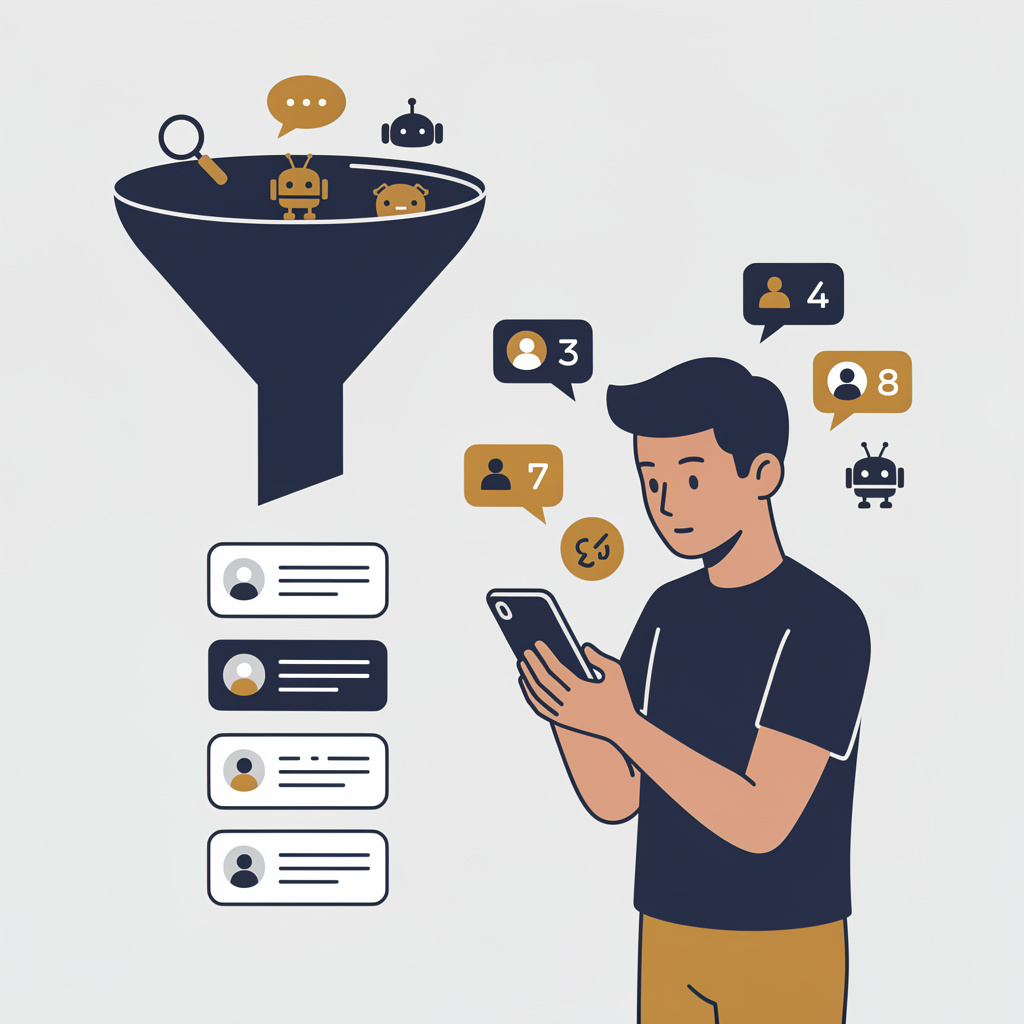
You're getting AI traffic. But do you know where it comes from?
RankControl credits every visit to the assistant that sent it: ChatGPT, Perplexity, Claude, Gemini, Copilot, or Grok. Full source attribution, next to your Google traffic.
The Watch List
Four things settle this story's next chapter. Whether the Nvidia deal closes, and at what number, tells you how convinced the smartest hardware money is. Whether OpenAI and Google respond with their own edge-hardware moves tells you if local AI becomes a front. Whether the shopping-agent ruling holds up tells you how far agents can reach into incumbent platforms. And whether Perplexity's revenue mix leans subscription or advertising tells you whose interests its answers will ultimately serve.
None of those outcomes change the practical takeaway, which is the boring one: the engines answering your buyers' questions are better funded and faster-moving every quarter, and less alike each time you look. Position early, measure weekly, diversify deliberately, and let the valuations be someone else's problem.
We'll show you exactly where your brand stands in AI search.
No commitment. $0 due today, cancel anytime. See how ChatGPT, Perplexity, Claude, Gemini, Grok, and Google AI Mode talk about your brand today.