
The ads are coming gradually, then internationally. On August 11, OpenAI expanded its ChatGPT ads testing beyond the US to additional countries, the biggest step yet in a rollout it has managed with unusual caution, publishing principles in January before a single ad ran and testing quietly in the US through spring. Now comes the international turn. ChatGPT ads testing expanded quietly compared to the February firestorm, but for marketers the compounding fact is the same: the largest new answer surface in a generation is getting a paid layer, and everyone selling anything needs a position on it.
The Timeline That Actually Matters
The dates tell a strategy. January 16: OpenAI publishes ad principles before showing an ad, with Sam Altman spelling out the core commitments personally. February 9: the test goes live for a subset of free and Go users in the US, with ads labeled as sponsored and visually separated from responses.
We’re starting to roll out a test for ads in ChatGPT today to a subset of free and Go users in the U.S. Ads do not influence ChatGPT’s answers. Ads are labeled as sponsored and visually separate from the response. Our goal is to give everyone access to ChatGPT for free with https://t.co/S9BV24uJLb
 OpenAI@OpenAIFeb 9, 2026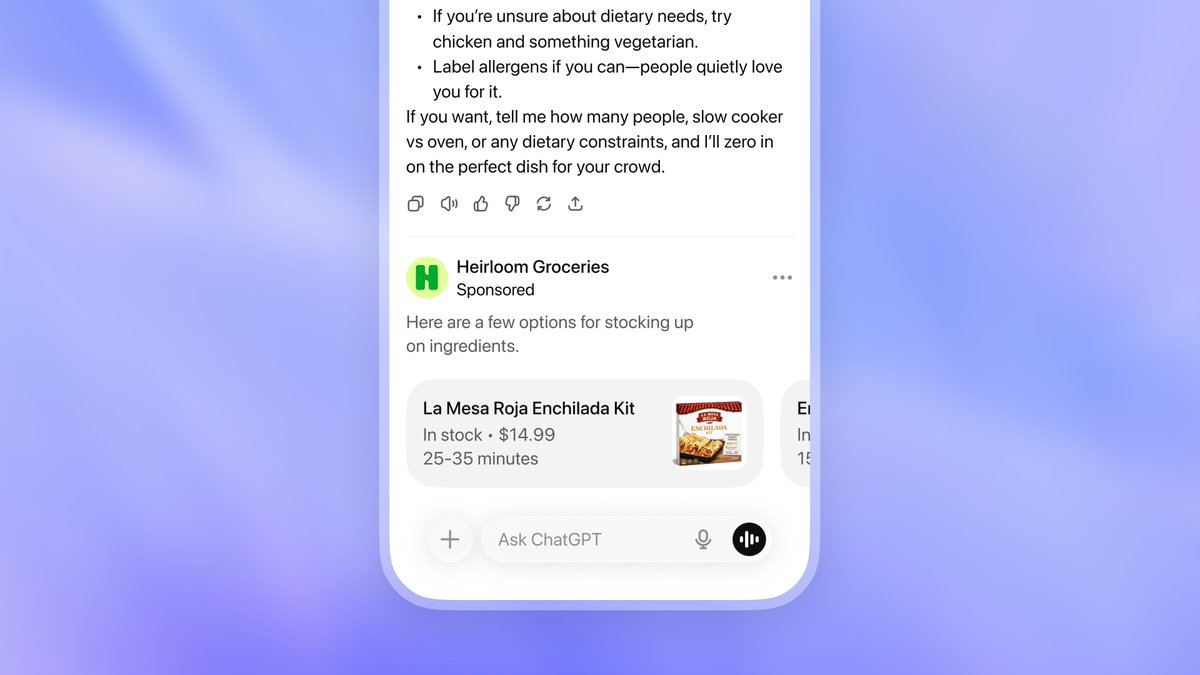
Then months of quiet iteration, a podcast explaining the principles, and the August 11 expansion to additional countries with restated notes on answer independence and privacy. This is a company that watched decades of search-ads backlash and is trying to speedrun the trust curve in reverse: rules first, inventory later.
February also produced the spiciest exchange in the category, when Anthropic ran ads portraying chatbot advertising as inherently corrupting and Altman fired back that OpenAI would obviously never run ads the way the parody depicted. File that spat away; it tells you the AI labs consider ad trust a competitive weapon, which shapes how conservatively this rollout will continue.
The Principles, and the Asterisk
OpenAI's stated rules are genuinely marketer-relevant. Ads never influence the answer. Sponsored content is labeled and visually separate. Conversations stay private from advertisers. Ads appear only in free and Go tiers, funding wider free access.
We are starting to test ads in ChatGPT free and Go (new $8/month option) tiers. Here are our principles. Most importantly, we will not accept money to influence the answer ChatGPT gives you, and we keep your conversations private from advertisers. It is clear to us that a lot
 Sam Altman@samaJan 16, 2026
Take the principles at face value and one structural fact still towers over everything: the organic answer remains the product. A sponsored unit beside an answer is a banner ad with better real estate. The answer itself, the sentence that says which tools are worth considering, stays earned, decided by the trust-first source selection that reshuffled citations this quarter. The asterisk is durability: ad businesses historically grow toward the content, and whether the separation holds at real revenue scale is the single most important thing to monitor in AI search over the next year.
Know exactly what AI says about your competitors.
RankControl's Recon Agent monitors competitor citations across ChatGPT, Perplexity, Claude, Gemini, Grok, and Google AI Mode. See where they show up and you don't.

What This Means for B2B Specifically
I'm getting ahead of myself, though. Before strategy, one question: who actually sees these ads? Mostly not your buyers, and that changes the read entirely.
Ads live in free and Go. Plus, Pro, Business, and enterprise tiers stay ad-free, and those are precisely the tiers professional buyers research on during work hours. For B2B SaaS, the paid-tier answer, where no sponsored slot exists at all, is decided one hundred percent by organic authority. Every dollar of visibility in that surface is earned, and the citations you're building now are the only currency it accepts.
The free tier matters differently: top-of-funnel education and the commercial-intent queries of smaller buyers, plus the students who become next year's champions. If sponsored slots start absorbing those, expect category incumbents to buy them first, which makes your organic presence in the same answers the low-cost counterweight. The dynamic should feel familiar; it's the SERP playbook, replayed on a new surface, with one big difference: there's no page two to fall back to.
The Tier Ladder Is a Targeting Map
Step back and look at the pricing architecture the ads slot into, because it segments the audience more cleanly than any ad platform's targeting menu. The Go tier launched at $8 a month as the cheap, ad-supported rung. Free sits below it, also with ads. Above them, the ad-free ladder climbs through Plus and Pro to Business, where OpenAI added premium seats at the hundred-dollar mark in August.
That spread, zero-with-ads to a hundred-ad-free, sorts users by willingness to pay before an advertiser spends a cent. Consumer attention pools in the ad tiers. Professional intent concentrates in the ad-free ones. When a self-serve platform eventually opens, the demographic reality underneath it is already set: ChatGPT ads will be a consumer reach product first, and B2B demand capture will keep running through the organic answer on tiers money can't touch.
Plan your channel mix around that split now and the eventual launch announcement becomes a detail instead of a decision.
Four Preparations That Cost Almost Nothing
- Baseline your category's answers now. Record how ChatGPT answers your buyers' questions today, pre-ads, across tiers. When sponsored slots arrive in your category, you'll want the before picture.
- Track the answer surface weekly. Sponsored presence, citation shifts, description changes, and tier differences all land unannounced. Weekly cross-engine tracking is the difference between noticing and being told by your board.
- Set your ad trigger in advance. Decide now what evidence would make you test ChatGPT ads if a self-serve platform opens: which categories, what proof of incrementality, what budget cap, and who owns the call. Pre-decided triggers beat launch-week improvisation.
- Double down on the unpaid slot. The answer itself can't be bought, on any tier, under OpenAI's own rules. Structured content, verifiable claims, earned mentions, and consistent entity facts keep compounding regardless of what happens to the ad layer.
To be honest, the fourth item is the whole strategy in disguise. RankControl's agents track how every major engine answers your category's questions each week, which covers items one and two without anyone on your team screenshotting chatbots on a Friday.
26 content formats. Published on your domain. Matched to your brand.
Guides, comparisons, listicles, case studies, and more. RankControl generates content that gets cited by ChatGPT, Perplexity, Claude, Gemini, Grok, and Google AI Mode.

Watch the Separation
The story to follow from here has one plot: does the wall between ads and answers hold? OpenAI has staked its credibility on yes, its fiercest rival is betting marketing dollars on doubt, and regulators who spent a decade relitigating search ads are watching with well-worn playbooks.
Marketers don't get a vote, but they do get a hedge. Organic authority works whether the wall holds or leaks. Build the position that wins in both futures, measure it weekly, and let the ad philosophers argue on your behalf.

Your competitors are getting cited by AI. You're not.
Every day without citation tracking is a day your competitors pull ahead in ChatGPT, Perplexity, and Claude.