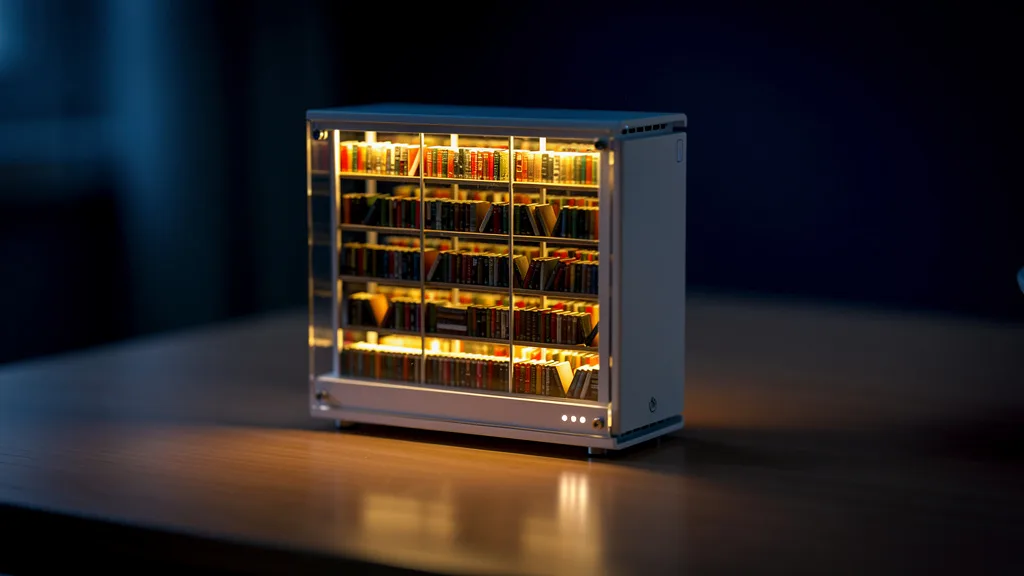
Perplexity put its whole agent on a desk. On August 25 the company launched Portable Computer on Nvidia DGX Spark: a fully local version of Perplexity Computer where every layer of the agent stack, from the orchestrator model down to the harness, runs on local hardware with no cloud dependency. Perplexity says the on-device 27B setup scores 85.4% on its knowledge-work evaluation. The Perplexity Portable Computer pitch is privacy and control. The side effect nobody's pricing in yet: local-first AI answers questions differently, and that changes who gets cited.
Today we’re launching Portable Computer on @NVIDIA DGX Spark. Portable Computer is a fully local version of Perplexity Computer, where the entire runtime: orchestrator LLM, subagent LLM, agent harness all run on your local hardware. No cloud dependency. https://t.co/plVWz5PaAw
 Perplexity@perplexity_aiAug 25, 2026
What Perplexity Actually Built
The engineering detail matters more than the headline. Perplexity's team was blunt that small models fail inside harnesses built for frontier models, so Portable was designed as a matched pair: a minimal system prompt, skills that load on demand, connectors as compact CLI tools instead of MCP servers, self-verification steps, and an always-on sandbox. Escalation to the cloud exists for tasks that outgrow the box, but the default path stays on the device.
Two weeks later the same direction reached consumer hardware, with Hybrid Compute on Mac splitting work between local models and the cloud while sensitive files stay on the machine. One launch is a workstation product. Two launches in a fortnight is a strategy.
Hold on, I need to explain something first: why a marketer should care about inference hardware at all. every lab is under the same pressure to cut inference cost and answer privacy objections, and local execution does both. Treat Portable as the first production glimpse of a pattern the whole industry is walking toward.
The Nvidia Subplot
The timing around the launch deserves a raised eyebrow. One day before Portable shipped, Reuters reported that Nvidia was discussing an investment in Perplexity at a valuation above $30 billion. The next morning, Perplexity launched its flagship local product exclusively on Nvidia's DGX Spark.
Read those two headlines together and the incentive structure snaps into focus. Nvidia needs reasons for businesses to buy inference hardware for the desk, and a genuinely useful local agent is the best reason anyone has shipped so far. Perplexity gets distribution and capital. Each DGX Spark that lands on an analyst's desk is another buyer whose research happens off-cloud.
That's why I'd bet on this category getting cheaper and louder fast. When the hardware vendor with the deepest pockets in the industry treats local agents as a go-to-market, the workstation version is the expensive first draft. Smaller boxes follow. And every box that ships moves another slice of buyer research into the dark.
Small Models Cite Differently
Look: a 27B model doing knowledge work knows dramatically less than a frontier model, and the harness around it is built lean on purpose.
That reshapes source selection in four concrete ways.
- Retrieval carries more weight. A small model can't paper over gaps with memorized knowledge, so what it fetches is what it answers with. The quality of your page's structure stops being a nice-to-have and becomes the whole ballgame.
- Fewer sources get consulted. Lean harnesses with on-demand skills don't fan out across thirty tabs. When the shortlist is five sources instead of twenty, the difference between being source three and source eight is the difference between cited and invisible.
- Self-verification filters the fluffy. Portable runs verification steps before finalizing work. Claims with dates, numbers, named sources, and traceable origins survive that pass. Unattributed thought leadership doesn't.
- Training-data presence becomes a moat. Whether a 27B model recognizes your brand at all depends on the corpora it learned from. Getting into the training data was already worth doing for frontier models. For small local models it's closer to existential.
To be fair, nobody outside Perplexity has published citation distributions for Portable yet. The mechanics above follow from the architecture, and the architecture is public.
Your competitors are building backlinks while you read this.
Organic outreach, social mentions, exchanges, and done-for-you link building. Four ways to grow your domain authority on autopilot.
The Dark Research Problem
Now the uncomfortable part for anyone who reports marketing numbers.
A buyer asking a cloud engine about your category leaves traces: impressions somewhere, sometimes a referral click. A buyer asking a local agent leaves nothing. The query never crosses the network. No analytics platform on earth records it, and the first time you learn that research happened is the demo call, if you're lucky. How do you attribute a deal that researched you on hardware you can't see into?
Local-first AI grows exactly the segment of research you can't observe: the security-conscious enterprise, the regulated industry, the legal team that bans cloud tools, the founder who put an agent on a workstation precisely so nothing leaks. Which is to say, frequently your best buyers.
In my experience, teams already underestimate how much AI-mediated research precedes the first touch they can see. The agentic browser wave made some of that research at least infrastructure-visible. Local agents remove even that. What remains measurable is the output side: what engines say about you, and whom they cite, when asked the questions your buyers ask.
What To Do About It
The response list is short because most of it is discipline you should already have.
Write for extraction and verification first. Direct answers under question-shaped headings, real dates on claims, numbers with origins, sources a verifier can chase. Our 90-day llms.txt experiment across 12 sites taught us that machine-facing plumbing helps at the margins while extractable page structure does the heavy lifting. Small verifying models will sharpen that split.
Stay broadly crawlable. Local models get refreshed from somewhere. Blocking crawlers or thinning your public footprint quietly writes you out of the next distillation cycle.
Watch citations, since analytics won't warn you. With a growing slice of research going dark, cross-engine citation tracking turns from a reporting nicety into the primary instrument. If Perplexity's hosted engine describes you one way today, that's your best proxy for what its local sibling will say from the same lineage. Checking that weekly by hand across engines takes a few hours. RankControl's agents run it continuously and flag when an engine's description of you drifts.
Resist the urge to chase the hardware. You can't optimize for a box you can't see into. You can make sure every pathway into it, from training corpora to live retrieval, meets content that answers cleanly.
You're getting AI traffic. But do you know where it comes from?
RankControl tracks every visit from ChatGPT, Perplexity, and Claude. Full source attribution, down to the prompts you're recommended for.
The Pattern Worth Watching
Portable Computer is one product on one Nvidia box. The direction it points is bigger: routine knowledge work migrating onto small local models, with the cloud reserved for what genuinely needs it. Every step down that path moves buyer research further from your analytics and concentrates citations among fewer, cleaner, more verifiable sources.
The teams that win that shift will be boringly consistent: extractable content, verifiable claims, broad presence, weekly measurement. The teams that lose it will be the ones still waiting for referral traffic to tell them what happened.
We'll show you exactly where your brand stands in AI search.
No commitment. No credit card. See how ChatGPT, Perplexity, Claude, and Gemini talk about your brand today.