
A buyer at a 300-person company asks ChatGPT for the best onboarding tool for a remote sales team. It names five products, and she books demos with three of them. If you're not one of the five, you never find out the deal existed.
That scenario is ordinary now. G2's 2026 Buyer Behavior Report found that 82% of B2B software buyers had sourced recommendations from an AI chatbot in the previous 24 months. That's why B2B SaaS marketing teams are shopping for generative engine optimization tools, and why the category filled up with dozens of products in about a year.
We read five recent Reddit threads where marketers asked which GEO tool to use. A striking share of the replies came from founders pitching their own small tools. The genuine answers kept landing on two complaints: prices that are hard to justify, and scores that bounce around from one day to the next. The list below is built with both of those in mind, and every price was checked on the vendor's own site on September 26, 2026.
The short list
| Tool | Starting price with AI tracking | AI engines at that price | Writes and publishes content |
|---|---|---|---|
| Semrush AI Visibility Toolkit | $99/mo per domain, billed yearly | 4 | No |
| RankControl | $400/mo, one plan | 6 | Yes, on your CMS |
| Profound | Custom (7-day trial) | 3 on trial, up to 9 on Enterprise | Drafts via credit-based agents |
| Ahrefs Brand Radar | Included with Ahrefs Lite at $129/mo; index from $199/mo | 6, plus Claude on custom prompts | No |
| AirOps | Not published | 1 on Solo, "7+" on Pro | Yes |
| Writesonic | $79/mo, billed yearly | 3 | Drafts; WordPress export |
| Peec AI | $95/mo | Any 3 of 14 | No |
| Frase | $49/mo ($39 yearly) | 2 | Yes, four CMSs |
What a SaaS team should look for
B2B buyers don't take the chatbot's word for it. TrustRadius's 2026 buying report, released in July, found 63% of buyers used AI during their purchase journey, and 94% of those fact-checked its answers at least some of the time. So the answer gets them to a shortlist, and your own comparison pages, integration docs and review profiles are what they check next.
That shapes what a GEO tool needs to do for a SaaS team. It has to track the prompts that build shortlists, like "best X for Y" and "X alternatives", across the engines your buyers use. It should show which sources the answer leaned on, and ideally it helps you publish the pages those answers cite. Very few tools on the market do that last part.
Know exactly what AI says about your competitors.
RankControl's Recon Agent monitors competitor citations across ChatGPT, Perplexity, Claude, Gemini, Grok, and Google AI Mode. See where they show up and you don't.

The 8 best generative engine optimization tools for B2B SaaS
1. Semrush AI Visibility Toolkit
Semrush's toolkit is the default starting point for a reason. It costs $99 a month per domain on annual billing and tracks your brand across ChatGPT, Google AI, Gemini and Perplexity. You get 25 custom prompts with daily AI rankings, competitor analysis, prompt research and a site audit for AI readiness, and it sits next to the keyword and backlink data your team probably already uses.
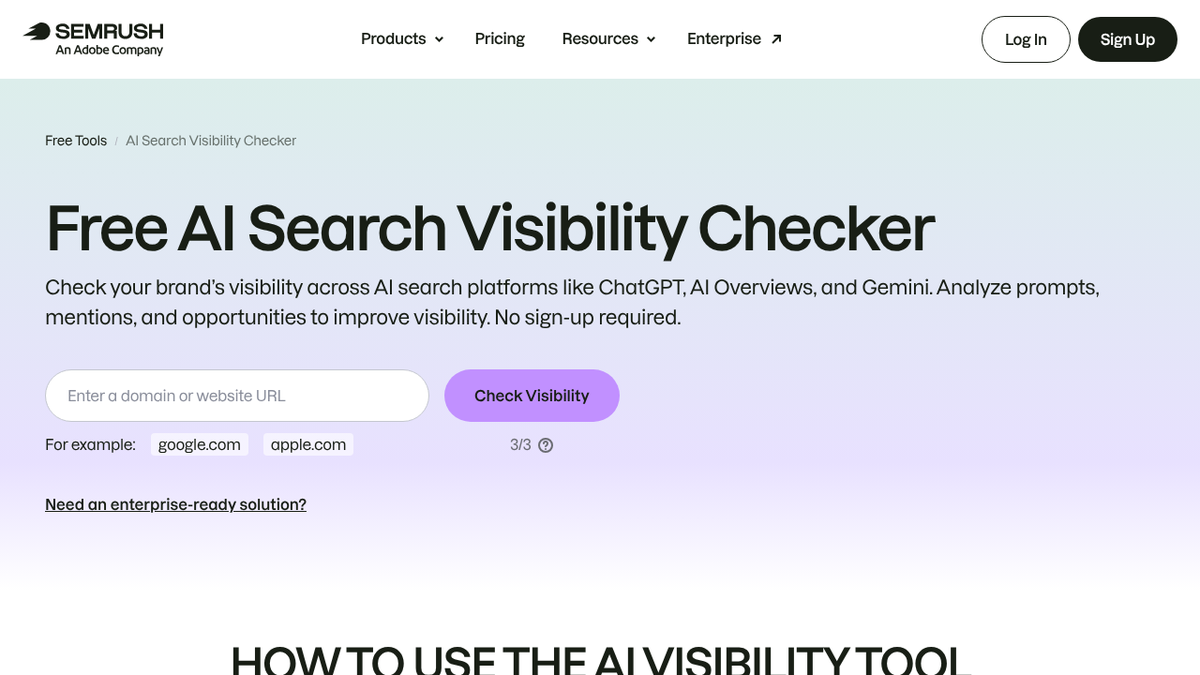
It doesn't track Claude or Grok, and it doesn't write or publish anything. There's a 7-day free trial.
2. RankControl
We built RankControl for the step after the dashboard: getting the pages that earn citations written, published and checked. You name the topics you want to own, and it plans titles from the questions your buyers search. Its content engine then writes each article in your brand's voice against the pages already ranking, including the comparison and alternatives pieces that SaaS shortlists are built from.
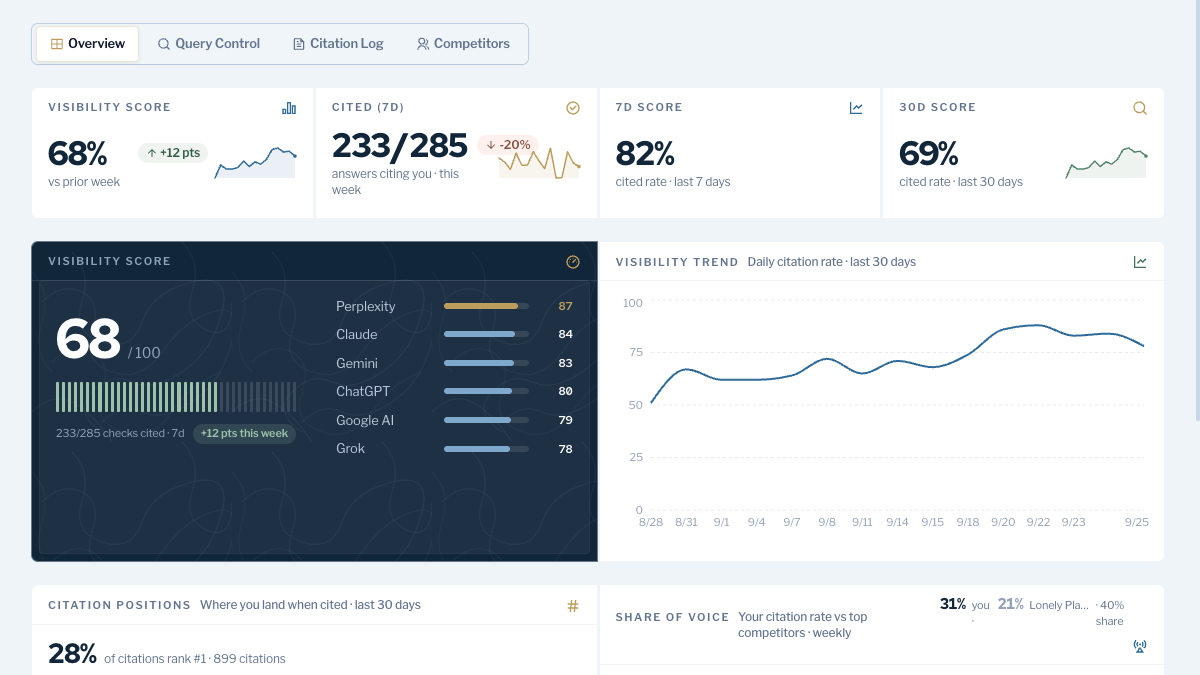
Articles go out as native posts through the destination you connect, and AI visibility tracking checks 50 queries every week across six engines, Claude and Grok included. Link Control drafts backlink outreach from your own mailbox. It's one plan at $400 a month with 100 pages and five seats, and a 7-day free trial. Auto-publish is off by default.
3. Profound
| Profound | |
|---|---|
| Price | Custom Enterprise pricing; agency workspaces at $399/mo each |
| Trial | 7 days, 50 fixed prompts on ChatGPT, Gemini and Google AI Overviews |
| Enterprise engines | Up to 9, including Claude, Copilot and DeepSeek; no Grok |
| Content | Credit-based agents draft content and publish to a connected CMS after approval |
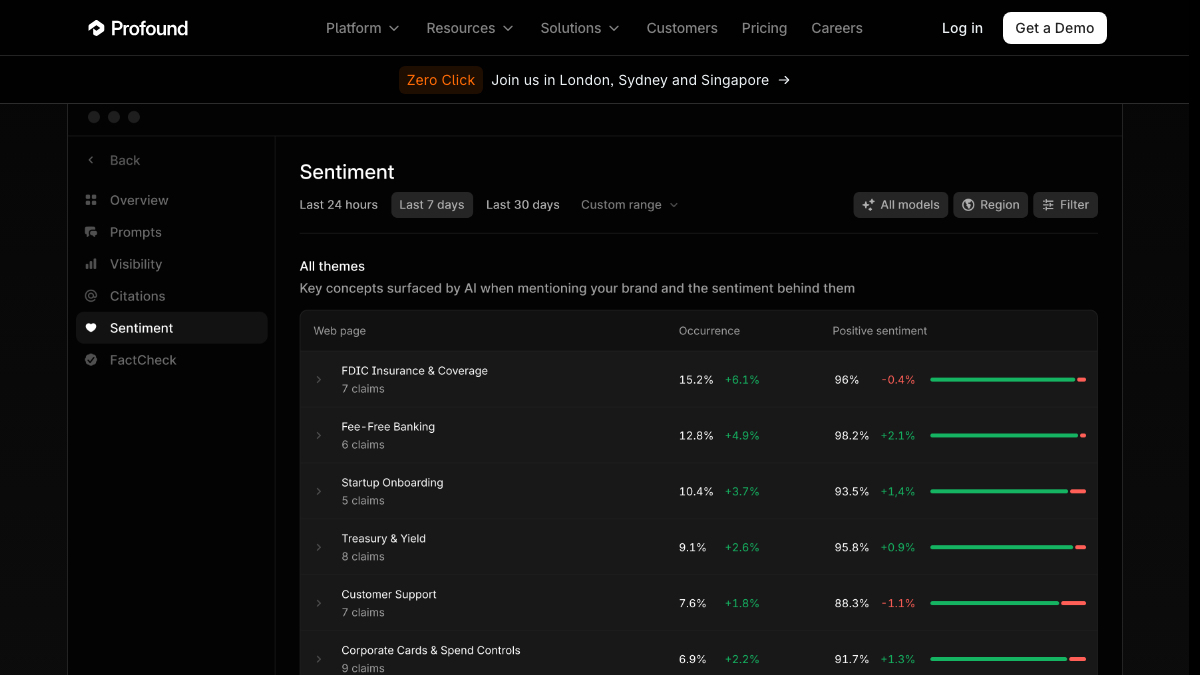
Profound is the enterprise name in this category, with deep sentiment and citation reporting. One agency marketer on r/GEO_optimization summed up the trade-off: good, but expensive enough that they use it for corporate clients and wouldn't pay for it themselves. Our RankControl vs Profound comparison goes through the plans in detail.
4. Ahrefs Brand Radar
If you already pay for Ahrefs, Brand Radar is the cheapest way in. Custom prompts come free with every paid plan, starting at five daily prompts on Lite at $129 a month. The separate AI Visibility Index starts at $199 a month and draws on a database of more than 449 million prompts across AI Overviews, AI Mode, ChatGPT, Perplexity, Gemini and Copilot.
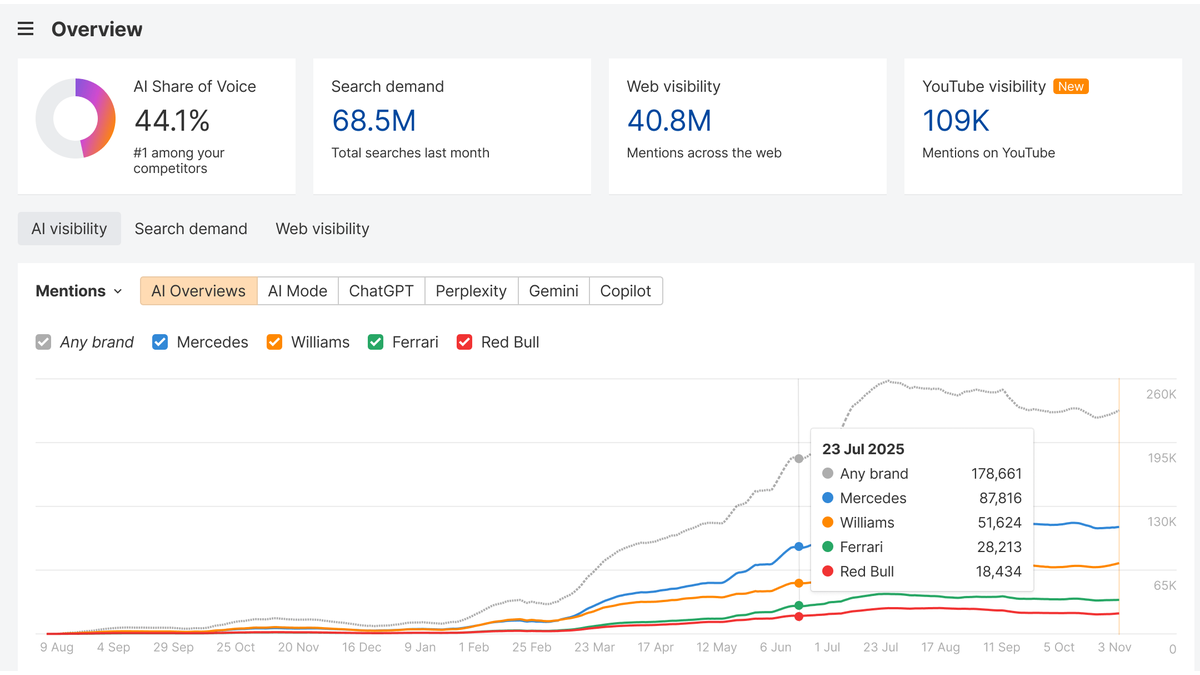
Claude is available through custom prompts, and Grok isn't covered. Like Semrush, it's a measurement tool, so the content work stays with you.
5. AirOps
AirOps pairs content workflows with AI visibility, plus a team that stays hands-on through your program. Its pricing page lists Solo, Pro and Enterprise without a single dollar figure. Solo covers ChatGPT only, and Pro promises insights across "7+ answer engines".
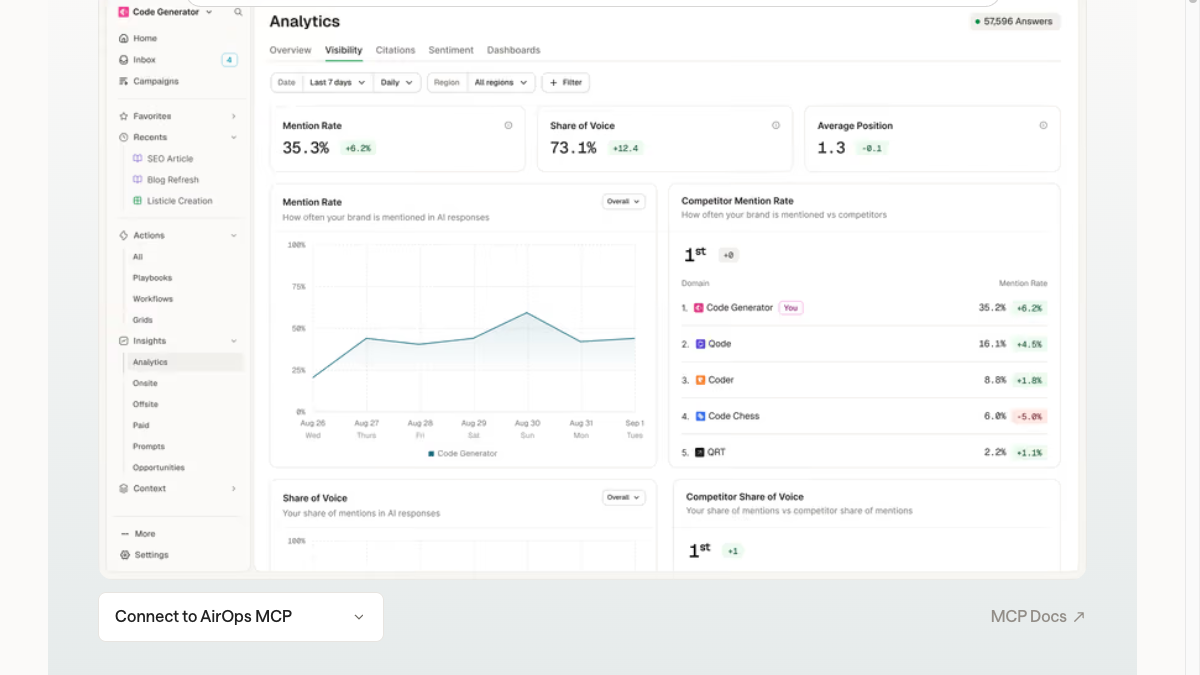
Its CMS connections include WordPress and Webflow as well as headless systems like Contentful and Sanity, which suits SaaS teams running a headless marketing site. You can start without a card, but the real price comes from a sales conversation.
6. Writesonic
Writesonic bundles tracking and drafting at a small-team price. Starter costs $79 a month billed yearly and checks ChatGPT, Gemini and Google AI Overviews daily for 50 prompts, with 15 AI articles a month. All ten platforms, Claude and Grok among them, only arrive on Enterprise.
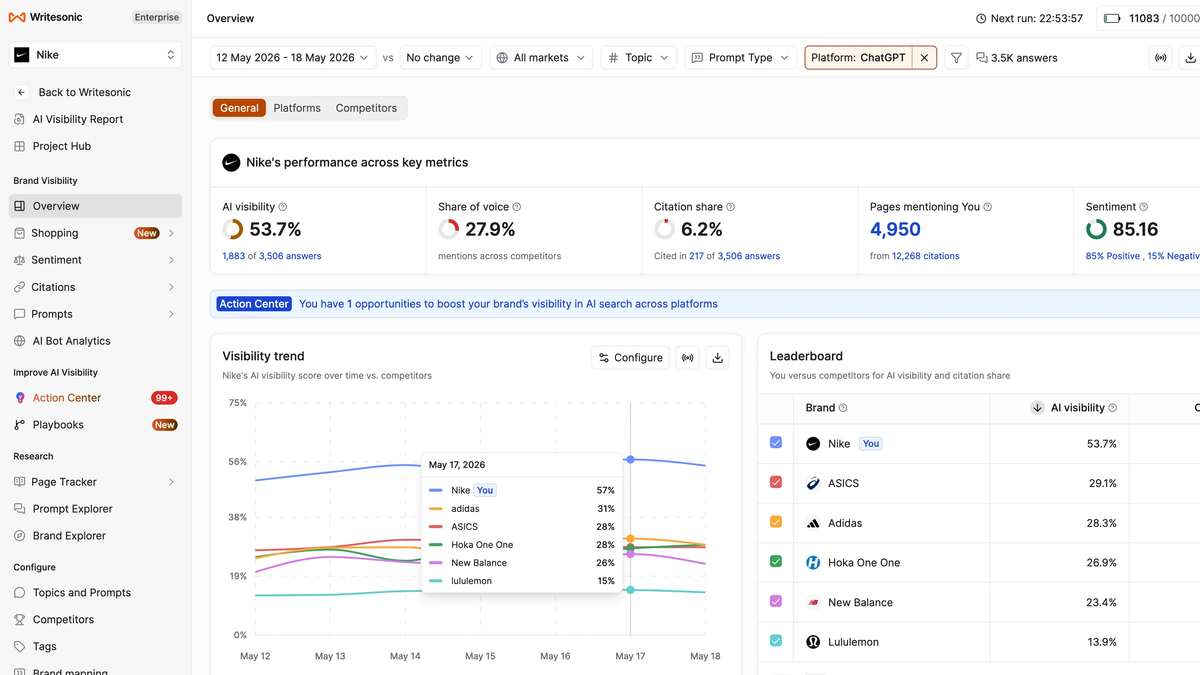
There's no card needed to start, and paid plans carry a 7-day, no-questions refund.
7. Peec AI
Peec AI is the flexible tracker. Starter costs $95 a month for 50 prompts, unlimited users and daily tracking, and you pick any three models from a list of 14 that includes Claude, Grok, Copilot and DeepSeek. That makes it the cheapest way to watch an engine the big suites skip.
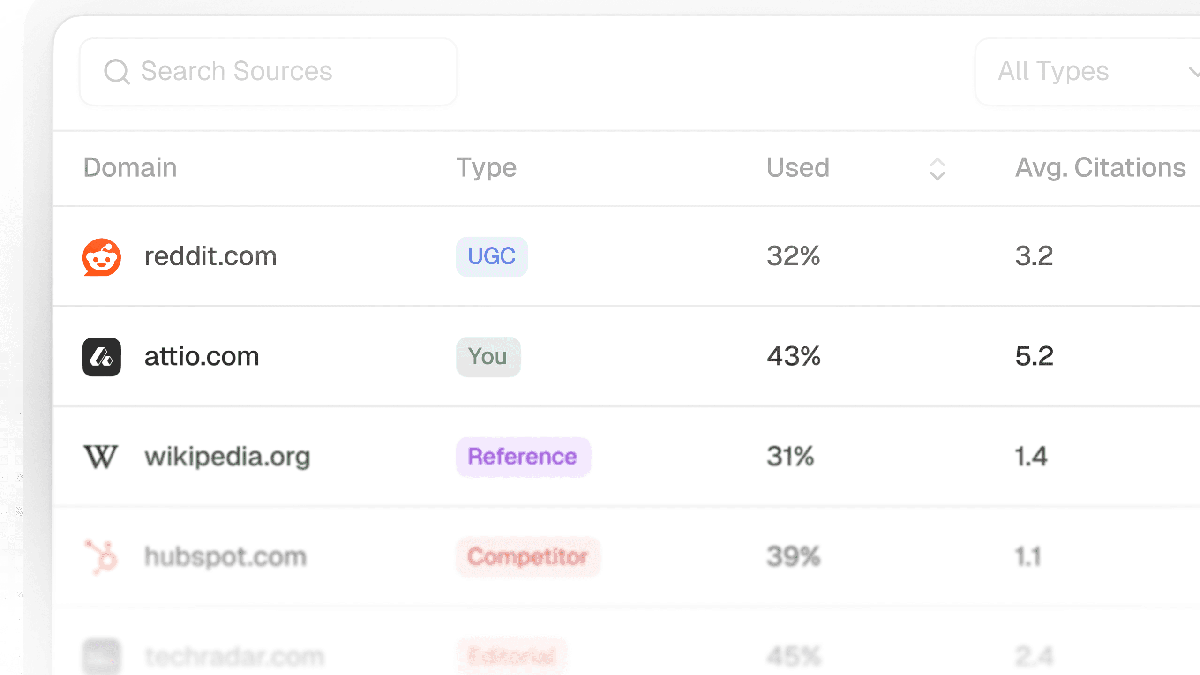
The source view is useful for SaaS teams: it separates your own domain from competitors, Reddit and reference sites in the answers you track. It doesn't create content.
8. Frase
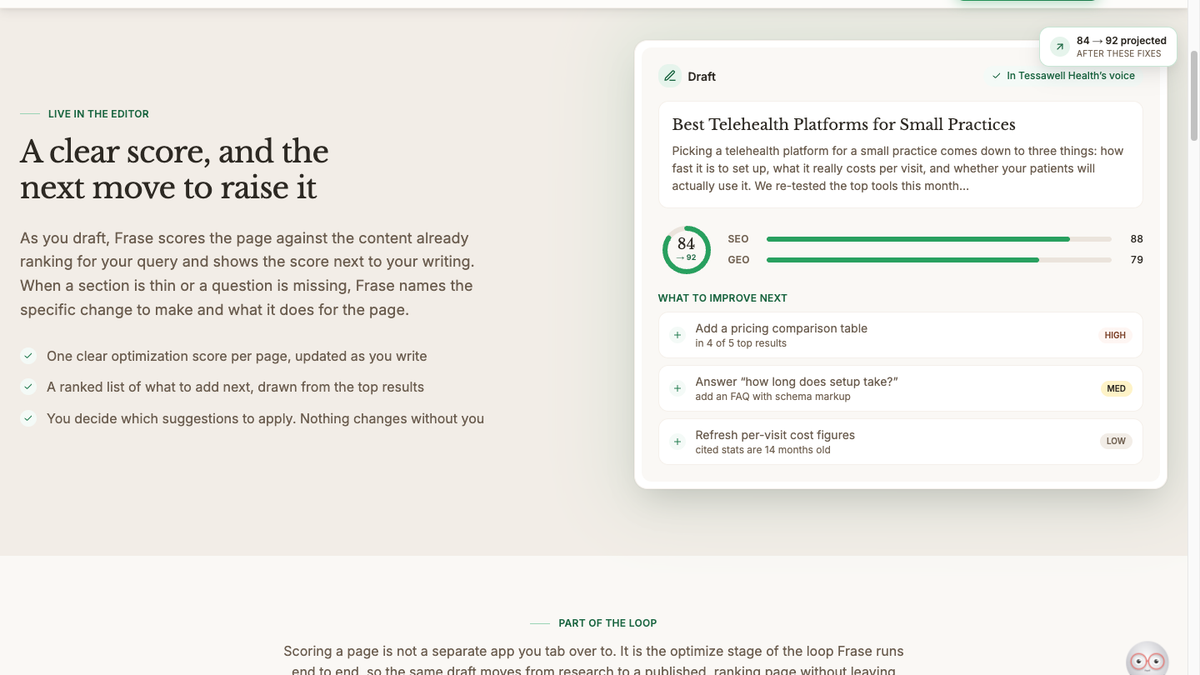
Frase is the cheapest tool here that covers the whole loop. Starter costs $49 a month, or $39 billed yearly. It covers research and briefs, an editor with separate SEO and GEO scores, and publishing to four CMSs including WordPress and Webflow. AI tracking on Starter covers ChatGPT and Google AI, and Claude and Gemini wait for the $299 Scale plan. The 7-day trial needs no card, and our Frase alternatives roundup has the full plan breakdown.
26 content formats. Published on your domain. Matched to your brand.
Guides, comparisons, listicles, case studies, and more. RankControl generates content that gets cited by ChatGPT, Perplexity, Claude, Gemini, Grok, and Google AI Mode.

The prompts to track first
Most SaaS teams start by tracking their own brand name, which tells them very little. Buyers rarely type your name into ChatGPT until you're already on their list. Track the prompts that build the list instead, grouped by where the buyer is:
| Prompt type | Example | What it tells you |
|---|---|---|
| Category best-of | "best customer onboarding software for remote teams" | Whether you make the shortlist at all |
| Alternatives | "alternatives to [market leader] for mid-market teams" | Whether switchers find you |
| Head to head | "[your product] vs [rival] for B2B support" | How engines describe you against a named rival |
| Integration | "onboarding tools that integrate with Salesforce" | Whether you pass the technical-fit filter |
| Problem | "how to cut time to first value for new accounts" | Whether you show up in early research |
Ten prompts per group gives you a set of 50, which is also the number RankControl checks every week on its plan. Keep the wording frozen once you start, or the trend line stops meaning anything.
The answer is only the start of the buyer's research. The 6sense 2025 Buyer Experience Report surveyed nearly 4,000 buyers and found 94% used LLMs during the process. Buyers still averaged about 16 interactions with the vendor they chose, a number that barely moved from earlier years.
The variance problem
Every tool on this list faces the same limit. AI engines don't give the same answer twice, so a single day's visibility score tells you very little. Rand Fishkin put the question to the test in January, asking ChatGPT for the same product recommendations 100 times to see whether the list ever repeats.
NEW research: https://t.co/yE1LogIFHO If you give ChatGPT the same request for product recommendations 100X, will you ever get the same list twice? And what does that answer mean for folks who try to track their brand presence in AI tools? Finally, some real answers 🧐 https://t.co/r8R7IMSJm5
 Rand Fishkin (follow @randderuiter on Threads)@randfishJan 28, 2026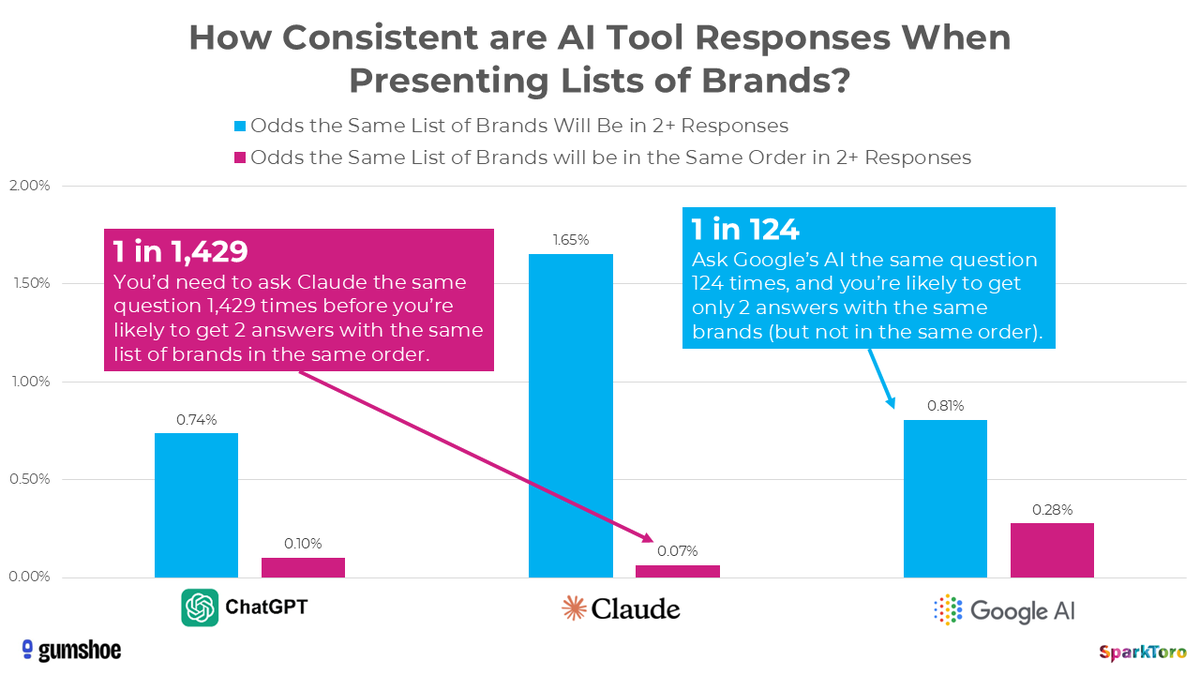
The practitioners in those Reddit threads handle it the same way. One reply that stuck with us said most GEO tools are "running a list of prompts on a schedule and charting how often you show up." Several others suggested counting a mention only when it appears in two of three runs.
What GEO (Generative Engine Optimization) tools have you actually used and found effective?
I’m looking to hear from people who have actually tested GEO tools in real SEO workflows—not just tools that claim to improve AI visibility. Which tools have you used for things like: * Tracking brand mentions/citations in AI search * Monit...
We'd read any GEO dashboard the same way: fix your prompt set, and judge the trend over four to eight weeks. A daily number mostly adds noise. RankControl checks weekly and keeps a citation history per engine, and it sends a notification when a new citation lands.
The work the dashboards leave to you
Say the tracker shows a competitor winning "best CRM for agencies" and "HubSpot alternatives for startups". For a SaaS team, winning those usually takes a set of pages, and roughly this much time per page:
- Research what the answers cite and what they're missing: 45 minutes.
- Write a comparison or alternatives page with real pricing and product detail: four to five hours.
- Add internal links, screenshots, a meta description and FAQ markup: about an hour.
- Publish it and pitch it to two or three relevant sites: two to three hours.
Call it eight to ten hours per page. Five pages a month, which is a modest program for a SaaS category, adds up to 40 to 50 hours. We've written about why comparison pages and alternatives pages earn so many AI citations, and neither page type writes itself.
You can do all of it by hand, with any tracker on this list telling you where to aim. Or RankControl's agents can plan, write, publish and track it every month while you focus on the product.
Which GEO tool fits your SaaS team?
The answer depends on who does the work after the dashboard updates.
- You already pay for Semrush and want tracking: Semrush AI Visibility Toolkit.
- You want the pages written, published and tracked on six engines: RankControl.
- You're an enterprise brand with a budget for deep reporting: Profound.
- You already pay for Ahrefs: Brand Radar.
- You want a vendor's team working alongside yours: AirOps.
- You want tracking and drafts at a small-team price: Writesonic.
- You need Claude or Grok tracked without an enterprise contract: Peec AI.
- You write everything yourself and want the cheapest loop: Frase.
If you're not sure where your brand stands today, run a free check of your brand in AI answers before you buy anything, and write down the result as your baseline.

Your competitors are getting cited by AI. You're not.
Every day without citation tracking is a day your competitors pull ahead in ChatGPT, Perplexity, and Claude.