
Your CMO wants to know what ChatGPT says about the company. Sales wants to know whether AI answers are sending any leads. The web team wants to know why AI crawlers keep hitting the pricing page. Those are three different questions, and no single tool answers all of them.
That's why this list of AI search tools for B2B marketing teams is organized by job instead of by vendor. It covers four jobs: tracking what AI answers say about you, getting your pages cited, measuring the traffic AI answers send, and controlling which AI crawlers can read your site. Several of the best options are free, from Google, Bing and Cloudflare, so start there before you pay for anything.
The short list
| # | Tool | Job | Starting price | One real limit |
|---|---|---|---|---|
| 1 | Semrush AI Visibility Toolkit | Track AI answers | $99/mo add-on | No Claude or Grok |
| 2 | RankControl | Track and get cited | $400/mo | Checks weekly, not daily |
| 3 | Ahrefs Brand Radar | Track AI answers | From $50/mo | Monitoring only |
| 4 | Frase | Get cited | $39/mo (yearly) | Claude and Gemini need the $239 plan |
| 5 | Google Search Console | Track Google's AI features | Free | Impressions only |
| 6 | Bing Webmaster Tools | Track Microsoft's AI answers | Free | Sampled data, Microsoft only |
| 7 | Google Analytics 4 | Measure AI-referred traffic | Free | One bucket for all assistants |
| 8 | Statcounter | Measure AI-referred traffic | Free up to 5,000 sessions | No AI label |
| 9 | Cloudflare AI Crawl Control | Control crawler access | Free to start | Paid crawling still in beta |
We checked every price and feature below on the vendors' own pages in late September 2026.
Tracking and getting cited: the paid platforms
These four are where most of the money goes. Two focus on tracking, and two also help you produce the pages that get cited.
1. Semrush AI Visibility Toolkit
For teams already paying for Semrush, this is the natural first pick. The standalone add-on costs $99 a month with 25 prompts, and Semrush also bundles prompt tracking into its SEO + AI Search plans, from $199 a month for 50 prompts tracked daily.
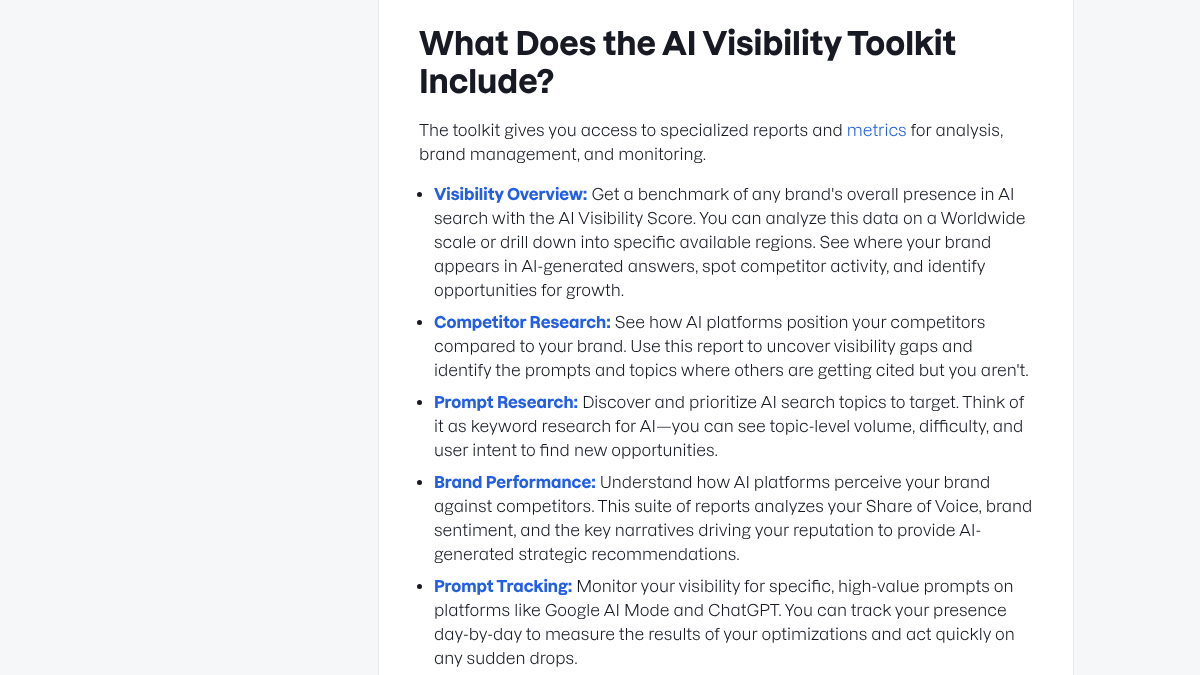
Its Brand Performance report updates weekly across ChatGPT, Gemini, Google AI Mode, AI Overviews and Perplexity, and its prompt tracking runs daily on a smaller set. It doesn't cover Claude or Grok. Ask which of the two products you're being quoted, because they have different prompt counts.
2. RankControl
RankControl covers two jobs in one plan: tracking and getting cited. We check up to 50 buyer questions every week across ChatGPT, Perplexity, Claude, Gemini, Grok, Google AI Mode and Google AI Overviews. Each answer is marked as mentioning you, citing you or both, and every source is recorded. Weekly Google ranking checks also note whether an AI Overview appeared for each keyword and whether it cited your page.
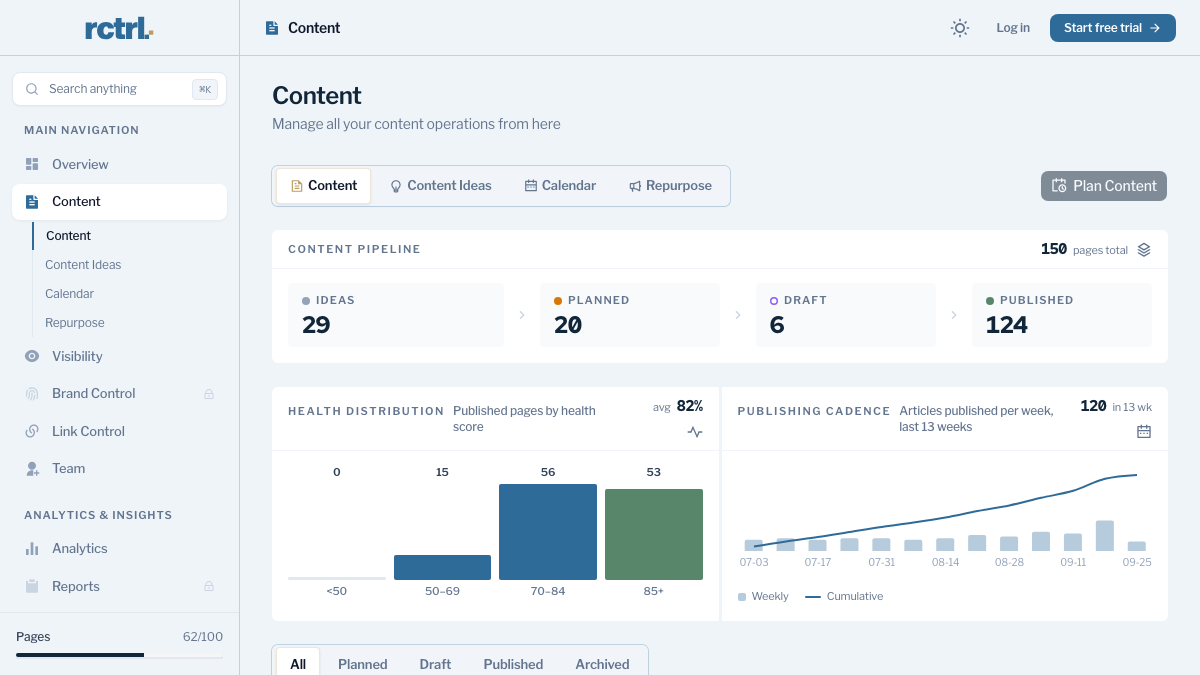
The other half is the content engine, which writes each article against the pages already ranking for its keyword and publishes it on your own site, whether that's WordPress, Webflow or one of the other supported platforms. We offer one flat plan at $400 a month, 100 pages included, with a 7-day trial. The trade-off is frequency: checks run weekly, so for pure monitoring a daily tracker gives you more samples.
How often does ChatGPT mention your brand?
Most founders have no idea. The answer might surprise you.

3. Ahrefs Brand Radar
Ahrefs comes at AI visibility from its data side. Its AI Visibility Index models more than 449 million prompts a month from Ahrefs' keyword database. They're spread across six platforms: Google's two AI features plus ChatGPT, Gemini, Perplexity and Copilot. Custom prompts you write yourself start at $50 a month and are checked daily.
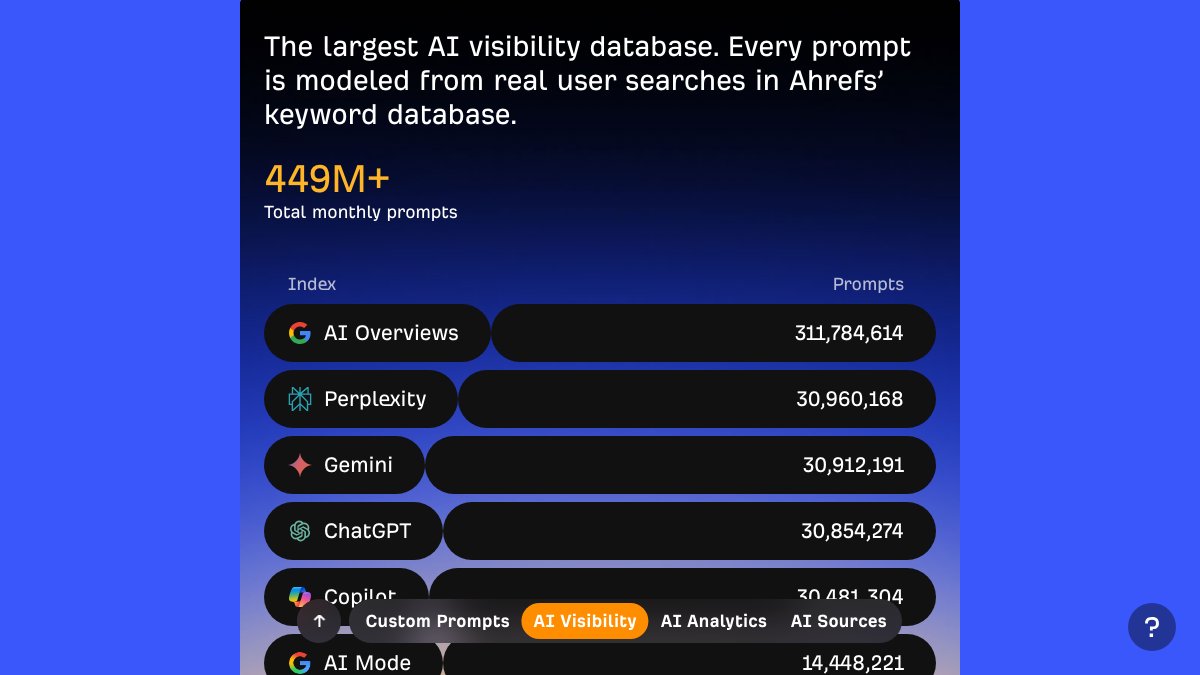
It separates mentions, citations and cited pages more clearly than most tools. The index prompts are Ahrefs' model of the market rather than your buyers' exact questions, and Brand Radar is a monitoring product, so the fixes stay with your team. If you already pay for Ahrefs, check your plan first: existing subscriptions include a small allowance of daily custom prompts.
4. Frase
Frase started as a content optimization tool and now includes AI visibility tracking. Its Starter plan costs $39 a month on yearly billing and tracks ChatGPT and Google's AI features across 50 prompts.
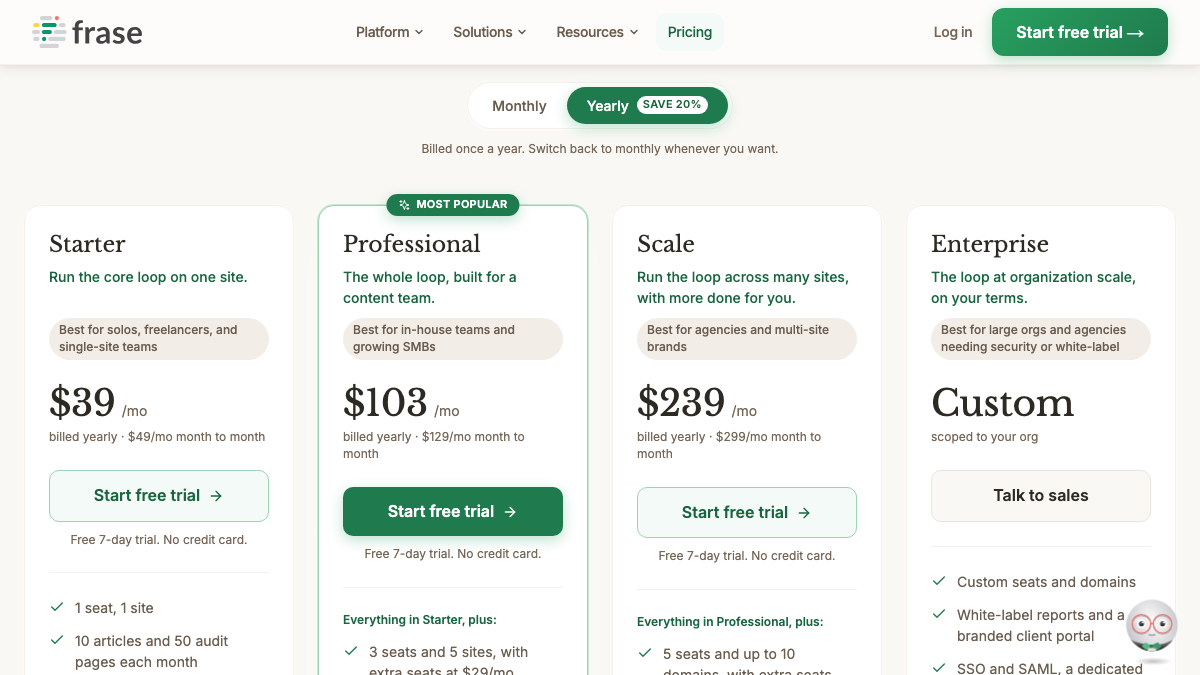
The engine list grows with the plan. Perplexity comes in at $103 a month, and Claude and Gemini only at the $239 Scale plan. That's worth pricing in if your buyers use those engines.
Free reports from Google and Bing
Both major search engines now report AI data for free, and every B2B team should turn these on before paying for anything else.
5. Google Search Console
Search Console's generative AI performance report shows how often your pages appeared in Google's AI features, including AI Overviews and AI Mode. Google finished rolling it out to all websites on August 31, 2026.
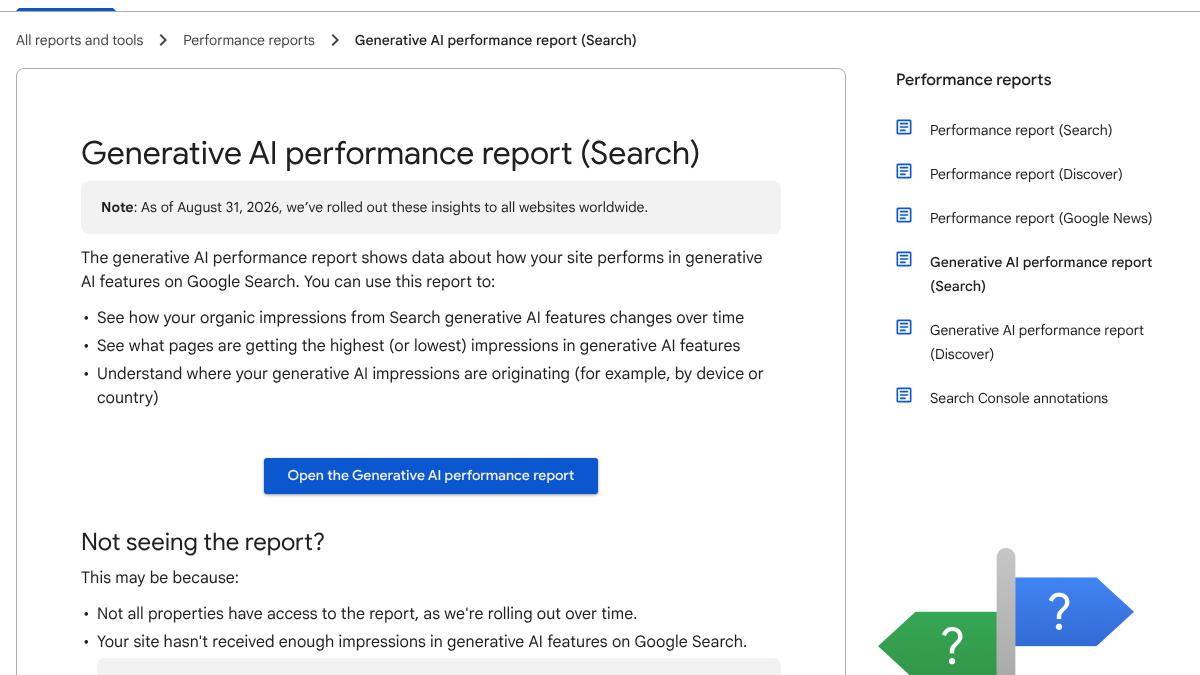
It shows impressions by page, country, device and date. It doesn't show clicks or the queries behind the impressions yet, so you can see that a page appeared, but not for which question.
The most useful way to read it is by page. Sort by AI impressions and compare the list with the pages you want cited, like your pricing, comparison and integration pages. If those pages are missing while old blog posts collect the impressions, that's where your next rewrite should go.
6. Bing Webmaster Tools
Bing's AI Performance report goes further in one respect: it counts citations. It shows total citations, the number of your pages cited and the grounding queries that led to them, across Microsoft Copilot, Bing's AI summaries and some partner integrations.
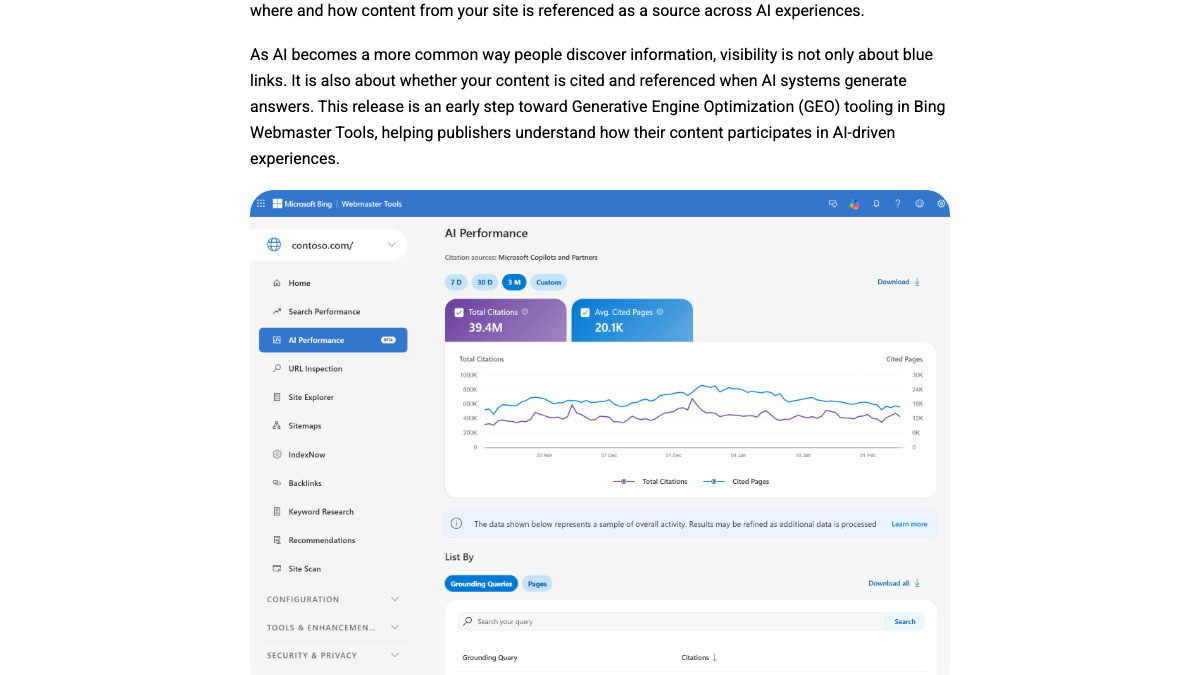
A June 2026 update added a citation share figure for each grounding query, along with intent and topic groupings. The report's own note says the data is "a sample of overall activity," and it only covers Microsoft's surfaces.
The grounding queries are the part to read closely. They show the wording people used when an AI answer drew on your site, which is often longer and more specific than the keywords in your SEO tools. Add the ones that match your buyers to the question list you track everywhere else.
Measuring AI-referred traffic
Tracking tells you whether you're named. These two tell you whether anyone clicked through.
7. Google Analytics 4
GA4 now has a default channel called AI Assistant. Google's definition says it's "the channel by which users arrive at your site from sources like ChatGPT, Gemini, Deepseek, Copilot, or Grok."
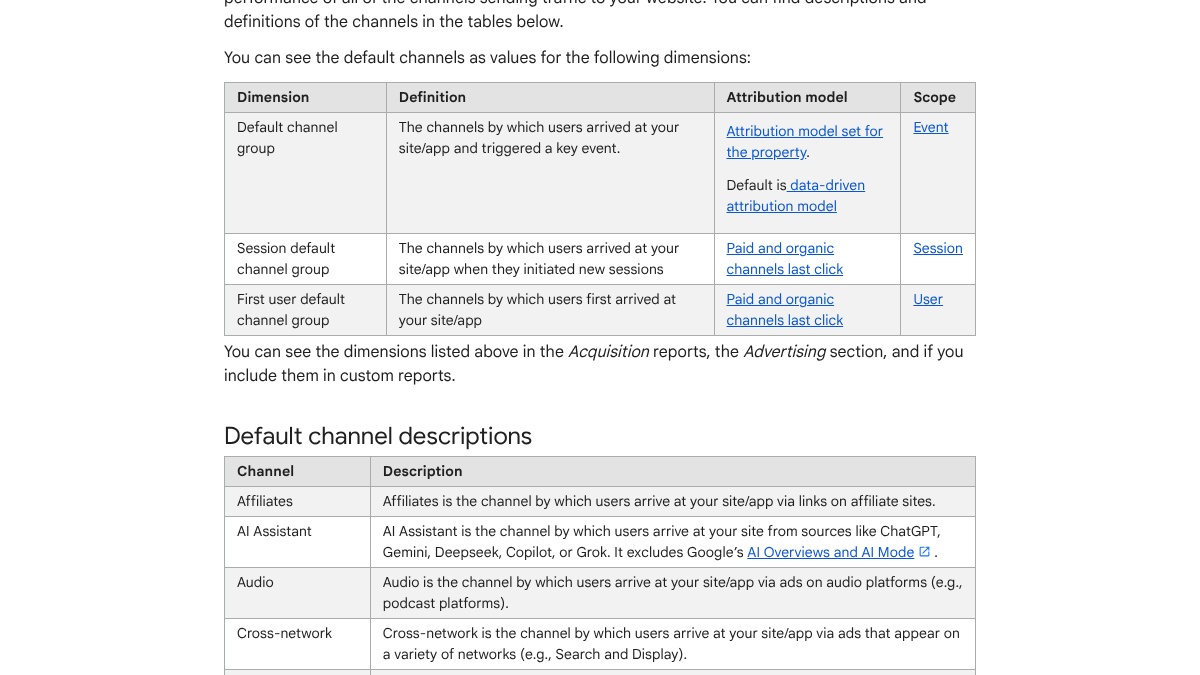
It's free and needs no setup. Two limits: it groups every assistant into one bucket, so you need an exploration to split ChatGPT from Copilot, and it excludes Google's own AI Overviews and AI Mode, which land under organic search. To see each assistant separately, open an exploration, filter to the AI Assistant channel and break it down by session source. Our GA4 guide to AI referral tracking covers the setup.
8. Statcounter
For teams that find GA4 heavy, Statcounter is a simpler option. The free Basic plan covers 5,000 sessions a month, paid plans start at about €9 a month, and its traffic sources view drills down to individual referring websites.
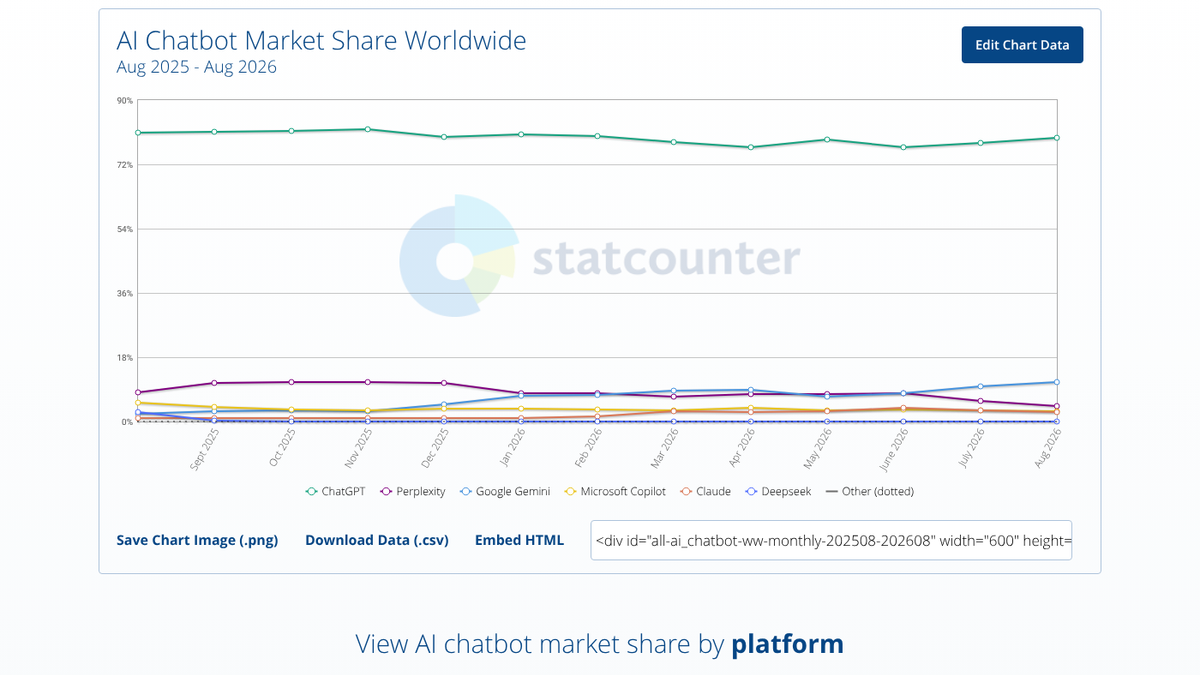
It doesn't label AI traffic as its own channel, so you'll spot chatgpt.com and perplexity.ai in the referrer list yourself. Its free GlobalStats site is also handy context, with a monthly chart of AI chatbot market share.
15 hours a week manually. Or 15 minutes with RankControl.
Track citations, monitor competitors, and fix content gaps across every AI search engine. Automatically.

Controlling crawler access
9. Cloudflare AI Crawl Control
If AI crawlers can't read your pages, they can't cite them. Cloudflare's AI Crawl Control shows which AI crawlers visit your site and how often, and lets you block or allow each one, starting free.
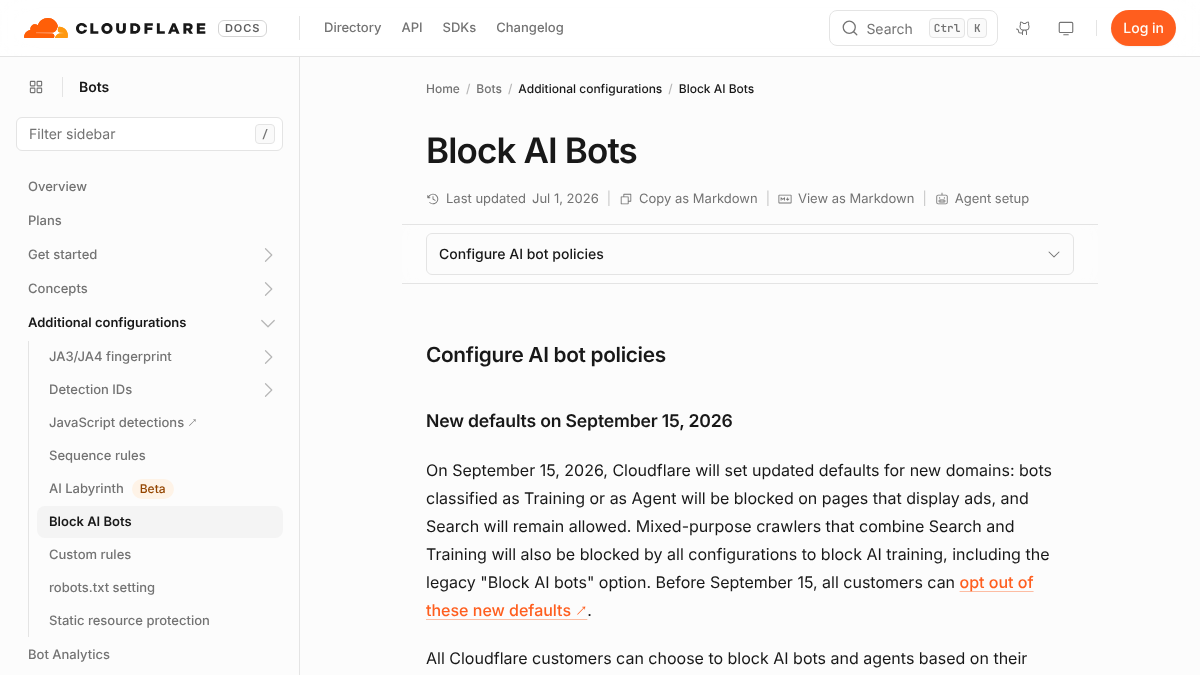
Check your settings after September 2026. Cloudflare changed its defaults for new domains on September 15, blocking training and agent crawlers on pages that show ads while leaving search crawlers allowed. The crawlers that matter most for citations are the search ones, like OAI-SearchBot for ChatGPT search and PerplexityBot. Confirm those are allowed in Cloudflare and in your robots.txt, even if you choose to block training crawlers. Our post on Cloudflare's bot settings and SEO covers which settings can block the crawlers you want.
The gap no free tool closes
Put the three free reports side by side and a pattern shows up. Search Console counts impressions but not clicks. Bing counts citations but only for Microsoft. GA4 counts visits but can't tell you which answer sent them.
We call this the split-report problem: each free tool sees one step of the path from an AI answer to a visit, and none sees the whole thing. That's fine for a monthly check. It breaks down when you need to know which page to fix, because the answer that stopped citing you is in one report and the traffic you lost is in another.
The same idea comes up when marketers talk about tools. In an r/DigitalMarketing thread asking for the best AI marketing tools, one of the more useful replies suggested skipping the hunt for more tools. Build a small stack instead, it said, connected to real data from Search Console, analytics and the CRM.
What are the best AI marketing tools every marketer should know about?
Hi all- I have been using ChatGPT and Claude a lot lately but haven't explored anything outside it. I have a little bit of time today since it's Labor Day and all and was looking to explore some interesting tools that could potentially help...
Which stack fits your team
A $0 stack: Search Console, Bing Webmaster Tools, GA4 and Cloudflare. Between them, you get impressions, Microsoft citations, AI-referred visits and crawler access. Add a monthly manual check of your top 10 buying questions in ChatGPT and Perplexity, which takes about an hour. This is where every team should start, and for a company with a small site it may be enough for the first year.
A tracking stack, from about $50 to $200 a month: add Ahrefs Brand Radar or Semrush's toolkit to the free tools. You'll see what AI answers say across more engines, and your team handles the fixes. Budget four to six hours a week for the writing and updates the tracking will point to.
A tracking and publishing stack, at $400 a month: add RankControl to the free tools, and the pages that close the gaps get written and published for you.
If you're comparing trackers, our AI visibility tool comparison covers what to ask in a demo, and our list of free AI visibility tools goes deeper on the free options.
Doing it yourself or handing it off
You can run the free stack yourself in about two hours a month: check the three reports, review crawler settings, and run your top buying questions by hand in the main AI engines.
The part that takes real time is acting on what you find, which means writing and updating the pages AI answers should cite. RankControl covers that and the tracking in one plan. Our AI visibility tracking checks your buyer questions weekly across seven engines, our analytics log AI crawler visits and AI-referred traffic by source, and our content engine writes the pages and publishes them on your own site.
AI search traffic grew 835% this year. Is your content ready?
RankControl generates 26 content formats optimized for ChatGPT, Claude, and Perplexity. Published on your domain, matched to your brand.