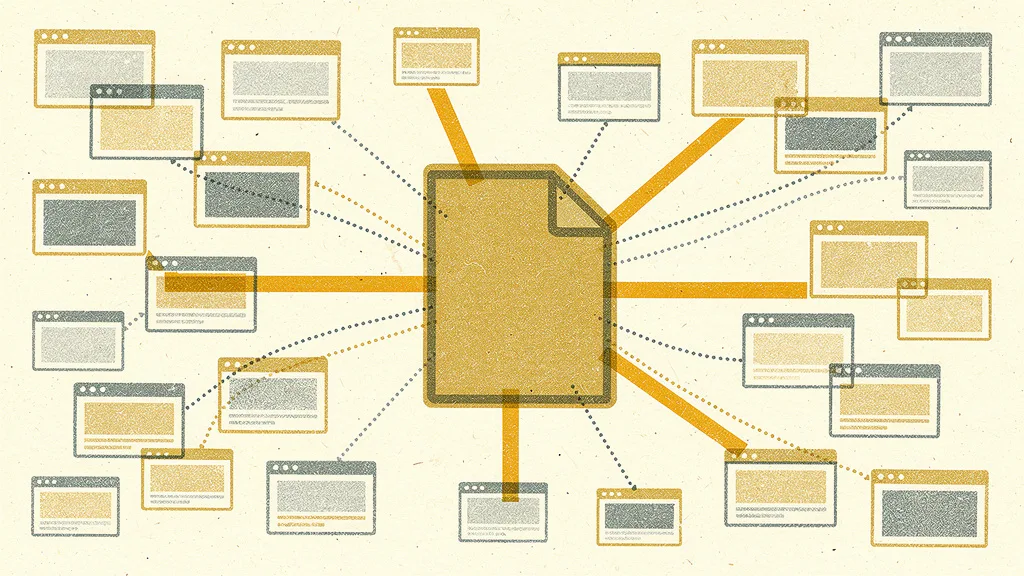
A marketer on r/TechSEO did something unusual for this space this week. Instead of trying one more tactic off a GEO checklist, they went back and read about 30 of the actual studies behind the advice everyone keeps repeating. The post is short. The conclusion is blunter. Most guru GEO tactics don't hold up once you check what was actually measured.
One person checked the studies instead of the advice
The reviewer's own rule for the project was strict. They only counted results that controlled for something, such as a same-site comparison, a matched control group or a re-test.
They skipped the common claim that sites doing X simply get cited more, with nothing held constant. That bar, they wrote, is where most GEO advice quietly fails.
The reaction in the comments split along a useful line. One reply agreed that getting retrieved matters most, but pushed back on "page polish barely matters" as too strong.
The same-site tests still showed a real, if smaller, effect from formatting, they pointed out. Another commenter noted that different AI engines run on different search backends, since Anthropic has used Brave and OpenAI has used Bing at various points.
A tactic proven on one engine's citations doesn't automatically transfer to another.
That same debate about what GEO even is has been running on a bigger scale since October. A thread on r/SEO asked why AI search and GEO people keep posting in an SEO subreddit, if SEO is supposedly dead. It pulled in 146 replies.
The top answer put it plainly. GEO is mostly SEO with a new name, the commenter wrote, since something like 95% of it comes down to having good SEO already in place.
Being found explains most of it, almost nothing else does much
The reviewer's headline claim traces back to a real paper. Researchers at the University of Toronto, Mahe Chen and Nick Koudas, tracked two 90-day collections of AI answers to commercial questions. That's 158,099 answers carrying 468,037 citations in total.
They found that whether a page gets pulled up by the AI's own search step explains about 32% of why one page gets cited over another. Every on-page feature combined, length, formatting, schema, FAQ blocks, explains under 3%.
That lines up with how these answers get built in practice. When ChatGPT needs current information, it runs a web search, reads a handful of the results, and writes the answer from those pages alone. A page that search never surfaces can't get cited, no matter how well it's formatted for AI.
The same paper found something else too. The model rewrites a person's question into its own search query first. That rewritten query often pulls a different set of pages than the same words typed straight into Google or Bing.
Ranking comfortably on page one of Google is no guarantee of showing up in the set an AI engine's own search pulls for a related question. The researchers reported the retrieval-over-polish pattern held up again, in a second market of small B2B vendors. That should worry anyone selling a one-size-fits-all GEO checklist.
We'll show you exactly where your brand stands in AI search.
No commitment. $0 due today, cancel anytime. See how ChatGPT, Perplexity, Claude, Gemini, Grok, Google AI Mode, and Google AI Overviews talk about your brand today.
Four tactics that tested weaker than the advice claims
| Tactic the guides push | What the advice promises | What the testing actually found |
|---|---|---|
| Stuffing pages with stats and quotes | Up to 40% more AI visibility | A re-test across roughly 1,900 queries and four models won only 3 times out of 54 tries |
| Adding JSON-LD schema | Helps AI engines understand and cite the page | Ahrefs tracked 1,885 pages that added it against 4,000 that didn't and found no real lift on any platform |
| Publishing an llms.txt file | Tells AI crawlers what to read | Ahrefs checked 137,210 domains; 97% of the files that existed got zero requests |
| FAQ blocks, tables, longer pages | Looks AI-friendly, should lift citations | The effect holds across different sites, then disappears once you compare pages on the same site |
The schema mix-up is easy to fall into, and it's worth slowing down on. Ahrefs separately found that pages AI engines already cite are close to three times more likely to carry JSON-LD than pages that aren't cited. Read quickly, that looks like proof schema helps.
Read carefully, it's a correlation. Schema tends to sit on well-run, well-linked sites that would probably earn a citation anyway. Bolting schema onto a weaker page by itself didn't move the needle in the controlled test.
Two of these deserve more than a row in a table. Our own schema markup breakdown goes through the Ahrefs test in full, including the one schema type that showed a real effect.
The llms.txt number gets its own adoption-versus-behavior piece, since the file keeps spreading even as crawlers ignore it.
Trying to game it outright doesn't hold up either
A separate r/aeo thread this week asked a more direct question. Could hidden text or schema stuffed with keywords across a batch of partner sites move Google's AI Overviews? The honest answers and the cautious answers landed in the same place.
Several commenters pointed straight at Google's spam policies on hidden text and noted that schema is only supposed to describe what's actually visible on the page. One added that repeating the same keyword-stuffed signals across a network of partner sites stops looking like promotion.
That starts looking like a link scheme instead, which is its own problem. Another commenter, closer to the question, guessed it might work for about a week before the penalty across every partner site involved got brutal.
A different reply in the same thread described something uglier than a hidden div. Some self-published listicles rank themselves first and lean on the authority of the sites ranked beneath them, nudging a model into recommending them over competitors, again and again.
A few sites have gone further, planting instructions aimed at the model directly inside their own source code, closer to poisoning the well than optimizing anything.
Models are starting to give that kind of content less weight, the commenter said. A system built on retrieval still makes the pattern hard to stamp out completely.
When the advice that's trying to be sneaky lands on the same list of don'ts as the advice that's trying to be honest, that's a strong signal either way.
What actually moved the needle in the same-site tests
Buried in the same research is a shorter, more useful list. Matching a page's title to the exact question people ask raised citations on the same site by about 14%.
Answering that question directly in the first paragraph added roughly another 15%. Both are cheap edits, and neither needs a developer.
Off the page, the gap is bigger. Ahrefs' brand-mentions study of 75,000 brands, December 2025, found branded web mentions carrying a 0.664 correlation with AI Overview visibility, about three times the 0.218 correlation backlinks get on their own.
Earning a mention on someone else's site, even one that never links back, appears to count for more than another link ever will. That's most of what RankControl's backlink outreach is built to go after.
One more thing is worth checking before any of this. Can AI crawlers even see a page's text in the first place?
Vercel and the SEO consultancy MERJ tested this directly and found that none of the major AI crawlers, not GPTBot, not ClaudeBot, not PerplexityBot, render JavaScript. If an answer only shows up after a script runs, these bots never see it.
Know exactly what AI says about your competitors.
RankControl's Recon Agent monitors competitor citations across ChatGPT, Perplexity, Claude, Gemini, Grok, Google AI Mode, and Google AI Overviews. See where they show up and you don't.

Why the same test gives you a different answer next week
Checking a tactic once, even a good one, tells you very little. A SparkToro study had 600 volunteers run 12 prompts through ChatGPT, Claude and Google's AI tools, 2,961 times in total.
The odds of seeing the exact same list of brands twice came in under 1 in 100.
Rand Fishkin, who shared the study, made the obvious point. Treat any single AI answer the way you'd treat a single coin flip, not a ranking you can act on. Run the same question several times across a few weeks before deciding a tactic worked or failed.
What to do with a GEO budget instead of ten tactics
Add up the real order of operations here. Fix crawlability and indexing first, since that's a requirement and not a tactic. Then publish pages that answer the specific questions buyers ask, with the answer near the top.
Then go earn the mentions that beat backlinks, through real coverage rather than a partner-site scheme. Expect 10 to 15 hours for that first pass on an existing site, then a few hours most weeks after that, just keeping new pages in line with whatever's ranking that month.
You can run that checklist yourself, on your own schedule. Or RankControl can run it every week instead. We write each new article against the pages already ranking for that keyword, rather than against a generic template.
Our AI visibility tracking checks where you stand across seven AI engines. That way you're not relying on one ChatGPT answer to judge a tactic that needs a month of runs to mean anything.
That's what weekly tracking is for. A tactic that worked the week a new model shipped can stop working days after the next update, and the only way to know is checking the same questions again, on a fixed schedule, across every engine that matters.
26 content formats. Published on your domain. Matched to your brand.
Guides, comparisons, listicles, case studies, and more. RankControl generates content that gets cited by ChatGPT, Perplexity, Claude, Gemini, Grok, Google AI Mode, and Google AI Overviews.