
You have a product that works, a few people using it, and a bank balance that makes every purchase feel like a decision. Every vendor's pricing page says the same thing: this is the investment that changes everything. Most of them aren't, at least not in year one.
The best investments for SaaS founders in the first year are mostly time, spent in the right order. The cash ones are smaller than you'd think. This list ranks ten of them by payback, from the ones that cost nothing and matter most to the ones worth delaying. It ends with the full first-year minimum we priced out, and what to skip.
Why the order matters
CB Insights looked at 431 VC-backed startups that shut down since 2023. Running out of money showed up in 70% of the failures it could classify. As its analysis puts it, that's "almost always the final cause of death, not the root problem."
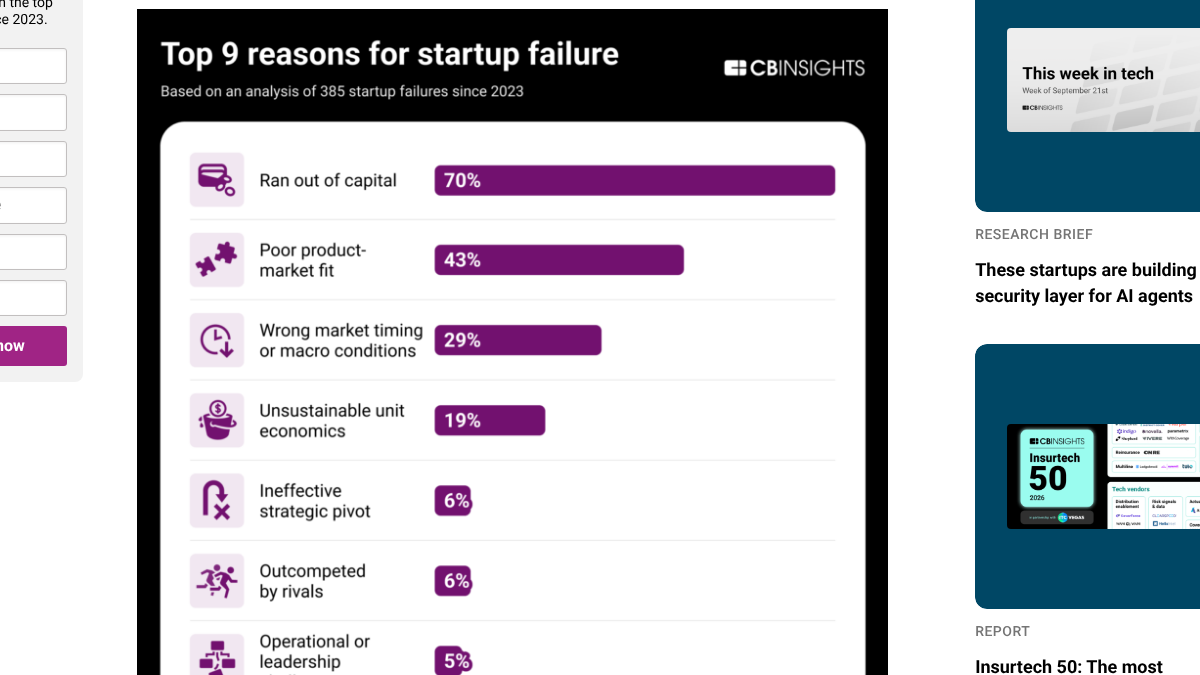
The causes underneath were poor product-market fit in 43% of cases, bad timing in 29% and unit economics that didn't work in 19%. These were venture-backed companies, not bootstrapped ones, but the lesson carries: most first-year money is lost building or selling the wrong thing, not spent on the wrong software. So the list starts with the investments that tell you whether you're building the right thing.
The time investments
The two highest-payback investments in year one don't cost money. They cost hours, and they're the ones founders most want to hand off.
1. Customer conversations
Talking to customers costs nothing but hours, and it's the best protection against the 43%. Paul Graham's essay "Do Things that Don't Scale" is still the clearest case for it: "The feedback you get from engaging directly with your earliest users will be the best you ever get."
Aim for a few conversations a week, split between people who use the product, people who tried it and left, and people who fit your buyer profile but have never heard of you. Ask what they did before your product existed and what they pay for today. Those two answers tell you more about pricing and positioning than any survey tool.
Keep a running document of what you hear, in the customer's own words. After 20 or so conversations, the phrases that repeat become your homepage headline, your pricing page and the questions your first content should answer. That's why this item comes first: nearly everything else on the list works better once you have it.
2. Founder hours on sales calls
Of everything on this list, this is the one founders most want to delegate early. Don't, yet. Graham's essay makes the point directly: "The most common unscalable thing founders have to do at the start is to recruit users manually."
Selling the product yourself teaches you the objections, the words buyers use and which features close deals. A salesperson hired before you know those things spends months learning them on your payroll, and usually can't tell you why deals were lost.
You're getting AI traffic. But do you know where it comes from?
RankControl credits every visit to the assistant that sent it: ChatGPT, Perplexity, Claude, Gemini, Copilot, or Grok. Full source attribution, next to your Google traffic.
The setup investments
Three things are worth getting right once, early, so they don't turn into cleanup projects later.
3. A clean company setup, done once
Setup mistakes are cheap to avoid and expensive to fix later. Stripe Atlas charges $500 for a Delaware incorporation. That covers state fees, a tax ID and the 83(b) election filing, plus a year of registered agent service, and it's $100 a year after that. Other incorporation services and a local lawyer are fine too. The point is doing it properly the first time.
Set up bookkeeping on day one, even if it's a free tool and a spreadsheet of receipts. The IRS lets you deduct up to $5,000 of start-up costs and $5,000 of organizational costs in the year your business starts, and good records are what let you claim them. One founder on r/ycombinator described paying Delaware franchise tax twice after missing the dissolution paperwork on a failed company, which is the kind of mistake a calendar reminder prevents.
4. Product analytics from day one
You can't fix what you can't see. Install product analytics before your first real users arrive, so you know where they stall between signing up and getting value.
This is close to free now. PostHog's free tier includes a million events a month plus session recordings, and it says the allowance renews "every month. Yes, for everything. Yes, forever." Track four or five main events, like signup, the first meaningful action and upgrade, and ignore the rest until you have a question the data can answer.
5. A free CRM and a simple sales process
Once you're doing sales calls, get the deals out of your inbox. HubSpot's free CRM covers two users and 1,000 contacts, "100% free with no expiration date." Any free CRM works. What matters is having one place where every conversation, next step and lost deal is written down.
Keep the process to four or five stages, and write down the loss reason every time. By month six, that list of loss reasons is one of the most useful documents the company has, and it's the first place signs of trouble show up, as our post on signs your product is getting harder to sell covers.
The revenue investment
One decision moves revenue more than almost anything else in year one, and most founders make it once and never revisit it.
6. A pricing model you're willing to test
Your first price will be wrong, and the model around it matters as much as the number. ChartMogul's February 2026 Conversion Report, covering 200 B2B software products, put the median free-to-paid conversion at 8%, with "very few products" landing on it.
The spread comes from the model. In the same report, free trials that require a card converted more than five times as well as trials that don't. That doesn't mean a card-required trial is right for you, but it does mean the choice is worth testing in year one instead of settling once. The report's own ranges show how wide the gap is:
| Model | Good conversion | Great conversion |
|---|---|---|
| Free trial, no card | 4 to 6% | 10 to 15% |
| Free trial, card required | 25 to 35% | 50 to 60% |
| Freemium | 3 to 5% | 8 to 12% |
The report also argues the old freemium-or-trial debate matters less than it used to, partly because free users cost more to support now that AI features carry real usage costs. For a first-year company, that's one more reason to price with a test in mind. Change one thing at a time, and give each version enough signups to see a difference.
The visibility investments
Once you know who buys and why, these make you easier to find and easier to trust.
7. One owned content asset
A few pages on your own domain that answer the questions buyers ask before they buy: what the product does, who it's for, pricing, how it compares with the main alternative. Unlike social posts or paid ads, these keep working after you stop paying attention to them, and search engines and AI answers can cite them.
Keep the scope small in year one. Our beginner's guide to startup SEO in the AI search era covers what to build at each stage, and why broad category keywords can wait.
8. Listings where buyers and AI answers look
Buyers check directories and review sites before they trust a new vendor, and AI answers lean on the same pages. A complete profile on the two or three directories your category uses costs nothing but an afternoon, and it gives both buyers and AI engines a page they can point to.
Ask your first happy customers for reviews there. Our post on SaaS marketplaces and directories in AI search covers which ones tend to get cited.
We'll show you exactly where your brand stands in AI search.
No commitment. $0 due today, cancel anytime. See how ChatGPT, Perplexity, Claude, Gemini, Grok, Google AI Mode, and Google AI Overviews talk about your brand today.

9. One real design pass
You don't need a brand agency in year one, but you do need a logo and a site you won't be embarrassed to send to a buyer. A 99designs logo contest runs from $249 to $1,050, and many founders build the site itself on a template.
The payback here is harder to measure, and we won't pretend otherwise. The case is trust: you're asking a stranger for a card number or a meeting, and a site that looks unfinished makes that harder. Do it once, well enough to last a year, and resist redoing it until you have product-market fit.
The one to delay
The last item matters, but its expensive part can wait for a customer to ask.
10. Security basics, and SOC 2 only when a deal asks
Start with the cheap habits: a password manager, two-factor authentication everywhere, backups and access that's removed when someone leaves. Those cost little and are what a security questionnaire asks about first.
SOC 2 is different. Vanta, which sells compliance software, puts the all-in cost of a first SOC 2 at between $10,000 and $80,000 or more. It has a reason to make the manual route look expensive. Either way, it's a large bill for a first-year company. Wait until a real deal needs it, and then let that deal help pay for it.
The real first-year minimum
We priced the cash floor on vendors' own pricing pages in late September 2026, for one founder:
| Item | Vendor | First-year cost |
|---|---|---|
| Incorporation, tax ID, 83(b), registered agent | Stripe Atlas | $500 |
| .com domain | Porkbun | $11.08 |
| Email, one user | Google Workspace Business Starter | $42 (intro rate for year one) |
| Bookkeeping | Wave Starter | $0 |
| Product analytics | PostHog free tier | $0 |
| CRM | HubSpot free CRM | $0 |
| Total | $553.08 |
Add $190 for Wave's paid plan if you want bank transactions imported automatically, and the total is $743.08. We call this the floor stack: the part you can't skip. Everything above it on this list is a choice, and most of the high-payback ones cost time, not money.
What not to spend on yet
Some purchases feel like progress in year one and mostly aren't:
- A PR retainer before you have a story buyers care about.
- A rebrand before product-market fit.
- Paid ads before you can sell the product by hand.
- A full sales team before you've closed deals yourself.
- SOC 2 before any customer asks for it.
The founders who've been through it tend to say the same. In an r/ycombinator thread, bootstrapped ex-founders shared what they lost. One described raising and losing $500,000 in under two years and failing again on a second try, then buying a small, already-working SaaS product for about $15,000 instead of starting from scratch.
Bootstrapped Ex-founders, how much money did you end up losing on your previous startup? What happened?
I'm curious to hear from founders who have already shut down a startup. How much money did you personally lose in the process? This could include savings, loans, or money you invested into the company. Also curious: - How long did the start...
Doing it yourself or handing it off
Almost everything on this list should stay with the founder in year one. Conversations, sales and pricing decisions are how you learn the business, and nobody can do that for you.
Items 7 and 8 are the exception, because they're steady, repetitive work that competes with sales for your time. You can do them by hand: a few pages a month, plus a monthly check of what AI answers say about your category.
Or RankControl can take them: our content engine writes pages for your buyers' questions and publishes them on your own site, and our AI visibility tracking checks up to 50 buyer questions every week across seven AI engines and records which sources each answer cites. We offer one flat plan at $400 a month, which is why we belong after the free items on this list, not before them.
Know exactly what AI says about your competitors.
RankControl's Recon Agent monitors competitor citations across ChatGPT, Perplexity, Claude, Gemini, Grok, Google AI Mode, and Google AI Overviews. See where they show up and you don't.