
On September 26 we pulled Google's top 10 for 12 B2B software searches, then counted how many other websites link to each ranking page. We expected the number one result to be the most-linked page on most of them. It was, once.
Across the 103 ranking pages, 54 had fewer than 10 linking websites of their own, and 10 had none at all in the backlink index we used. The page ranking first for "soc 2 compliance software" was a blog post with zero linking domains, sitting above a Vanta product page with 62 and a Palo Alto Networks explainer with 216.
So, are backlinks still the secret to SEO? We don't think they're the secret anymore. They still matter, though, and the way they matter is worth getting right before you spend another dollar on them.
What Google has actually said
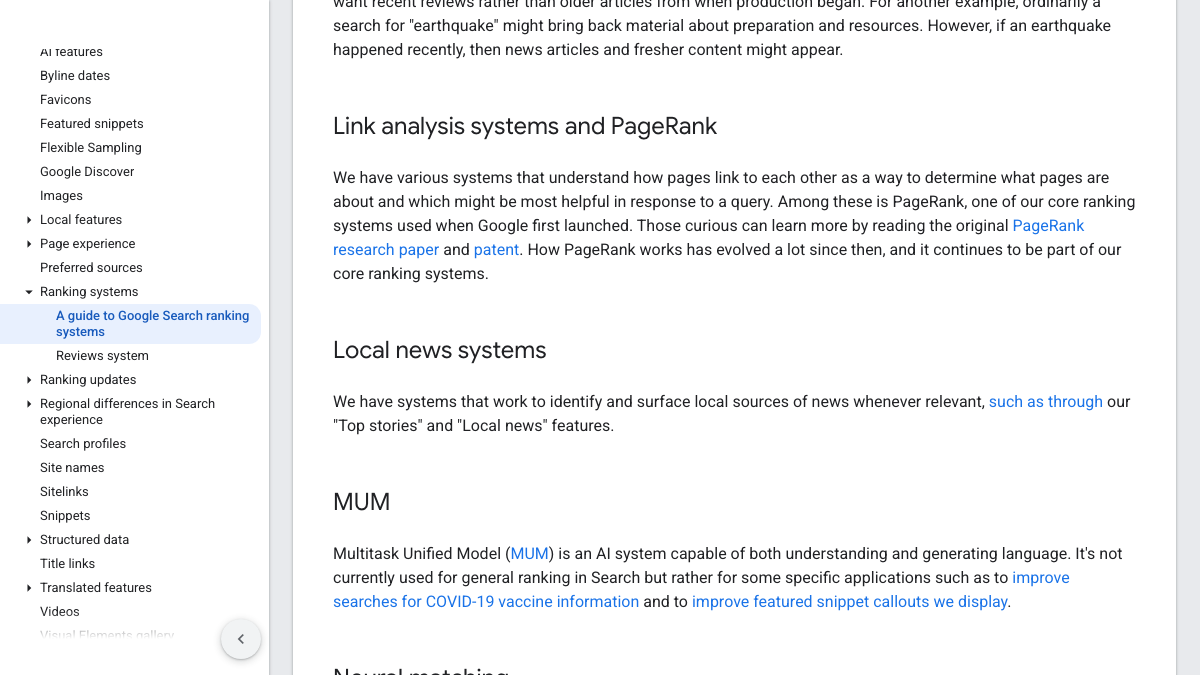
Google hasn't dropped links. Its guide to ranking systems still lists "link analysis systems and PageRank," and says PageRank continues to be one of its core ranking systems.
It has also been saying, more and more plainly, that links carry less weight than they used to. At a conference in April 2024, Google's Gary Illyes said Google needs very few links to rank pages, and that it has made links less important over the years. He'd made a similar point in 2023, saying links hadn't been among Google's top three ranking factors for some time.
Both statements fit together. Links are still an input, but they're one input among many, and Google stopped needing a lot of them to judge a page.
What we found in 12 searches
Here's the full picture from our check. We used common B2B searches, such as "best crm for small business" and "how to calculate customer churn rate," and pulled referring-domain counts for every ranking page and its site:
| What we measured | Result |
|---|---|
| Top-10 pages with fewer than 10 linking domains | 54 of 103 |
| Top-3 pages with fewer than 10 linking domains | 18 of 36 |
| Pages with no linking domains at all | 10 |
| Searches where the number one page had the most links | 1 of 12 |
| Median linking domains, positions 1 to 3 versus 4 to 10 | 11 versus 7 |
The top three pages did have slightly more links on average. But the relationship between link count and position was weak enough that you couldn't have guessed the order of any single result from it.
The individual results make the point better than the averages. For "best time tracking app," the top result was a Reddit thread with no linking domains at all. For "how to write a sales proposal," a Zoom blog post with no links of its own ranked fourth, carried by a domain that more than 130,000 sites link to. For "what is employee onboarding," the top page came from SHRM, a professional body, with 260 linking domains.
One pattern stood out more than the numbers. Reddit threads ranked in the top three for 7 of the 12 searches, usually with a handful of links to the thread itself. They rank on the strength of the whole site, which has over a million linking domains, and on the fact that people want first-hand answers for these questions.
A few caveats are fair. Twelve searches is a small sample, and link counts vary from tool to tool, so treat this as a snapshot. The weak relationship doesn't prove links don't help, but it does show that page-level link counts aren't what separates most of these results.
Know exactly what AI says about your competitors.
RankControl's Recon Agent monitors competitor citations across ChatGPT, Perplexity, Claude, Gemini, Grok, Google AI Mode, and Google AI Overviews. See where they show up and you don't.

The links that count are the site's reputation
What seems to matter is the reputation of the whole site, which links help build over years, more than the links pointing at any one page. A new post on a well-known site can rank with no links of its own, because the site has already earned trust. Our guide to high quality backlinks found two first-place pages with none at all.
That matches what practitioners describe. In an r/WebsiteSEO thread in August, the poster argued that five highly relevant links can beat a hundred random ones, and one reply pointed out, fairly, that this is how links have always worked.
SEO in 2026: Are Backlinks Still Worth It?
I’ve been working with SEO for years, and one thing I keep noticing: people still focus heavily on backlink numbers. But today, I think 5 highly relevant links can be more valuable than 100 random links. What’s working for you in 2026: back...
It also explains why people see such mixed results from link building. Buying a batch of links to one page rarely moves it, while a few mentions from trusted sites in your field can lift everything you publish afterwards.
What SEO experts still say
We don't want to overstate this, because the people who do SEO for a living still rate links highly. In September, Cyrus Shepard published a 2026 survey of 131 SEO specialists, and backlinks came second as a Google ranking factor, just behind relevance.
📊 The 2026 Google Ranking Factors Expert Survey Report is here based on 131 specialists answers - developed by @CyrusShepard 👇 According to the answers, the most important Google ranking signals in 2026 are Relevance, Backlinks, and Content Quality: 1. Relevance - 57.1%: https://t.co/ihkVzhiBFJ
 Aleyda Solis 🕊️@aleydaSep 9, 2026

Look at the wording in that survey, though. The respondents emphasized links from trusted, relevant sites, and specifically links from pages with real visitors. That's a long way from the old model of counting links from anywhere.
The 2024 leak of Google's internal API documentation pointed the same way. Analysts who studied it found attributes suggesting Google weighs a link by the quality tier of the page it comes from, so a link from a page nobody visits may count for very little. Google hasn't confirmed how those attributes are used, but the survey's emphasis fits them.
Where links still decide it
Links still separate results in a few situations, and it's worth knowing which ones you're in. On "cheap accounting software," the top two results were pages from two accounting products with 625 and 1,378 linking domains, well above most of the pages below them. When every competitor is an established product with a strong site, links are part of how you get into that group.
They also matter a lot for new sites. A domain with no reputation needs some outside signals before Google trusts its pages, and links from real sites are still one of the clearest.
A July thread on r/seogrowth asked whether a site with good content but low authority can still rank. The most useful answer was that it depends on the competition: on lower-competition searches outside sensitive topics like health and finance, strong content on a small site can reach page one.
Good content, but low DR and barely any backlinks. Can you still rank?
Let’s say your content is genuinely useful and well optimized, but your site has low domain authority and only a few backlinks. Can you still rank on Google? And does domain authority matter as much for appearing in AI results like ChatGPT,...
What changes with AI search
AI search adds another reason to think about links differently. Engines like ChatGPT tend to name brands the wider web talks about, and Ahrefs found branded web mentions correlated with AI visibility at 0.664 across 75,000 brands, against 0.218 for backlinks. Our comparison of brand mentions and backlinks covers that study in detail.
Links still help AI visibility indirectly, since AI answers often draw on pages that already rank. How much depends on the engine, as our check of AI citations against Google rankings shows. And our 20-site test on backlinks and AI citations looked at what happened when sites added links over 90 days. For how to split time between the two, see our comparison of AI citations vs backlinks.
26 content formats. Published on your domain. Matched to your brand.
Guides, comparisons, listicles, case studies, and more. RankControl generates content that gets cited by ChatGPT, Perplexity, Claude, Gemini, Grok, Google AI Mode, and Google AI Overviews.

What we'd do in 2026
If we were planning link work for a B2B site today, this is the order we'd follow:
- Get relevance right first. Make sure each important page matches what the searcher wants, because that's the factor experts rank above links.
- Earn a handful of links from relevant sites with real readers, through original data, partner pages, podcast appearances and expert commentary.
- Link your own pages together properly, so the authority you do have reaches the pages that need it, starting with links from your most-visited pages to the ones you want to rank.
- Stop paying for bulk links. Google's spam policies target links built to manipulate rankings, and a batch of low-quality links is more likely to be ignored than to help.
The cheapest version of step two is original data. A short survey or an analysis of your own product data gives journalists and other writers something to cite, and those citations tend to come from pages people actually read.
For most sites, the second step is the one that gets skipped, because it takes outreach time. Done by hand, publishing eight solid articles a month takes 16 to 24 hours, and checking 50 questions on six engines takes about five hours a week, before any outreach at all. Those are rough estimates.
RankControl's outreach agent finds prospects and contacts for each article you publish, then drafts personalized emails from your own mailbox. If you'd rather not run outreach at all, the optional Managed Backlinks add-on places five links a month from DR 25+ sites for $350 a month, separate from the main plan. Link Control shows both.
You can do all of this yourself with a spreadsheet and some patience. Or RankControl's agents can handle the repeated parts while your team writes the pages worth linking to.

Your competitors are getting cited by AI. You're not.
Every day without citation tracking is a day your competitors pull ahead in ChatGPT, Perplexity, and Claude.