
Eight link building vendors, two days spent reading their pricing and service pages, and not one of the eight used the word "sponsored" anywhere on the page. That's what stood out after checking those sites on October 18 and 19, 2026. One of them went further and listed "a contextual dofollow link" as a feature baked into every paid package.
Clients ask agencies for link building, and building it in-house is slow, so reselling is the obvious answer. The part nobody budgets for is the risk underneath it: your name goes on work you didn't do. A vendor whose links come from a link farm, or whose placement gets a client's site hit, leaves the agency holding the explanation, not the vendor.
So this guide covers what those vendors charge, the checks worth running before you resell anything to a client, the signs that a vendor is selling metrics rather than links, and what Google's own policy actually says about paid placements.
What white label link building costs
Prices are sitting right there on most vendor sites, no quote request needed. Here's what the pages we checked list, broken down by the kind of offer.
| Offer | Price range on vendor pages | How it's priced |
|---|---|---|
| Blogger outreach and niche edits | From about $72 per link | Per placement |
| Guest posts, entry tier | About $80 to $200 per link | Per placement, by DA or DR |
| Guest posts, higher tier | About $240 to $500 per link | Per placement, by DR and traffic |
| Monthly packages | About $300 a month | A set number of links per month |
| Marketplaces | Varies by site | You pick each site and see its price |
Underneath that spread sits one pattern: price tracks Domain Rating, almost like a menu. One vendor's own pricing runs from $160 a link on DR 30+ sites up to $500 on DR 60+, with an estimated traffic range attached to each tier.
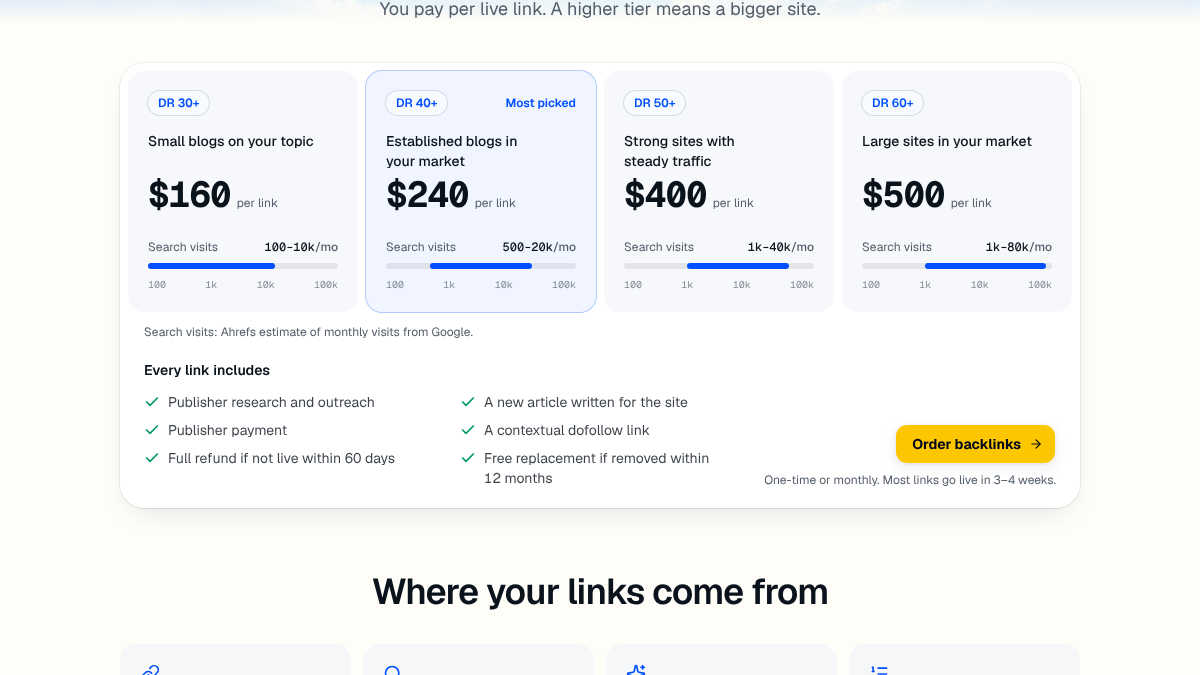
Those numbers look precise, which is exactly why they're worth questioning. A thread on r/SEO about vetting vendors raised the same doubt: most backlink lists are really selling metrics, one reply argued, and plenty of high-DR sites pass little real value because they're link farms with inflated scores.
How often does ChatGPT mention your brand?
Most founders have no idea. The answer might surprise you.

What Google says about paid links
Know the rule before you build the checklist. Google's spam policies, last updated August 28, 2026, name "buying or selling links for ranking purposes" as link spam, specifically "exchanging money for links, or posts that contain links."
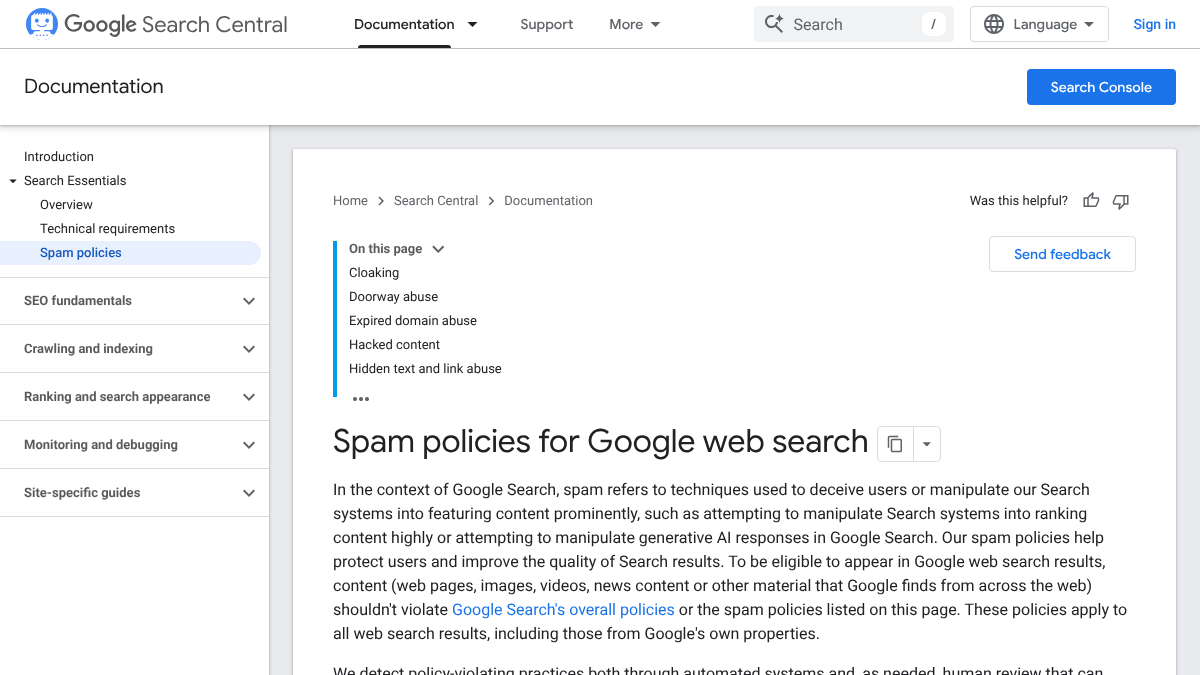
That page isn't a flat ban, though. It also says Google "does understand that buying and selling links is a normal part of the economy of the web for advertising and sponsorship purposes," and that it's fine "as long as they are qualified with a rel="nofollow" or rel="sponsored" attribute value."
One line in the opening is easy to skim past. Google now defines spam as an attempt to manipulate Search systems into ranking content highly, "or attempting to manipulate generative AI responses in Google Search." The same rule now reaches AI answers too, alongside rankings.
Put those two things together and agencies land in an awkward spot. A link sold as "dofollow" and placed to move rankings is precisely what the policy describes. Tag it sponsored instead and it's allowed, but it stops passing ranking credit, which is usually the reason the client paid for it. Our guide to the types of backlinks covers what each tag actually does.
Before you resell a single placement, find out how the vendor tags its links and say so plainly to the client. Call it the label question: it decides what the client is actually buying.
The checklist: what to check before you resell
Run these checks on a sample of the vendor's past work, not on its sales page. Ask for 10 to 20 live links from recent orders and go through them one by one.
| Check | What it tells you |
|---|---|
| Is the linking page indexed in Google? | A page out of the index passes little value; search its URL directly |
| Does the site get real traffic? | Look for traffic spread across many pages and branded searches for its own name, not one spike |
| Is the site about something specific? | A focused site with a real audience beats a general one that posts on everything |
| Where does the link sit? | Inside a relevant article's body beats a sidebar, footer or author box |
| How many outbound links does the page carry? | Dozens of unrelated outbound links is a sign the page exists to sell them |
| Is the content real? | Read a few placed articles; thin, spun or obviously mass-produced text is a warning |
| How is the link tagged? | Ask directly whether it's followed, sponsored or nofollow; the sales page usually won't say |
| What's the replacement policy? | Several vendors promise free replacements if a link drops within 12 months, or a refund if it's late; get it in writing |
| What goes in the report? | You need the live URL, anchor text, date and the site's metrics for every link, in a format you can brand |
| Did the quote really come from your client? | One vendor's own portfolio labels several placements "AI-Generated Quote"; confirm anything attributed to your client is something they said |
Ten checks, and most of them take under a minute once you have the sample links in front of you. The ones worth slowing down for are the tag and the quote, because both decide whether you're telling your client the truth.
15 hours a week manually. Or 15 minutes with RankControl.
Track citations, monitor competitors, and fix content gaps across every AI search engine. Automatically.

Managed vendors vs marketplaces
Two ways to buy exist. A managed vendor picks the sites, writes the content and places the links, then hands you a report. A marketplace lets you browse sites yourself, see each one's traffic, Domain Rating and price, and choose. If you're buying for your own site rather than reselling, our guide to outsourcing link building compares what five links a month costs under each model.
Marketplaces hand you more control, which is useful for checks like traffic and topical fit. They also hand you the vetting work. One marketplace's terms are unusually direct about that trade. It guarantees it will deliver placements matching the order, and states plainly that it does not guarantee "specific search rankings, traffic growth, conversions, indexing speed, or exact visibility in Google or AI answers."
That sentence is a fair description of what any link vendor can honestly promise. Anyone who claims more than that is worth a second look.
Red flags
These are the signs a vendor is selling metrics instead of links.
| Sign | Why it matters |
|---|---|
| Guaranteed rankings | No honest vendor can promise one |
| Very cheap links on very high-DR sites | A DR 70 link priced below a cheap dinner deserves a question |
| No sample links offered | A vendor that won't show past placements has a reason |
| "No PBNs" with nothing to back it up | Check the sample sites yourself anyway |
| Every site covers every topic | Real publications have a focus; general sites usually don't |
A thread on r/DoSEO about whether private blog networks still work for SEO had one useful habit from a regular buyer. They ask sellers for sample posts, then check whether the linked page's rankings dropped a week or two after the link went live. If it did, they stop buying from that vendor.
Do private blog networks (PBNs) still work for SEO?
Questions to send a vendor
Send these in your first email to any vendor you're considering.
- Can you share 10 recent live placements in my client's industry?
- How are links tagged: followed, sponsored or nofollow?
- Where in the article does the link usually sit?
- Do the sites you use sell links to anyone, or do you vet them?
- What happens if a link goes down, and for how long?
- Can the report go out under my agency's brand?
- Do you write the content, and can we approve it before it publishes?
A vendor's answers here tell you more than its price list ever will.
How to report links to clients
Clients care about what moved, not how many links went live. Report the links, but set them next to the thing they're supposed to move.
Show each link's live URL and anchor text. Then show the target page's position and clicks in Search Console across the following months. Our guide to seeing backlinks in Search Console covers where Google surfaces them. If nothing's moved after three to six months, that's a conversation to have with the vendor.
Be straight about timing, too. Links take weeks to be discovered and months to show their full effect. Our look at whether backlinks are still important covers how much they still move rankings today.
Doing it yourself or handing it off
Vetting a vendor the first time takes three to five hours, mostly spent checking sample links. After that it's a spot check on a handful of links from each new order. If you'd rather build the links yourself, our guide to how to build backlinks covers each method.
RankControl takes a different route, built on earned links instead of bought ones. We write articles worth linking to on their own, then our outreach finds prospects for each one, finds the right contact and drafts a personalized email from the client's own mailbox. Expect the effect to show up first as Google traffic, with AI citations following more slowly as mentions and links build up.
AI search traffic grew 835% this year. Is your content ready?
RankControl generates 26 content formats optimized for ChatGPT, Claude, and Perplexity. Published on your domain, matched to your brand.