
Perplexity Computer for Builders launched on August 6, and most people scrolled past it as one more agent-platform announcement. I almost did too. Then I read the launch post properly, and one sentence buried in the use-case section has been rattling around my head ever since. It says more about where software discovery is going than any AEO think piece this year.
We'll get to that sentence. Facts first.
What Perplexity Computer for Builders Actually Does
Computer for Builders is a set of tools inside Perplexity Computer, the multi-model agent platform Perplexity shipped back in February. It targets solo founders and small engineering teams: the agent writes code, opens pull requests, deploys, watches production, tracks payments, and sends a growth report to Slack every Monday. No tab pile, no tool-switching.
The launch stack is five connectors, all live on day one:
- GitHub: explore repos, open and review pull requests, manage issues from chat
- Datadog: query metrics, search logs, inspect traces and alerts
- Stripe: look up customers, payments, subscriptions, payouts, and fraud signals
- Supabase: run read queries on production data, manage storage, trigger edge functions
- Slack: search channels, read history, post messages across a workspace
Deploys run through Vercel, and Computer reaches Google Drive, Gmail, Calendar, and 400+ other tools through Perplexity's App Connectors. Under the hood it orchestrates 15+ frontier models and picks one per task. The same day, Perplexity made GPT-5.6 Terra the default model for Computer subagents, with Luna handling scheduled automations.
Availability is simple: if you're a Pro or Max subscriber who uses Computer, the builder tools are already in your account. No separate SKU.
The partner side moved fast too. Stripe published its own walkthrough the morning after launch: check MRR and churn from chat, look up a customer's invoices and disputes, refund a charge, apply a coupon, spin up a payment link.
Connect Stripe to Perplexity Computer for Builders. • Check revenue, MRR, and churn • Look up your customer's subscriptions, invoices, charges, and disputes • Refund a charge, cancel a subscription, apply a coupon, or create a payment link https://t.co/TG3WQus2fN https://t.co/BpzZ5x7Db6
 Stripe@stripeAug 7, 2026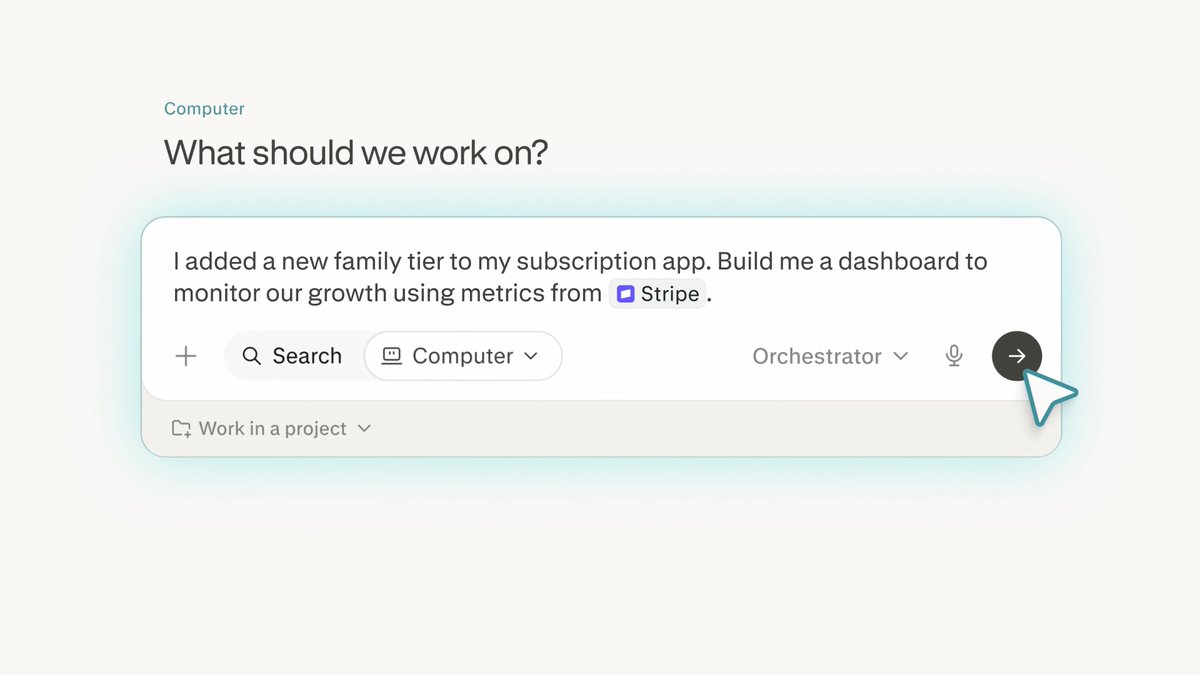
The Sentence That Should Worry Every SaaS Founder
Here it is, from Perplexity's own launch post. One of the example runs has Computer set up subscriptions end to end: it creates the products and prices in Stripe, wires the checkout into a Next.js and Supabase app through a GitHub pull request, and, in Perplexity's words, "gates access behind Clerk."
Read that again. Nobody searched "best auth provider for Next.js." Nobody opened six comparison tabs or skimmed a single Reddit pricing thread. The agent needed auth, so the agent picked Clerk. The founder finds out which vendor they're paying for when they review the pull request.
That's agentic search. The comparison still happens, but it happens inside the agent's context window, in seconds, built from whatever the underlying models already believe and whatever the live search layer surfaces. If your product is the one the model reaches for by default, you win deals no human ever shopped. If it isn't, you never find out there was a deal to lose.
Here's the thing: we were already arguing about this when agentic engine optimization became a buzzword earlier this year, but that debate was mostly about browsing agents reading web pages. Computer for Builders goes a step further. The agent is doing the work, and vendor selection is a side effect of doing the work.
You're getting AI traffic. But do you know where it comes from?
RankControl tracks every visit from ChatGPT, Perplexity, and Claude. Full source attribution, down to the prompts you're recommended for.
Perplexity Is Picking a Lane
Zoom out and August looks like a company placing one big bet. Computer learned to run from your inbox on August 18. Brain, a memory system that compiles what the agent knows into a structured wiki, landed August 19. Portable Computer arrived August 25 to run agents locally on NVIDIA hardware, and Hybrid Compute followed on Mac on September 1. Meanwhile Reuters reported Nvidia discussing an investment at a valuation above $30 billion.
The consumer side tells a messier story. Spend ten minutes in r/perplexity_ai and you'll find long-time Pro subscribers cancelling and saying the answer engine they signed up for now feels like a side quest next to Comet and Computer. One heavily upvoted thread flat out asks why anyone should keep paying for it.
Why keep Perplexity?
Is perplexity worth it? Currently have a gpt and Claude subscription. Why should I keep perplexity at this point (genuine question) Is it really that superior with web search?
Both things are true at once, and we've covered the numbers before: Perplexity's share of AI referral traffic fell from 19.7% to 6.9% while its ARR roughly tripled. Fewer humans treat Perplexity as their search tab. More businesses treat it as an operating layer. If you're deciding where your AEO effort goes this quarter, that trade matters more than any single launch.
We'll show you exactly where your brand stands in AI search.
No commitment. No credit card. See how ChatGPT, Perplexity, Claude, and Gemini talk about your brand today.

Should You Actually Use Perplexity Computer for Builders?
Honest answer: if your stack already looks like the launch stack, it's worth an afternoon. The Monday growth report alone is the kind of chore agents were built for, and bug triage that starts from clustered GitHub issues instead of a raw inbox is genuinely pleasant.
Right, I forgot to mention the cost part. There's no extra fee. Builder tools ride along with Pro and Max plans, so trying it costs you time, not budget.
Two cautions from a team that runs agents for a living. We operate a seven-agent pipeline in production at RankControl, and the pattern repeats every single week: agents are excellent at loops with clear success criteria and unreliable at judgment calls. So let Computer open pull requests all day, but keep a human on merge. And watch the vendor choices it makes on your behalf, because as of this launch the agent makes those calls unless you tell it otherwise.
What This Means for Your AI Search Visibility
Agents don't browse the way buyers do, and founders who adjust early will compound quietly while everyone else optimizes for a click that never comes. The first pass is four moves:
- Publish machine-readable commercial facts. Pricing, plan limits, feature specs, and integration docs in plain structure an agent can parse without rendering a JavaScript bundle. Making your SaaS discoverable to AI agents is mostly formatting discipline.
- Open the crawler doors. If PerplexityBot can't fetch your docs, Computer's search layer can't surface you at the moment an agent needs your category.
- Write content agents can lift whole. Direct answers under clear headings, comparison tables, plain lists, honest limitations. When we reverse-engineered 500 Perplexity citations, only 11% overlapped with ChatGPT's picks. Every engine plays favorites, so each one needs its own presence.
- Track whether any of it works. An audit tells you where you stood on audit day. What actually bites founders is the engine that quietly drops them three weeks after they stopped looking. Weekly citation tracking across the six major engines turns agentic search from a black box into a channel you can manage.
For what it's worth, the whole first pass takes an afternoon, then a few hours a month to keep watch. You can run all of it manually. Or RankControl's agents can handle the publishing and the tracking for you, every week, while you review pull requests from your own robot.
Know exactly what AI says about your competitors.
RankControl's Recon Agent monitors competitor citations across ChatGPT, Perplexity, Claude, and Gemini. See where they show up and you don't.