Every SaaS company has one: a YouTube channel holding a couple dozen demo videos, some onboarding walkthroughs and feature explainers, and a webinar recording nobody rewatched. The views sit in the low hundreds, and nobody on the team thinks of it as a search asset.
The AI engines see it differently. YouTube is now the single most-cited domain in Google AI Overviews, ahead of every publisher, wiki, forum and government site on the internet, and the part doing the work is the one founders spend the least time on: the text around the video. This guide covers what AI engines actually read on a watch page and how to write descriptions they can quote, then how to turn the video library you already have into citations.
Five findings shape everything below:
| Finding | Detail |
|---|---|
| YouTube is the #1 cited domain in Google AI Overviews and AI Mode | 29.5% of AI Overview citations (BrightEdge). Ahrefs' 75,000-brand study found YouTube mentions are the strongest single correlate of AI visibility (r = 0.737, ahead of backlinks at 0.218) |
| AI engines can't watch video | They retrieve the text layer (title, description, chapters and caption track), and that text is what gets quoted |
| Engagement barely matters | Every popularity metric shows near-zero correlation with citations, and roughly 4 in 10 cited videos have under 1,000 views |
| The description is the metadata lever | The average cited video carries a 334-word description, and description length is the strongest metadata signal (r = 0.31) |
| It's mostly a two-engine game | Google surfaces and Perplexity drive ~95% of YouTube citations; ChatGPT reaches your video content through your own domain instead |
YouTube for AI search: the most-cited domain nobody optimizes
The numbers are lopsided enough to be worth reading twice. BrightEdge tracked citations from May 2024 through September 2025 and found YouTube cited in 29.5% of Google AI Overviews, the top domain overall, and #1 in Google AI Mode as well. Vimeo, its nearest video competitor, got cited 200x less.
The correlation data points the same way. When Ahrefs tested which signals track with AI visibility across 75,000 brands, YouTube mentions (in titles, transcripts and descriptions) came out as the strongest correlate of all at r = 0.737, above web mentions at 0.664 and far above backlinks at 0.218. Whatever the models are weighting, YouTube text sits close to the center of it.
The spread across engines is anything but even, though. Perplexity alone drives 38.7% of all YouTube citations in OtterlyAI's study of 100+ million citations. Add Google AI Overviews (36.6%) and AI Mode (19.6%) and you're at about 95%, which leaves ChatGPT with 4.4% and Copilot with 0.5%.
So YouTube optimization is really Google-and-Perplexity optimization. I wouldn't skip it on that basis, since those two surfaces answer an enormous share of buyer questions, but it changes the plan: ChatGPT has to be reached with your video content through a different route, which I'll get to.
The trajectory matters as much as the share. NP Digital measured 414% growth in YouTube citations inside AI Overviews during Q1 2025 alone, with how-to video citations up 651%, and a follow-up a year later found the count still climbing 34% per half-year. Google keeps leaning further into its own video inventory, so every quarter you wait, more of the answers you could own get filled by someone else's video.
AI search traffic grew 835% this year. Is your content ready?
RankControl generates 26 content formats optimized for ChatGPT, Claude, and Perplexity. Published on your domain, matched to your brand.
What AI engines actually read on a watch page
No engine watches your demo. What they retrieve is the stack of text sitting around the player:
| Text layer | Who reads it | Notes |
|---|---|---|
| Title | All engines | Average cited title runs ~19 words: descriptive beats clever |
| Description | All engines | Fully indexed; first ~160 characters double as the search snippet |
| Chapters / timestamps | Google surfaces | Timestamped AI citations are exclusively a Google feature |
| Captions / transcript | Google surfaces, Perplexity | Perplexity surfaces transcript snippets; treat auto-captions as a rough draft |
One practitioner put the whole tier list in a single line: everything textual on YouTube gets indexed, down to the subtitles and transcripts, which makes one well-transcribed explainer a long-term asset.
X never drives AI traffic. never will. here's the platform tier list that actually matters for AI search visibility in 2026 tier 1 @Reddit → AI pulls threads with real tradeoffs and detailed answers. 3-5 substantive replies per week in relevant subreddits. mention brand only https://t.co/ea6qOo5Zqu
 Warden@wwardennMay 11, 2026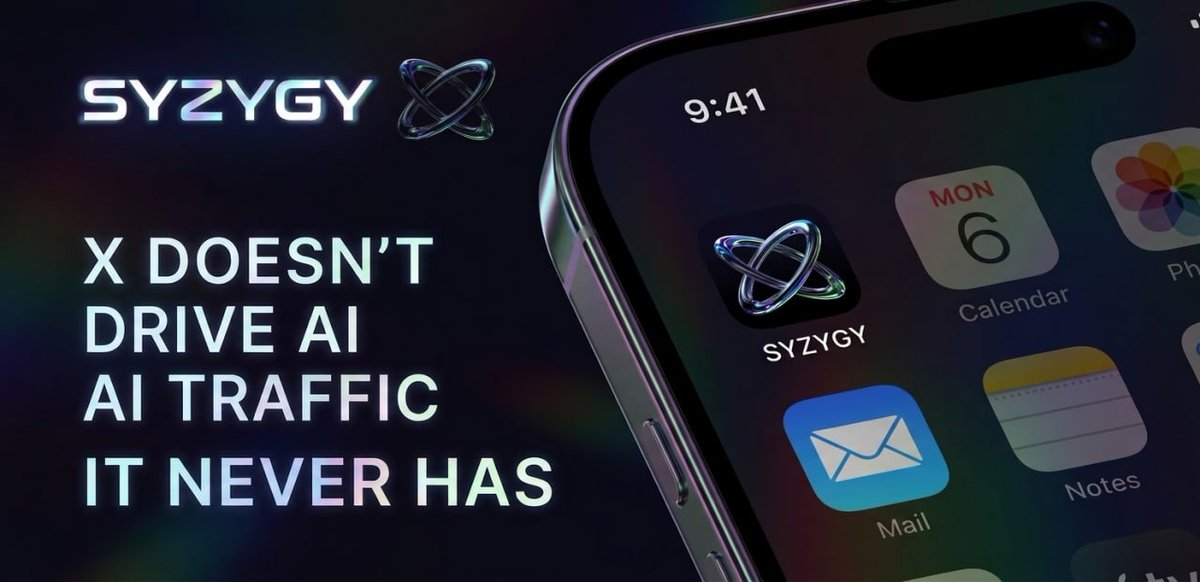
The evidence backs that framing. In OtterlyAI's data, views, likes and subscriber counts all showed near-zero correlation with citations, and 40.83% of cited videos had fewer than 1,000 views. Retrievable text is what earns citations, and production value has little to do with it. For a small SaaS channel that's the whole opportunity, because extractable answers matter far more than audience size, the same property that makes summary blocks work on web pages.
Format matters too, with 94% of cited videos being long-form. Shorts almost never get cited, and the mechanical reason is obvious once you think in text: thirty seconds of transcript contains nothing worth extracting.
Writing descriptions AI can quote
Most channels treat the description field as a dumping ground for social links, and the data says it's the strongest metadata lever you have. OtterlyAI found description length to be the top metadata correlation with citations (r = 0.31), and the average cited video carries a 334-word description, which is the length of a short blog post rather than a caption.
The tactic going around marketing Twitter is blunt: pick the query you want, make a video on it, and pack the caption with the phrasing buyers use.
Don’t tell Google I told you this 🤫 If you want to rank in ai overviews, you can use social media videos to do this on platforms like Instagram, YouTube, X, TikTok, and Facebook! Here are the steps to rank your social media posts in ai overviews. Find a keyword you want to
 Oluwatimileyin✨🦋@TimmysofineJul 12, 2026
It's directionally right, but "that's literally it" oversells the keyword part. Matching the query's phrasing gets you into retrieval, and getting quoted takes a description with an actual standalone answer in it. I'd structure it in four parts:
- The first two lines give the direct answer, one or two sentences that answer the video's core question outright. Those ~160 characters are also the snippet Bing and Google show, so they carry weight beyond the watch page.
- A 100-150 word expansion explains what the video covers, who it's for and the 2-3 concrete claims it makes (numbers included), written so a machine could quote any sentence alone.
- A chapter list uses question-shaped labels. "How the Slack integration handles alerts" beats "Feature demo part 2."
- An entity block carries the product name, category, site link and a consistent one-line positioning that matches your homepage, so the engines connect the channel to the brand.
Some creators resist stuffing descriptions with external links because they believe outbound links suppress reach. I'd keep one link to your site and one to the transcript page, since the description's job is to get cited and two links is plenty for that.

Built by the team that got cited in 48 hours.
Content generation, backlink building, AI visibility tracking, and Google rankings. One platform, zero guesswork.
Chapters, transcripts and the own-domain multiplier
Chapters first, because the data on them is unusually specific. Among cited videos with timestamps, 78% earn citations across 2-5 different chapters, so one well-chaptered video competes for several distinct questions. Every timestamped citation in OtterlyAI's dataset came from a Google surface, though, which makes chapters a Google play. They're worth doing, since that's where the volume is, but don't expect Perplexity to deep-link your timestamps.
Transcripts are where SaaS channels quietly bleed. Auto-captions run 85-95% accurate, and the misses cluster exactly where you can't afford them, on product names, API terms and integration names. One accuracy test watched auto-captions turn "Postgres" into "post grey sequel." If the caption track is what gets read, your brand terms need a human-reviewed caption file rather than YouTube's best guess.
That leaves ChatGPT, which barely cites youtube.com, and you reach it through your own site. Publish the cleaned transcript as a page on your domain (a real page with headings, not a wall of text), embed the video, add VideoObject schema per Google's video structured-data docs, and link the page from the video description. A 10-minute demo is roughly 2,000+ words of retrievable text, and on your domain every engine can reach it, including the Bing-fed ones that skip watch pages. Practitioners keep converging on the same finding:
Anyone else seeing YouTube citations spike in AI answers? How are you optimizing for it?
Noticing YouTube showing up more and more as a cited source in ChatGPT, Perplexity, and even Gemini responses over the last few months, not just for "how to" queries but for more analytical and opinion-based ones too. Curious how people her...
The thread's core insight, in paraphrase, is that engines read the caption track like a web page and pull the cleanest passage that answers the query, so state the answer out loud, early, in plain language. One commenter's version of the rule was simply to create for transcripts. The extraction logic from our schema blueprint applies here as well, since a transcript page is the kind of structured input schema works best with, just with a video attached.
Audit the library you already have
For most SaaS teams, the move is a retrofit of videos already uploaded rather than a new YouTube strategy:
| Step | What it involves | Time |
|---|---|---|
| Inventory | Every public video: demos, onboarding, webinars, conference talks | 30 minutes |
| Map to prompts | Match each video to a buyer prompt you want to win; a video with no matching question gets skipped, the same triage we apply to Reddit threads as citation sources | 1 hour |
| Rewrite descriptions | Use the four-part structure above | 30-45 minutes per video |
| Fix captions | On the mapped videos, and add question-shaped chapters | 30 minutes per video |
| Publish transcript pages | For your top 5 videos, with schema and cross-links | 1-2 hours each |
Call it 15-20 hours for a 15-video library, then a maintenance pass whenever the product changes. Google is also rolling AI search directly into YouTube itself (an "Ask YouTube" feature has been in testing since spring), and it surfaces answers with timestamps inside the app, so the text layer you just built is exactly what it will read.
Then comes the part nobody staffs, which is knowing whether it worked. Video citations reshuffle with model updates and ranking changes like everything else in AI search, so the retrofit is a weekend of work while knowing when it stops working is the ongoing job. AI visibility tracking that samples your buyer prompts weekly will catch when your videos start appearing in answers, and when they stop. RankControl checks your buyer prompts weekly across six engines, so you can see whether your brand gets cited alongside the videos.
See your first AI citation report in under 5 minutes.
No setup calls. No onboarding meetings. Connect your domain and see where AI mentions your brand right now.
The text layer is the video
The mental model that makes all of this click is that, to an AI engine, your video IS its text. A demo with a two-line description is nearly invisible no matter how good the demo is. Give the same demo a 300-word answer-first description, clean captions, question-shaped chapters and a transcript page on your domain, and you have five citation surfaces built around one video.
You can retrofit your library by hand in a couple of focused days, and for a 15-video channel it's worth the hours. Or RankControl's agents can track your buyer prompts every week across six engines, while you get back to shipping product.