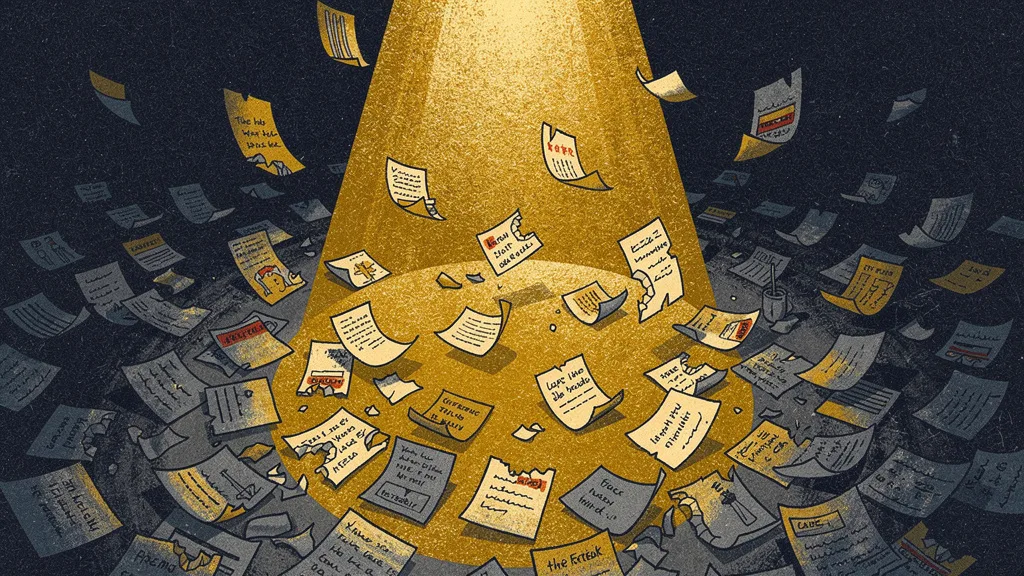
I spent two weeks tracking exactly where ChatGPT pulls its product recommendations from, and the answer surprised me. It wasn't the product's own website or its documentation, and it wasn't review sites either. Over half the time, ChatGPT was pulling from "best of" listicle articles, the "10 Best Project Management Tools in 2026" posts that look like content marketing filler. They turn out to be the single most cited format in AI search.
Why AI search engines can't resist listicles
When someone asks "what's the best CRM for startups?", the model needs structured, pre-filtered recommendations it can reference, and a listicle is exactly that. Our citation tracking across thousands of AI search responses shows that listicle-format articles make up over 50% of all citations, and that number isn't slowing down. When ChatGPT or Perplexity answers a "best X for Y" query, it's almost always pulling from a page that already ranks and compares options in a list format.
There are four reasons it works out this way. Listicles pre-filter entities: they name specific products, rank them and attach context like "best for small teams" or "best free option," and an LLM can extract those labels directly. They also come with comparison data baked in (pricing, pros, cons, use cases). That's all the structured information a model needs to form a recommendation.
The title carries a category signal too, telling the model which category the products belong to, and "Best AEO Tools 2026" is a clean category label. Then there's freshness. Year-tagged listicles ("2026") signal recency, and AI models weight recent content heavily.
Niche beats reach here. Niche industry sites publishing listicles earn 158x more citations per article than major publications covering the same topics. A focused "Best Email Marketing Tools for Ecommerce" on a domain that actually covers ecommerce outperforms a generic Forbes roundup for specific AI queries. (If you're still figuring out why AI search ignores your content in the first place, start there.)
The self-promotional listicle trap
In January 2026, Google started penalizing SaaS companies that published "best of" listicles on their own blogs with themselves ranked first. If you've considered doing that, or already have, this part matters.
The pattern was obvious in hindsight. A company would publish something like "7 Best [Category] Tools in 2026" on its own blog, put itself at position #1 and fill the rest with competitors, then refresh the title with the current year. Industry analysis documented at least seven SaaS companies hit by this, with drops in organic visibility ranging from 29% to 49%. For some of them, the blog was driving 77-93% of all site traffic. That's a catastrophic hit.
The part nobody mentions is that those Google ranking drops cascaded into AI search too. When a listicle loses organic visibility, ChatGPT and Perplexity stop citing it as well. Self-promotional listicles that had been generating AI citations watched those citations evaporate along with the Google traffic.
So don't publish "best of" lists where you rank yourself #1. The strategy that works is getting placed on other people's listicles, because third-party validation is what both Google and AI models trust.
Does Google punish self serving listicles?
My site's traffic and impressions were great. Recently, I published 7-8 self-serving alternative listicles, and after the update, my site's traffic is free-falling. Is it because of those listicles? Is anyone else also experiencing this?
Your competitors are building backlinks while you read this.
Organic outreach, social mentions, and citations from Editorial Circle member sites, with managed backlinks available as an add-on. Grow your domain authority without running the campaign yourself.

Three listicle strategies that still work
Not all listicle strategies got penalized. Our tracking shows 78 specific listicle URLs actually grew their AI citation share during the same period when the broader category declined 30%. So what separates the winners from the losers?
Strategy 1: Get placed on third-party listicles
This is the highest-ROI play: find existing listicle articles on other sites that rank for your target queries, then get your product included. The economics are wild right now. Placements on established listicles cost $100-$500 as a one-time fee. Compare that with the ongoing cost of creating and maintaining your own content. The timeline is fast as well, and we've seen placements go from "indexed" to "cited by ChatGPT" in about two weeks.
Finding the right listicles takes four steps:
- Ask ChatGPT and Perplexity your target queries ("best [category] tools 2026") and look at the sources they cite.
- Search Google for "best [your category] tools" and note which listicles rank on page one.
- Check industry directories and review sites in your niche (G2, Capterra, TrustRadius for SaaS).
- Look for niche sites with domain authority over 30 that cover your category specifically.
Not every listicle you find is worth a pitch. The ones to target were published or updated in the last 6 months and list 10-20 options (not 5, not 50). They already appear in AI search citations for related queries, and they're published on a domain that isn't your own and isn't a competitor's.
Strategy 2: Build genuinely useful comparison content
You can still create listicle content; you just can't rank yourself first and fill the rest with filler. The listicles that survived Google's January filtering share four traits: fresh publication dates, 10-20 options per list, transparent methodology explaining how items were ranked, and structured formatting with numbered H2/H3 headings.
Say you write a "Best CRM Tools for Bootstrapped SaaS" post. Include 12-15 real options with honest pros and cons for each, and mention your own product if it genuinely fits, placed where it actually belongs. If you're the best option for solopreneurs but not for teams, say that, because Google and AI models can smell a stacked deck in 2026.
Add an "answer capsule" after your H2 headings too, meaning a self-contained definition or summary of 120-150 characters. Industry research shows 72% of AI-cited posts include these capsules, and 91% of the capsules that get cited contain zero links. Keep that text clean and quotable.
Strategy 3: Make your product easy to list
This one's underrated. You can't control whether someone includes you on their listicle, but you can make it dead simple for them to do it. Start with a clear one-liner on your homepage that says what your product does in under 15 words, because listicle writers will copy it verbatim.
Publish your pricing publicly as well. Every good listicle includes pricing, and if yours says "contact sales," you're getting skipped, since listicle authors don't have time to book a demo just to fill in a row on their comparison table.
A press or media page with logos, screenshots and a product description writers can grab helps too. And if you don't have a free plan or trial, expect to get overlooked, because writers test products before listing them.
How to pitch listicle authors (without being annoying)
Finding the right listicle is half the battle, and getting included is the other half. For what it's worth, I've seen founders blow this by sending generic mass emails. The pitch that works is specific and low-effort for the writer.
First find the author, meaning the actual person who wrote the piece rather than the "content team" email; check LinkedIn, Twitter or the author bio. Then show you read the article by referencing a specific point they made about another tool. A line like "I noticed you mentioned [Tool X] struggles with [specific limitation]" proves you actually read it.
Position yourself against a gap in the list. Instead of "please add us," say "I noticed you don't have an option for [specific use case]. We solve that." Offer the information upfront: your one-liner, pricing, two differentiators and a link. Don't make them research you. Then offer something back, like a quote for their article, a data point from your product or a case study they can reference. Give before you ask.
Expect a 10-20% response rate and a 5-10% placement rate from cold outreach. That math works if you're pitching 30-50 listicles per quarter.
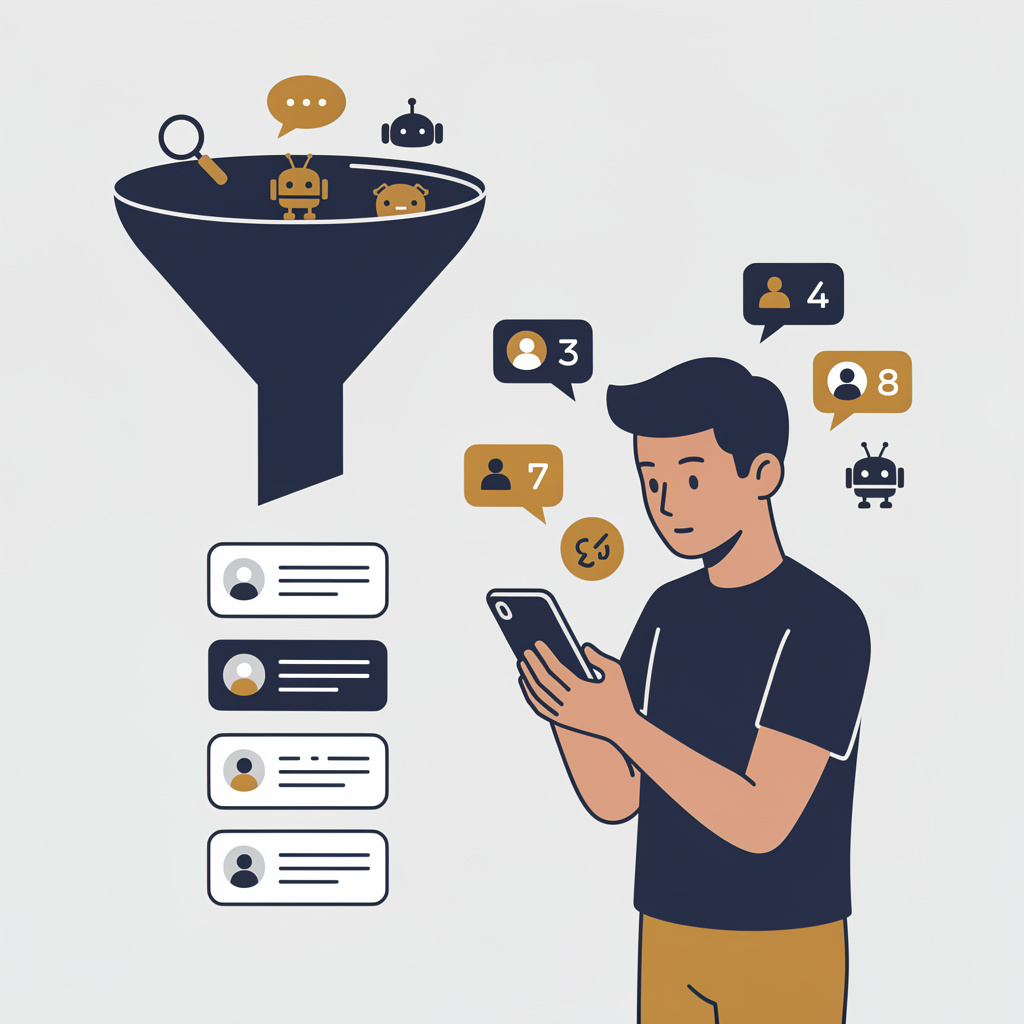
You're getting AI traffic. But do you know where it comes from?
RankControl credits every visit to the assistant that sent it: ChatGPT, Perplexity, Claude, Gemini, Copilot, or Grok. Full source attribution, next to your Google traffic.
Tracking whether listicle placements actually drive AI citations
This is where most founders stop. They get placed on a listicle, celebrate and never measure whether it moved the needle. That's a mistake, because not all placements are equal.
Start with your analytics. Look for referrers from chatgpt.com, perplexity.ai and other AI platforms, then filter by keywords that map to the listicles you're placed on, and you'll know whether a placement is generating actual traffic.
Then run citation checks. Every 2-4 weeks, query ChatGPT, Perplexity, Claude and Gemini with your target keywords. Note whether your product appears, which source URL gets cited and where you sit in the response. When an AI model does cite your product, check whether the source is a third-party listicle or your own content.
Track the lag, too. The time between getting listed on a listicle and first appearing in AI search results is typically 2-3 weeks, though high-authority domains can be faster.
Getting placed once is the easy part. The harder part is knowing when a listicle gets updated and your product gets removed, when a listicle loses its ranking and stops generating citations, or when AI models shift their sources entirely. The citation studies published this year show Reddit's share of AI citations climbing while other sources lose ground, and the sources AI models trust keep shifting.
That's why one-time listicle placements aren't enough and you need ongoing monitoring. A listicle that drives 40% of your AI citations today might lose its Google ranking next month and take your AI visibility with it.
The time math
Here's what this playbook costs in hours:
| Task | Time |
|---|---|
| Finding 30-50 target listicles | 8-10 hours |
| Researching authors and crafting personalized pitches | 10-15 hours |
| Follow-ups and negotiation | 3-5 hours |
| Setting up citation tracking | 4-6 hours |
| Monthly monitoring and re-pitching | 5-8 hours/month |
That comes to about 25-36 hours for the first sprint, then 5-8 hours a month to keep it running. If your time is worth $100/hour, that's $2,500-$3,600 upfront plus $500-$800/month, and it only covers the listicle channel. You'd still need to track citations across your own content, monitor competitor mentions and update your strategy as AI models change their sourcing.
You can do all of this manually. Or RankControl's content engine and AI agents can find the listicles, check the citations every week and show when a placement stops being cited, while you focus on building your product.
We'll show you exactly where your brand stands in AI search.
No commitment. $0 due today, cancel anytime. See how ChatGPT, Perplexity, Claude, Gemini, Grok, and Google AI Mode talk about your brand today.