
OpenAI's own Signals program data says more than half of active ChatGPT consumer users now primarily speak a language other than English. Spanish, Portuguese and Arabic are the top three of those languages, and the fastest-growing ones inside ChatGPT are Uzbek, Kazakh and Burmese. In Europe, AI search visits are doubling year over year and are projected to reach a quarter of all organic traffic by late 2026.
Almost every AEO playbook on the web is still written in English and tested against English queries. It's tuned for English citation graphs, and those look nothing like the graphs the other half of the user base is generating.
This guide is for that other half, the eighth in our vertical AEO series. It runs from how each engine behaves outside English, through the regional ecosystems Western engines never reach, to the schema that keeps a brand resolvable as one entity in every language.
The non-English majority nobody optimizes for
English accounts for 49.5% of websites whose content language is known, yet only 26% of the global internet population primarily reads English. Chinese speakers make up 19.4% of internet users, with Spanish at 7.9% and Arabic at 5.2%, and each of those is a large market with its own AI citation graph and comparatively little competition inside it.
Temso.ai measured how wide the gap is in March 2026. Their study covered 3.25 billion citations from seven AI models in 14 countries, and its per-language citation rates deserve a close look:
| Language | Google AI Overview | Copilot | ChatGPT | Grok |
|---|---|---|---|---|
| Italian | 89.9% | 76.5% | 73.8% | 54.0% |
| German | 89.8% | 75.9% | 66.0% | 49.3% |
| Swedish | 85.1% | 60.4% | 57.4% | 47.1% |
| Spanish | 83.4% | 83.5% | 74.6% | 55.3% |
| French | 82.1% | 87.2% | 72.3% | 58.9% |
| Dutch | 81.2% | 66.4% | 62.2% | 38.3% |
Each figure is the share of citations coming from local-language sources when the query itself is in that language. Google AI Overview averages 85% and Grok 52%, with ChatGPT in between, and ChatGPT slips noticeably on Germanic languages like Dutch and Swedish, whose native-language web corpora are smaller.
The Faux Polyglot problem
The behavior you most need to understand has a name. An arXiv paper cited by Advanced Web Ranking calls it "Faux Polyglot": ChatGPT often writes its answer in the language of the query while grounding it in English-language sources. Ask in Spanish and you get a Spanish paragraph built from English content, and a Japanese query comes back in Japanese with English sources behind it.
That's why the obvious fix, translating your English content into ten languages and adding hreflang tags, doesn't work. The AI grounding layer sits upstream of the URL-serving logic where hreflang does its job in classic search, and localized URLs are often left out of generative retrieval even when the query is in a specific language. The model isn't asking Google, "what's the German version of this page?" It's asking a training-derived corpus for "the answer to this question," and it falls back on whatever language dominates that corpus.
✈️ Where AI Search Sends Traffic: 10-Market Patterns for Your Global AI Search Strategy 👇 The outcome of my latest International AI search traffic analysis: There’s a comfortable narrative around AI search right now: AI assistants surface the biggest brands, ecommerce https://t.co/eww8H2MBUn
 Aleyda Solis 🕊️@aleydaApr 29, 2026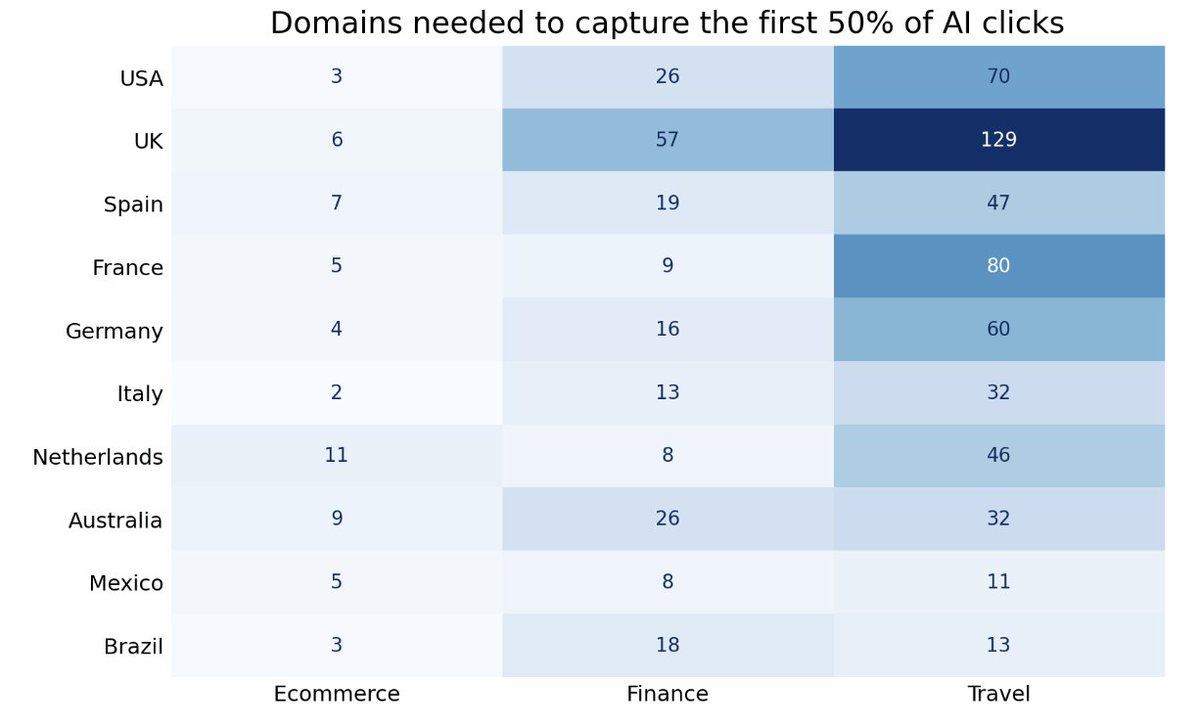
Aleyda Solis reached the same conclusion by a different route in her April 2026 analysis of international AI search traffic across 10 markets. AI search doesn't automatically surface the biggest global brands, traffic and citation patterns differ visibly from market to market, and markets where brands invest in genuinely native content see disproportionate lift. The consequence is blunt. Brands that treat multilingual AEO as translation plus hreflang will lose to smaller local competitors who treat it as native content plus regional citation graphs.
How each Western engine handles non-English queries
Each engine has its own defaults outside English, and most global AEO teams underestimate how much those defaults matter.
Gemini has the deepest multilingual training corpus of the Western engines, covering 70+ languages, and it cites local-language sources 85.4% of the time. Gemini 2.5 Pro and Flash also rank among the best for Chinese and Brazilian Portuguese translation, as well as Ukrainian and French. ChatGPT with Browse enabled goes the other way, defaulting to English-language sources for ambiguous queries regardless of locale, even though GPT-4o understands context in non-English languages 32% better than GPT-3.5 did.
Perplexity is the easiest to plan for. It follows Bing's index coverage in non-English languages, so for Perplexity visibility outside English, Bing Webmaster Tools matters as much as Google Search Console.
Claude supports all major world languages and is particularly strong in German, Japanese and Korean, and in Dutch and Italian as well. Claude Sonnet 3.7 outperforms GPT-4 in Southeast Asian languages (81% accuracy on Thai sentiment analysis against GPT-4's 68%), and Claude keeps dialogue context across five-plus language switches per turn. Grok is the least localized of the group, at a 51.7% average local-language citation rate.
Know exactly what AI says about your competitors.
RankControl's Recon Agent monitors competitor citations across ChatGPT, Perplexity, Claude, Gemini, Grok, and Google AI Mode. See where they show up and you don't.

The citation graph changes per language market
Change the query language and the whole citation graph moves, well beyond one cited source trading places with another. Profound's analysis of Google AI Overviews went market by market:
| Market | How the citation mix shifts |
|---|---|
| Spanish (LATAM) | TikTok jumps to 16% of AI citations, a 5x increase over the English baseline; Instagram and TikTok together dominate social citations in Mexico and Spain |
| Portuguese (Brazil) | YouTube concentrates further at 65% of citations, Reddit collapses to 7% and Instagram triples to 17% |
| Arabic | Instagram reaches 29% and YouTube falls to 26%, nearly inverting the English baseline where YouTube dominates; LinkedIn roughly doubles |
So a global brand has to rebuild its off-site presence for each market. TikTok works as a citation channel in Spanish and Portuguese in a way it doesn't in English, and Instagram carries an outsized share in Arabic. Reddit's big share in ChatGPT and Perplexity turns out to be an English-market phenomenon that doesn't carry into most European or Asian markets.
The regional AI ecosystems Western engines don't reach
China, Russia and Korea run AI search on citation ecosystems of their own, and a Western playbook barely touches them.
Start with Baidu. On June 25, 2026 it merged the Ernie App and Wenxin Bot into the Baidu Wenxin Assistant, a single AI search entry point for hundreds of millions of Chinese users. Its citations follow a clear order: Baidu Baike (the Chinese Wikipedia equivalent) first, then high-vote Zhihu answers, then B2B tech media such as 36Kr, Huxiu and Leiphone. WeChat Public Account articles come next, with CNKI and WanFang covering academic content, and a brand's own website carries minimal weight.
DeepSeek leans heavily on Zhihu long-form Q&A and technical documentation in Simplified Chinese. Qwen (Alibaba) surfaces Taobao, Tmall and 1688 results for commercial queries, so e-commerce brands need their platform presence aligned. Doubao (ByteDance) is connected to Douyin, Toutiao and Xigua Video and works as a TikTok-adjacent citation ecosystem for brand awareness among mid-market and SMB audiences in China.
In Russia, Yandex is building generative AI into 100% of its consumer-facing products by the end of 2026, and YandexGPT understands the Russian language, Russian legislation and post-Soviet cultural context in depth. Yandex Alice and YandexGPT cite Russian Wikipedia, Yandex Q for Q&A and Kinopoisk for entertainment, plus Russian media like RBC and Kommersant.
In Korea, the engine to know is Naver's. HyperCLOVA X powers Naver's "Cue:" AI search and draws mainly on Naver Q&A, Naver Blog and Naver News, so a brand with no Naver Blog presence is nearly invisible to Korean AI search however strong its English content is. SK Telecom's KoGPT is a smaller Korean alternative aimed at younger demographics.
Wikipedia is language-specific
Wikipedia holds an estimated 47.9% of ChatGPT's top-10 source share and 7.8% of total individual citations, which makes it the single most important AI citation source across engines. For international work, the catch is that each language edition is its own world. Non-English Wikipedias differ from the English one in content depth, editorial gatekeepers and article eligibility requirements, so a brand with a solid English article isn't automatically cited in Japanese, German or Arabic AI responses.
To earn citations in a target language, the entity needs a Wikipedia article in that language backed by its own citations from local sources, and a translated stub of the English article won't qualify. It's a substantial editorial project. It's also often the single highest-ROI move an international brand can make.
26 content formats. Published on your domain. Matched to your brand.
Guides, comparisons, listicles, case studies, and more. RankControl generates content that gets cited by ChatGPT, Perplexity, Claude, Gemini, Grok, and Google AI Mode.

Hreflang, schema and multilingual entity resolution
Hreflang tags do help with cross-lingual entity resolution, though they matter more for classic Google search than for AI grounding. I'd still ship them, and there are three ways to deliver them:
| Delivery | Example or note |
|---|---|
| HTML head (most common) | <link rel="alternate" hreflang="de" href="https://example.com/de/page/"> |
| HTTP headers | For non-HTML content |
| XML sitemap | <xhtml:link rel="alternate" hreflang="es" href="..."/> |
Add an x-default tag as well, because without one you break entity resolution whenever the AI can't match a locale, and make sure your schema markup references locale-specific URLs rather than English defaults. The schema stack that moves multilingual AI citation is short:
| Property | What it does |
|---|---|
inLanguage | Goes on every page with the ISO 639-1 code ("de", "ja", "ar", "zh-Hans", "zh-Hant") and must match the page's actual language, not the site's default |
sameAs | Links every language version to the same Wikidata entity, plus the language-specific Wikipedia article and regional business directories |
areaServed | Distinguishes the regional entity from the global brand |
parentOrganization | Links the regional entity back to the global brand |
audience with geographicArea | Targets local content |
Wikidata does the heavy lifting there. An item with multilingual labels in every language you operate in acts as a semantic anchor, and that anchor is what stops AI systems from treating your regional pages as unrelated brands. If the retrieval vocabulary behind all this is unfamiliar, our AEO terminology cheat sheet explains 65 terms in one line each, and enterprises running this across 12 markets should also read the enterprise AEO playbook for the governance and procurement layer.
Translation vs cultural localization
Machine translation gets the grammar right. It fails at entity localization and cultural context, and at mapping market-specific terminology, and AI citation engines can detect the semantic differences between regional variants.
The reference numbers come from McKinsey localization research and several practitioner sources: keyword-translated content saw 45% lower engagement than culturally contextualized content. Airbnb documented a 20% year-over-year increase in bookings in new markets after fully localizing its support content, going past basic translation to local idioms, region-specific search intent and regionally adapted keywords.
For AEO, I'd draw the line like this. Translation moves words from one language into another, while localization moves entities: the local competitors you name, the local news sources you cite, the local tax code, and city names spelled the way natives actually spell them. It even reaches the writing system, since Japanese has three (kanji, hiragana and katakana) and the right choice depends on how natives read that type of content.
The models are uneven too, scoring 64% accuracy on Arabic and Hindi and 79% on Japanese and Korean, against 90%-plus on English, French and Spanish. Content that sounds machine-translated to a native ear also sounds machine-translated to a model trained on native content, and both fail the citation test.
Half of ChatGPT's users primarily speak a language other than English, and AEO tooling built around the English graph serves them poorly today. The brands that move first inside a target language, with native content, a Wikipedia article in that language, a regional Wikidata entity and a presence on the platforms that feed each ecosystem, are collecting citation share while everyone else waits for the English playbook to translate itself.
RankControl tracks citation share across six AI engines, ChatGPT, Perplexity, Claude and Gemini among them, for queries in each language you track, so a drop in Spanish citations shows up in that week's results instead of sometime in the same fiscal year.

Your competitors are getting cited by AI. You're not.
Every day without citation tracking is a day your competitors pull ahead in ChatGPT, Perplexity, and Claude.