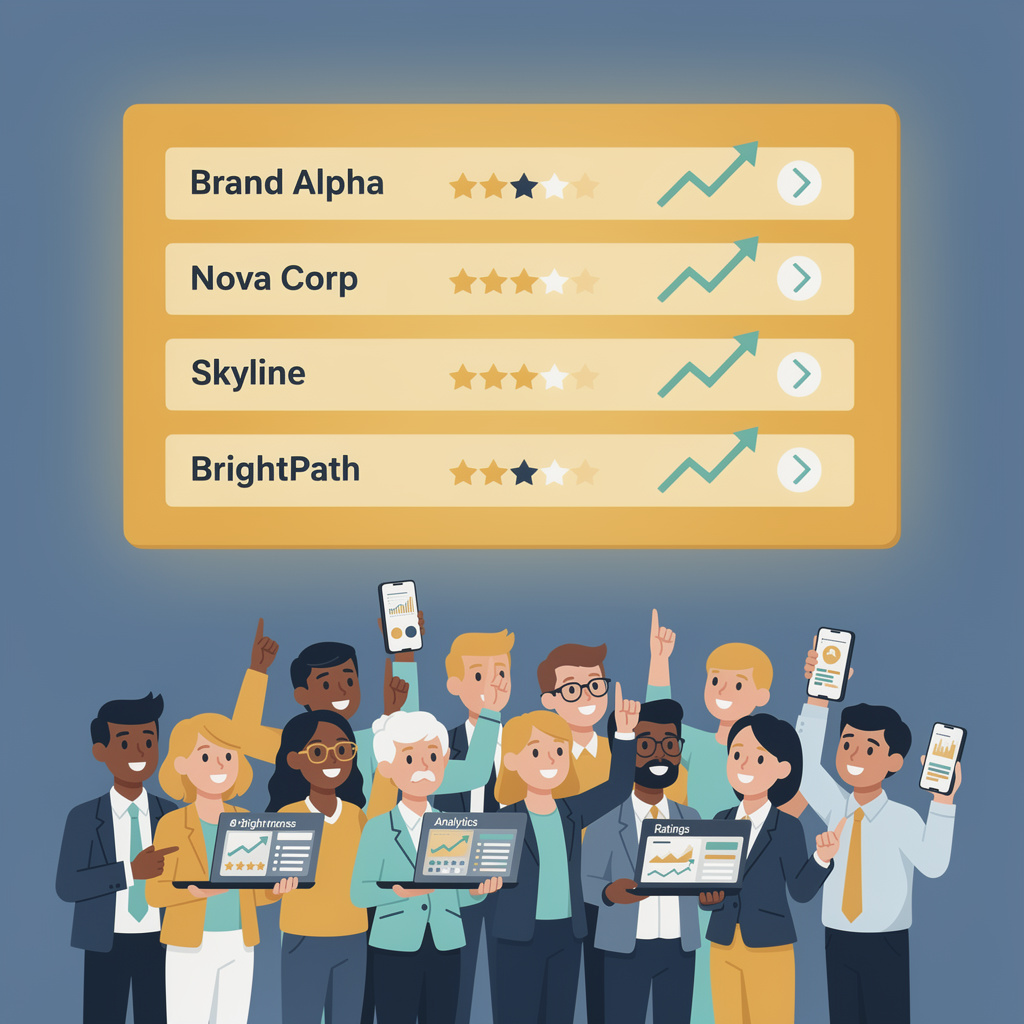
Two numbers landed within a month of each other, and together they change how you should think about Google. At I/O in May, Google confirmed AI Mode had passed a billion monthly users. Then on June 3, the UK's competition regulator did something no government had managed before: it forced Google to give publishers a real opt-out.
If you run a SaaS company and neither of those made you look up, here's the short version. Google's most aggressive AI search product is now bigger than most social networks, it reads your customer's Gmail before it answers them, and the rules for staying visible in it just started shifting under everyone's feet at once.
What Actually Changed
Quick bit of history first, because AI Mode gets confused with AI Overviews constantly. AI Mode launched as a Search Labs experiment in early 2025 and opened to all US users that summer. For a while it was the thing power users toggled into. Not anymore. A billion people a month now use it, and AI Overviews, the summaries that show up automatically on a normal results page, sit above 2.5 billion.
The bigger shift is what's under the hood. AI Mode runs on Gemini 3 and pulls from a feature Google calls Personal Intelligence, which reached general availability earlier this year. Ask "best CRM for a small team" and the answer can now factor in the tools already sitting in your Google Workspace, products named in your recent email, and what your calendar says you do all day. Same query, different answer per person.
For B2B that's a real problem. Your landing page now has a new competitor it can't see: the searcher's own inbox.
And AI Mode doesn't read your page the way a human does. It uses a technique called query fan-out: it takes one question, splits it into 8 to 12 sub-queries, fires them across the web at once, then stitches the results into a single answer. So your content doesn't need to answer the headline question well. It needs to answer the six quieter questions hiding underneath it.
AI Mode and AI Overviews Are Two Different Games
Here's the thing most marketing teams still get wrong. AI Mode and AI Overviews look like the same feature wearing two hats. They give AI answers, they both eat your clicks, so people assume winning one means winning the other.
Ahrefs ran the numbers on 730,000 response pairs and found the opposite. The two systems produce answers that are 86% semantically similar, meaning they basically say the same thing. But they cite almost completely different sources. Only 13.7% of the cited URLs overlap.
Read that twice. You can be the source behind every AI Overview for your target keywords and be a ghost inside AI Mode. AI Mode also name-drops roughly 2.5x more brands and people per answer, so there's more room to show up, and more competitors showing up next to you.
| AI Overviews | AI Mode | |
|---|---|---|
| How it shows up | Automatic, top of results | User opens it on purpose |
| Model | Gemini (auto summary) | Gemini 3, conversational |
| Answer length | Short summary | Much longer, multi-part |
| Personalization | No | Yes, via Personal Intelligence |
| Shared citations | 13.7% overlap | 13.7% overlap |
So you're not running one optimization campaign. You're running two, on the same search engine, with two different scoreboards. Teams that track only one of them are flying blind on half their Google visibility.. Our AI visibility tracking splits the two out on purpose for exactly this reason.
26 content formats. Published on your domain. Matched to your brand.
Guides, comparisons, listicles, case studies, and more. RankControl generates content that gets cited by ChatGPT, Perplexity, Claude, Gemini, Grok, and Google AI Mode.

The Traffic Math Nobody Says Out Loud
I won't dress this up. On raw traffic, the data is grim.
Seer Interactive measured organic click-through rate falling about 61% when AI features appear on a result, from roughly 1.4% down to 0.6%. Ahrefs, tracking the effect over eight months, watched AI Overviews cut clicks to the number-one organic result by 58%, up from 34.5% earlier in the year. It's getting worse, not settling. Pew found that only about 1% of AI Overview answers lead to anyone clicking a cited source, and something close to 60% of Google searches now end with no click at all.
The sneaky part hits Search Console first: impressions hold steady or even climb while clicks fall off a cliff. An AI Overview counts as an impression even when nobody clicks, so your dashboard looks healthy while real visits bleed out.
For a founder watching a traffic graph, that looks like a slow-motion car crash.
But watch what happens to the traffic that does come through. The part that surprised us most, once we pulled the numbers across accounts: AI-referred visitors convert several times better than standard Google organic. In ecommerce this year the gap hit around 42% higher conversion for AI-sourced visits, a full reversal from a year earlier when that same traffic converted worse. Fewer people land on your site. The ones who do are further down the decision than any organic visitor you've ever had.
So the math flips. Losing 40% of your sessions feels fatal right up until the survivors, plus a stream of high-intent AI referrals, quietly out-earn the traffic you lost. The old dashboard says you're dying. The revenue says you're fine. You just need a new dashboard.
The Opt-Out Everyone's About to Ask For
Now the part that'll dominate LinkedIn for the next quarter. For years there was no honest way to tell Google "summarize me in AI, but keep sending me search clicks." Google-Extended in your robots.txt only blocks Gemini from training on your content. It does nothing to keep you out of AI Mode or AI Overviews. The nosnippet tag technically pulls you from AI answers, but it yanks your normal search snippets along with it, so using it is basically self-harm.
That deadlock is what the UK's Competition and Markets Authority just broke. On June 3, using its new Strategic Market Status powers, the CMA ordered Google to build a Search Console toggle that lets publishers opt out of AI Overviews and AI Mode without touching their traditional rankings. Google has nine months to ship it and has signaled a global rollout will follow the UK version.
Before you get excited: opting out means volunteering to disappear from the fastest-growing surface in search. For most SaaS brands that's the wrong move. The prize here isn't the exit door. It's finally having proof of what AI Mode does with your content, so you can decide page by page instead of guessing.
One more gut-check from the citation data. An SE Ranking study of 68,000-plus keywords found the single most-cited source inside AI Mode is Google itself, at about 17% of all citations, with its self-citation share roughly tripling in under a year. Your loudest competitor in AI Mode is the search engine, sitting above every rival you were already worried about.
Your competitors are getting cited by AI. You're not.
Every day without citation tracking is a day your competitors pull ahead in ChatGPT, Perplexity, and Claude.
What To Do This Week
Enough doom. Here's the actual list.
Audit AI Mode separately from AI Overviews. Since only 13.7% of citations overlap, checking one tells you nothing useful about the other. Run your money keywords through AI Mode directly and write down what gets cited and what gets skipped.
Rewrite your key pages for extraction, not for reading. Fan-out rewards pages that answer sub-questions cleanly. Open every section with a direct 30 to 50 word answer before any wind-up. Our content engine writes every new page in this structure, and you can apply it by hand to existing pages one at a time.
Fix the technical layer. FAQ schema on anything with questions, Article schema carrying a current modifiedDate, and an llms.txt file at your root pointing crawlers at your best pages. Make sure your robots.txt isn't quietly blocking AI crawlers you actually want in.
Build clusters, not monoliths. AI Mode grades topical depth. Three tight 1,200-word pages hitting specific sub-questions tend to beat one bloated 4,000-word guide. We walked through this in our beginner's guide to getting cited.
Say the same thing everywhere. AI Mode builds its picture of your brand from your whole footprint: your site, Reddit, LinkedIn, reviews. When each surface describes you differently, the model can't cite you with confidence. Pick one description of what you do and repeat it across every profile you own.
Change the metric you stare at. Rankings and CTR described the old game. The number that predicts pipeline now is citation share: how often your brand shows up in AI answers versus your competitors.
Realistically that's 15 to 20 hours for the first pass and 5 to 8 hours a month to keep it fresh once AI Mode shifts again, which it will. You can absolutely run all of it by hand. Or point RankControl's agents at it to write the new pages and re-check your citations weekly while you build the product.
200+ SaaS teams already track their AI citations.
They know exactly when ChatGPT mentions their brand, and when it stops. Do you?