
Ten posts in two weeks won't guarantee that ChatGPT cites you, and I'd rather you hear that now than in week three. The "1,000 pages in a weekend" pitch works when you have the data behind it. The "ten posts in two weeks and you're cited" pitch is a lot messier.
What a sprint buys you is a foothold. It puts enough of your content into the retrieval index for one category that you can start tracking citation share, and it gives you momentum to stack the next twenty posts on. It won't turn you into the most-cited source overnight, and nothing else will either.
The foothold is worth having, though, and two benchmarks show why:
| Benchmark | Result |
|---|---|
| Averi's 12-piece sprint | Citation inflection around piece 11-12; a 10-post sprint gets you 90% of the way there |
| Ramp, per Profound's published case study | 7x AI visibility from 4 targeted pages in about a month, using use-case segmentation (SMB and enterprise), one listicle and one trend page |
AI engines care more about how densely you cover a topic cluster than about any one flagship article. Ten solid posts give you that density in a single category, and two weeks is plenty of time to ship them if you stay disciplined.
The ten post archetypes that actually get cited
Most sprints I've watched go sideways were lost before the writing started, because the topic mix was wrong. The format-share studies agree closely on what gets cited, so here's the mix:
| Archetype | Posts | Why |
|---|---|---|
| Ranked listicle ("best X for Y") | 3 | 71-86% of cited listicles are numbered or ranked (Wix); winners list 10-20 items with methodology, losers 5-8 with no rationale |
| Comparison / vs page | 2 | Real pricing table, feature grid, testing methodology; cite at 2.4x generic blog posts' rate (DigitalApplied's 500-SaaS audit) |
| Alternatives-of page | 1 | "[Competitor] alternatives" is a sibling of comparisons that ranks and cites separately |
| Use-case page, named outcome | 1 | "How [company] used [tool] to reduce onboarding time 40%" or "[Tool] for solo founders"; named outcomes lift Claude citations +28% |
| Buyer's guide pillar | 1 | Comprehensive, 2,000-2,500 words, linking to every listicle and comparison; the hub the others feed |
| Statistics roundup | 1 | "50 [Category] Stats for 2026" with primary sources; compounds for years if refreshed quarterly |
| How-to guide | 1 | "How to [outcome]" with numbered steps; informational queries lean 2.7x more on how-to and article formats |
Listicles get three slots because 21.9% of AI citations go to them, more than any other format, in the Wix Studio AI Search Lab study of 1M+ citations. Don't go much past three, though. Seer's data has listicle citations falling 30% month-over-month in early 2026, so spread the rest of your bets.
Make one of the three a third-party format, something like "Best CRMs for a 20-person sales team, ranked", because 80.9% of professional-services listicle citations end up with third-party editorial instead of self-promotion.
Glossary and product-review pages can wait until month two or three. They build more slowly and need longer before the citations come in.
Lily Ray named the thing that makes any of this work:
Buy my latest course and download my secret guide to how to own 2 links in AI Mode at the same time 🤑 JK. Just wrote an article with a lot of new/original data and hit 'publish.' https://t.co/TFB81UzbWS
 Lily Ray 😏@lilyraynycSep 2, 2025
Plenty of people want to sell you a secret framework. What works is data that's genuinely new, and a publish button, which is also why ten posts fit into two weeks: with the data in hand, the writing goes quickly.
Week 1: setup and the first three posts
Most sprints die in setup. On a calendar it looks dull, so people skip ahead to the writing, and I'd ask you not to.
| When | The job |
|---|---|
| Day 1, Monday | Prompt research. Pick 30 buyer prompts your ICP asks AI engines, mined from sales call transcripts, Search Console queries, r/[yourindustry] threads, Reddit questions and competitor blog H2s |
| Day 2, Tuesday | Competitor citation gap. Run each prompt in ChatGPT, Perplexity and Google AI Mode; note which competitors get cited and which don't |
| Day 3, Wednesday | Topic assignment. Map the 30 prompts to the 10 archetypes (listicles usually attract 4-5, some archetypes one) and end with 10 outlines, target prompts assigned |
| Days 4-5, Thursday-Friday | First 3 posts, the anchors: pillar buyer's guide, one listicle, one comparison, 1,500-2,500 words each. Publish Friday afternoon |
Treat Monday's prompt list as the foundation, because it decides what every post goes after. On Tuesday, the prompts where no one in your category shows up well are the ones that pay best. Ahrefs Brand Radar or Profound can automate that check if the budget allows.
Semrush put the gate under all of this well:
If your site structure isn’t clear, AI won’t surface your content. Improve visibility in AI search with our SEO guide (+ 6-month playbook template) 👇 https://t.co/Fzqjh8VOFK. https://t.co/Qrh4nzy1Fd
 Semrush@semrushJul 7, 2026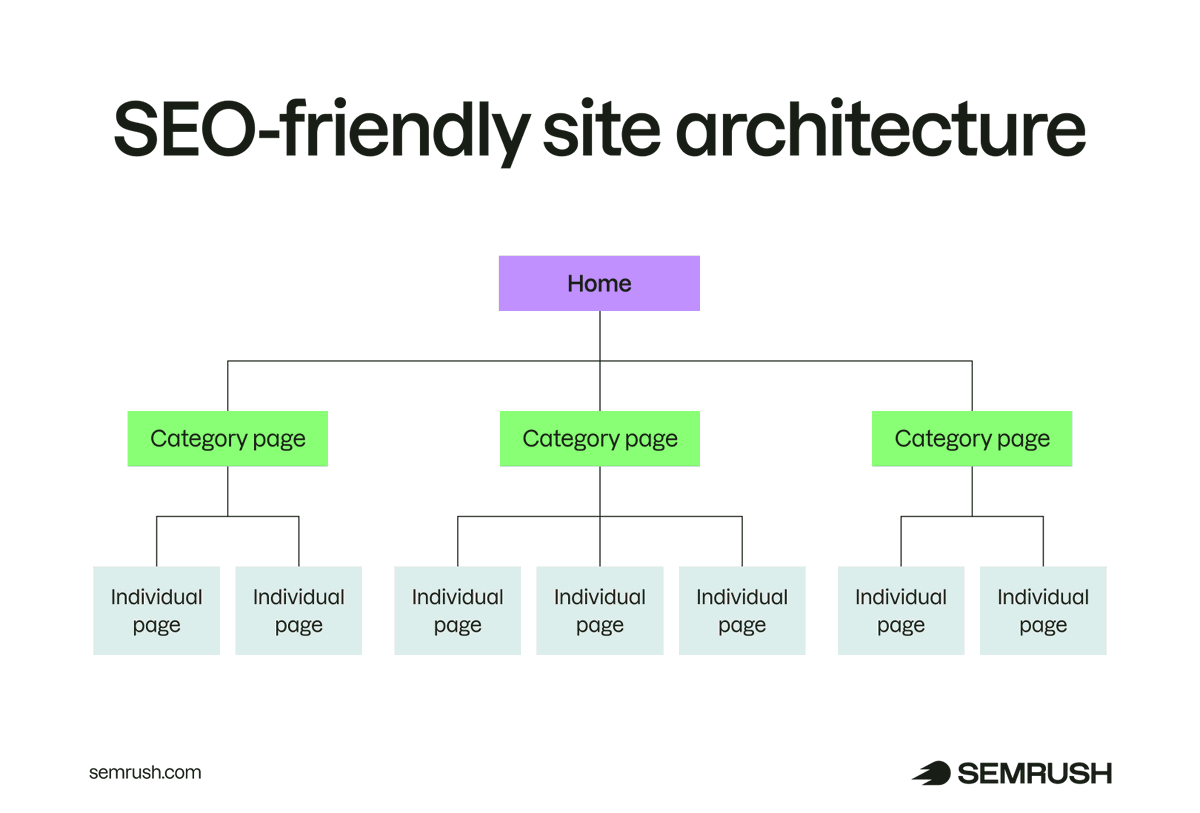
No sprint rescues a site whose structure keeps AI from surfacing the content. Those first three days are the structural setup, and if you skip them, the writing rests on noise.

Your competitors are getting cited by AI. You're not.
Every day without citation tracking is a day your competitors pull ahead in ChatGPT, Perplexity, and Claude.
Week 2: the remaining seven posts
Week two runs at one post a day, then a weekend and two more days to finish:
| When | Post or task |
|---|---|
| Day 6, Monday | Second listicle |
| Day 7, Tuesday | Second comparison |
| Day 8, Wednesday | Alternatives page |
| Day 9, Thursday | Use-case page |
| Day 10, Friday | Statistics roundup |
| Days 11-12, weekend | Polish, plus the third listicle if you have the energy and the how-to guide as post ten |
| Days 13-14, Monday-Tuesday of week 3 | Interlinking and schema audit |
Interlinking works in both directions. Each post points to the pillar, and the pillar points back at every post. Comparisons point to the listicles featuring their products, and each listicle points out to the individual comparisons. Then add Article schema, with author set up as a Person node plus sameAs, and add dateModified.
Why not publish all ten on day one? ChatGPT and Perplexity favor recent content, so a staggered cohort works with them. A ten-post dump can also read as scaled content abuse to Google's SpamBrain classifier. In the August 2025 spam update, that classifier took out a lot of programmatic sites.
Don't obsess over length, since structure counts for more. Search Engine Land's study of 25K URLs found cited pages sitting at 1,000-2,000 words, so your pillar can run long, the listicles and comparisons can sit in the middle, and the how-to stays short. Nothing needs to pass 3,000 words unless the subject demands it.
A founder on r/juststart posted how a three-week publishing push went on a brand-new domain:
Been publishing AI SEO articles for 3 weeks — here's what actually happened (with GSC data)
I want to share what's been happening since I started using AI to write SEO content for my own site, because most posts I see are either "AI content is amazing" or "AI content is garbage" with no actual data. Background: I'm building a SaaS...
Notice which post ChatGPT pulled from first. It was the comparison article, with real pricing, a clean table and no deliberate AEO tricks, and it got cited inside the sprint window while the long research piece trailed behind. That matches the archetype data: on a young domain, comparisons ramp up citations fastest.
Quality gates for every post
Every post goes through six gates, and anything that fails more than one doesn't ship.
| Gate | What it takes |
|---|---|
| Question-shaped H2 | Every section opens with a question the model can match against a buyer prompt |
| Answer-first paragraph | Front-load the answer: about 44.2% of AI citations come from the first 30% of the page, per Averi |
| One data point per section | Quantitative, with a named primary source, every section, no exceptions |
| Named entities in every paragraph | Product, company and tool names, never pronouns that lose their referents when extracted |
| Semantic-triple phrasing | Subject-predicate-object sentences (see HubSpot's caveat below) |
| Descriptive URL slug | /blog/best-crm-for-sales-teams-2026, not /post/4712. Ahrefs' 1.4M-prompt study: descriptive slugs cited 89.78% of the time when retrieved, opaque ones 81.11% |
In a controlled experiment, HubSpot documented +642% AI citations after rewriting into subject-predicate-object structure, but they flagged the catch themselves: "triples alone did not achieve this." The lift only came alongside schema, backlinks and a general SEO foundation.
A post that clears all six has a real shot at the retrieval index. Miss two or more and it mostly drags your average down.
200+ SaaS teams already track their AI citations.
They know exactly when ChatGPT mentions their brand, and when it stops. Do you?

Measurement: the 60-day window
After the two weeks, you switch from shipping to measuring:
| Window | What to expect, and what to do |
|---|---|
| Days 15-21 (week 3) | First citations (median 6.81 days in Fogtrail's 900-page study). By the end of week 3, at least 3-4 of your 10 posts should appear in at least one AI engine's answers for at least one target prompt |
| Days 22-40 | Citation share grows. Google AI Mode cites 36% of new content within 24 hours, ChatGPT only 8%: faster AI Mode wins, slower ChatGPT ramp. Zero citations by day 37 (Fogtrail's P90) usually means a technical problem: check URL, canonical, indexing status, robots.txt |
| Days 41-60 | Two out of ten posts typically take the majority of citation share. Refresh those two quarterly, the seven middle-tier posts lightly, and retire or completely rewrite the bottom one |
| Every week | Sample weekly and read 30-day and 60-day trends. Track at least 50 category prompts; 30% share or better on at least one provider is meaningful traction |
Never judge the sprint on one snapshot. Citations are volatile, and 40-60% of citations churn every 30 days, per Stackmatix.
Our AI visibility tracking follows the same pattern, with weekly sampling and citation share for each prompt on each engine across 30/60/90-day windows. A spreadsheet works if you're running the sprint manually, but the churn makes weekly sampling miserable by month two.
The traps
These sprints tend to fail in four ways. The first happens before any writing, when you sprint on the wrong ten topics. If your ICP doesn't actually ask the prompts you picked, no quality of writing will recover the sprint, and catching that is what the first three days are for.
Publishing everything at once is the second. Stagger the posts and you keep the recency bump without the SpamBrain risk.
The third, quitting after the sprint, does the most damage. Averi's benchmark puts the inflection between the eleventh and twelfth piece, so if you stop at ten you're one post short. Keep shipping a post a week for the next 8-12 weeks, because that's when the compounding kicks in. Most founders quit around month five, exactly a quarter before pipeline appears, and by then they've spent the setup cost on a system they never really ran.
The fourth is having no refresh cadence. Ahrefs' freshness study covered 17M citations, and roughly half of them went to pages published or refreshed within the previous 13 weeks. Quarterly refreshes on your winners are non-negotiable, so set the reminder before the sprint ends.
What to do next Monday
If you plan to run this, put two full weeks on the calendar, starting from a Monday. Skip the sales-pipeline Mondays and the meeting-heavy ones, because you need both weeks clear.
| Days | Work |
|---|---|
| 1-3 | Buyer prompt research and topic assignment |
| 4-14 | One post per working day |
| 15-16 | Interlinking, schema, dateModified |
Our content engine treats the format templates and the internal linking as one system. After the sprint, Radar keeps putting planned titles on your calendar, so posts eleven through twenty go out inside the inflection window. For the schema side, our Organization schema playbook walks through the entity foundation all ten posts rest on.
I call it a sprint on purpose, because the framing fights the default failure. Founders who plan to "publish 4 articles a week when I have time" hardly ever get there, while the ones who clear two weeks and ship ten posts actually do it. The pace forces the work to happen, and the foothold from those ten posts is what a slower weekly cadence compounds on afterward.
So think of the sprint as the on-ramp to your strategy. Ship the ten, measure for 60 days, and keep publishing after that.
How often does ChatGPT mention your brand?
Most founders have no idea. The answer might surprise you.