Somewhere in the shift to answer engines, review pages quietly became the highest-impact content type nobody is rewriting. Buyers used to type into a search box and click through a list. Now they ask ChatGPT and read a paragraph, and that paragraph almost always cites a review page, about a third of the time the same one: G2. G2's dominance is the smaller part of the story, though. The bigger part is the structural pattern the winning review pages share, which you can borrow for your own comparison and product-review content without waiting to buy a G2 profile.
AI engines cite passages rather than whole pages. A well-structured review page can get pulled into a Perplexity answer even when it ranks nowhere near the top for the query, while a badly structured one can rank #1 and still get skipped. What separates the two is a handful of on-page choices that have almost nothing to do with SEO in the classic sense.
Key takeaways
- G2 alone captures about 33% of review-platform citations in ChatGPT and Google AI Overviews and around 75% in Perplexity, per Profound data reported by G2, and the G2 family (including Capterra, Software Advice, GetApp) accounts for ~84% of review-platform citations.
- Only about 17% of AI Overview citations come from organic top-10 pages (BrightEdge), which makes passage structure the gate for AI citations instead of ranking.
- Google's Review Snippet doc, updated December 2025, reiterates that self-serving reviews are ineligible for star rich results and that a single
itemReviewedper Review/AggregateRating is mandatory. - Per practitioner analyses of 2025 citation patterns, extractive AI systems select reviews with clear sections (specs, testing, pros and cons, a verdict) around 4.7x more often.
- August 2025's Spam Update took a direct swing at thin-affiliate reviews without hands-on testing, while Google's E-E-A-T evolution now weights multimedia evidence (original photos, video, measurements) as a real signal for review pages.
Why review pages punch above their weight in AI search
Review pages earn their outsized share on bottom-of-funnel prompts. When a buyer asks "best CRM for a 20-person sales team" or "is [Product] worth it in 2026," the answer engines lean heavily on structured, third-party review content, because that's the shape of the answer they need to give. G2's own analysis of BOFU prompts shows review platforms overweight in exactly the queries that convert.
The data on which sources AI engines actually cite has consolidated at the same time. Across 150,000 AI citations and 5,000 keywords, Semrush found Reddit taking 40.1% of LLM references overall, with Wikipedia at 26.3% and YouTube at 23.5%. Zoom into product and software queries, though, and the picture flips. Omniscient's Profound analysis puts the G2 family at ~84% of AI Overview review citations and the top five review platforms at ~88% combined, those five being G2 and Gartner Peer Insights plus Capterra, Software Advice and TrustRadius.
Marie Haynes flagged the second half of this shift when Google announced AI Mode's shopping surface would pull reviews and price directly into the answer card:
Google just announced a big update to Shopping. 🛒 Converse in AI Mode and when you ask a shopping related question you'll get an intelligently organized response with rich visuals showing price, reviews, inventory info and more. 🛒 You can also use these shopping features in https://t.co/jpzXYfF2jQ
 Marie Haynes@Marie_HaynesNov 13, 2025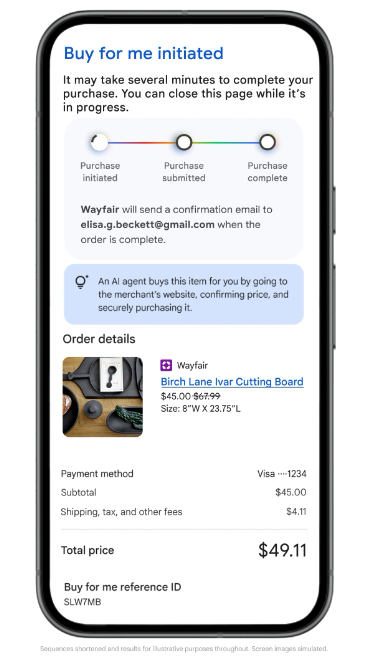
When the reviews themselves become the visual comparison, instead of a link you click after reading the answer, the structural quality of the review page underneath turns into the raw material for the whole experience. That's where the "highly cited" signal Barry Schwartz surfaced comes in:
Google AI Overviews & AI Mode gain preferred sources, plus new perspectives carousel and highly cited labels https://t.co/C3f82Vv7Of https://t.co/bYF0J1sxjt
 Barry Schwartz@rustybrickMay 27, 2026
AI engines come back to a "highly cited" review page across many variations of a prompt. I think of that as a passage-level reputation that sits apart from ranking, and you build it by making the review structurally easy to extract, again and again.
The structural blueprint for a citation-worthy review page
Almost every review page that gets cited consistently has the same six components, and you don't need to be a review platform for any of them.
A verdict belongs in the first 40-60 words. AI engines weight opening passages heavily, and when the prompt is "should I use X," the extraction the model reaches for is a one-sentence verdict paired with a "best for" line, so skip the throat-clearing and put the answer first.
For pros and cons, use short lists and name the product in every bullet. Pronouns lose their referent the moment a passage is extracted: "It's fast but expensive" survives as an orphan, while "Airtable is fast but expensive" survives as an answer.
A comparison table with stable columns does a lot of the work. Practitioner analyses converge on tables outperforming prose by roughly 4x for extraction on equivalent data. Keep it to four to six competitors and four to six criteria, with column headings that match the H2/H3 labels lower on the page, because that consistency is what lets the model reuse the structure across prompts.
The author byline should be a Person with credentials and a linked profile. Schema.org doesn't require byline schema with sameAs pointing to a real LinkedIn or professional site, but Google's E-E-A-T evolution treats it as a meaningful signal, and so does the way AI engines evaluate passage authority. A reviewer whose expertise is visible outperforms one whose byline is just a name.
Write down the testing methodology. "We tested this for six weeks with a team of three" is a passage AI engines can and do quote directly, whereas "We reviewed this tool" is skippable filler. The sample size, testing window and testing conditions belong in a short paragraph near the top of the page, along with who did the testing.
Dates round it out, with datePublished and a visible Last updated. AI engines discount stale reviews, so a "Last updated 2026-06-14" line at the top of the page, plus dateModified in your Product schema, tells the model the passage reflects the current state of the tool.
These compound. A review page with all six components clears the bar even without domain authority, and a page with none of them gets skipped even if it ranks.
See your first AI citation report in under 5 minutes.
No setup calls. No onboarding meetings. Connect your domain and see where AI mentions your brand right now.

The schema that actually works
Google's Review Snippet doc, cited above, is the primary source of truth here, and three things in it matter for a self-hosted review page.
Use Product schema with aggregateRating and at least one nested review (the schema.org Review type). An aggregate without individual reviews leaves the model with no passage to quote, and individual reviews without the aggregate leave rich snippets on the table.
Follow the one-review-target rule. Search Engine Journal covered the reminder from Google that a single Review/AggregateRating markup block can only point to one itemReviewed, so trying to bundle multiple products into one block breaks rich-result eligibility.
Then watch the self-serving trap, which Google clarified in the Dec 2025 doc update. Reviews you control on your own product page don't qualify for star rich results, and that includes embedded third-party widgets like Google or Facebook review displays. Publishing your own reviews of other products is fine, but user reviews of your own product on your own site aren't eligible for stars.
The numbers on the page also have to match reviewCount and ratingCount exactly, since discrepancies get flagged in Search Console and can trigger a manual action.
Where people get this wrong
The most common failure is a page that ranks well and never gets cited. Usually the review is structurally opaque, a wall of prose with no verdict up top and no pros/cons list, table or methodology paragraph, under a byline that's just a name. With the passage layer empty, the model has nothing extractable to quote.
Thin affiliate content dressed up as a review is the second. Google's August 2025 Spam Update took a direct swing at pages that copy vendor spec sheets and wrap them in "best of" listicles without any first-hand use. Even setting the HCU-era ranking damage aside, these pages have no unique passage for AI engines to prefer, so citation share collapses even when the ranking briefly survives.
The third is the one practitioners underestimate: the gap between ranking and citation. BrightEdge puts the share of AI Overview citations coming from organic top-10 pages at only about 17%, while Ahrefs' updated analysis of 863K SERPs and 4M AIO URLs lands at 37.9% (down from 76% earlier). Whichever number you trust, ranking predicts citation less and less. A widely shared r/SEO thread analyzing 1.4M ChatGPT prompts reached a community consensus on this:
Why ChatGPT Cites One Page Over Another (Study of 1.4M Prompts)
More bad News for the GEO fabricated "AI researches and trusts brands based on x, y, z criteria" - which to be honest, I doubt they can even admit to - the story they've spun is so long and nonsesnical. However - a study worth looking at fr...
The thread and the underlying data agree that the title, URL and snippet do most of the gatekeeping before ChatGPT ever opens a page. The retrieval layer decides which reviews are candidates, and the passage layer decides which one wins.
Your competitors are building backlinks while you read this.
Organic outreach, social mentions, and link exchanges, with managed backlinks available as an add-on. Grow your domain authority without running the campaign yourself.

A practical template you can use this week
The pattern that keeps showing up in cited pages has six sections, in this order:
- An H1 with the product name and year, like "Airtable Review 2026: Six Weeks with the New Interfaces."
- A verdict block of 40-60 words: the star aggregate, a one-sentence verdict, and a best-for and a worst-for line.
- How you tested, in two to four sentences covering sample size, testing window, testing conditions and who tested.
- Pros and cons as short bullet lists, with the product named in every bullet.
- A comparison table of four to six alternatives against four to six criteria, with stable column headings.
- A verdict recap and update log that restates the verdict, then lists dated changes ("2026-06-14: added notes on the new AI features release").
Add the schema, the byline and the update date, publish, and then let the retrieval layer do its work. When you want to see which of your review pages are actually getting cited, our AI visibility tracking samples the buyer prompts across ChatGPT, Perplexity and Google AI Mode and logs citation share per page. The content engine can then write new review and comparison pages for the buyer questions where you are not cited yet. If structuring pages for extraction is new to you, our llms.txt and robots.txt checklist covers the access side of the same problem.
One caveat: the studies you'll read don't all tell the same story. If you want to calibrate how much weight any single citation-share number deserves, Search Engine Land's analysis of the study field is worth the read. The direction is consistent, with review pages punching above their SEO weight in AI answers, but the exact percentages will keep moving.
Over the next year of AI search, the review pages that win will be the ones structured so a model reading a paragraph at a time can pull a clean, self-contained answer out of them, whatever they ranked in 2023. Review pages are unusually well suited to that shape, and most brands are still writing the old kind.
You're getting AI traffic. But do you know where it comes from?
RankControl credits every visit to the assistant that sent it: ChatGPT, Perplexity, Claude, Gemini, Copilot, or Grok. Full source attribution, next to your Google traffic.