
Semantic search is easiest to see from the side where it costs you money. A small skincare seller posted in r/Google_Ads this fall about ads for beef tallow balm, which had done well on searches like "tallow cream." Then Google began showing them on searches for pharmacy brands and generic face creams, and the seller kept adding negative keywords to stop it.
Why is Google Ads matching my keyword to completely irrelevant searches?
I need help. I’m advertising in a very small market. In my country, there are only like four businesses selling tallow products, so there really isn’t much competition.I sell a very niche product: beef tallow balm. Earlier, my Google Ads ca...
Most replies blamed Google's newer matching settings. One put it bluntly, saying exact match "isn't truly exact anymore." Google had decided those searches meant roughly the same as the seller's keywords, even though the words differed.
You don't have to run ads for this to matter. The same machinery picks which pages rank for your customers' searches and which pages AI answers pull from. So we tested it on Google, on ChatGPT and on three open models.
What semantic search means
Google's Search Liaison account once gave a good example. Ask why your TV looks strange, and you can get pages about the soap opera effect, a term you never typed.
For example, neural matching helps us understand that a search for "why does my TV look strange" is related to the concept of "the soap opera effect." We can then return pages about the soap opera effect, even if the exact words aren't used...
 Google SearchLiaison@searchliaisonMar 21, 2019
The engine worked out what you meant rather than matching the exact words you typed. Keyword search asks whether a page contains your words. Semantic search asks whether the page is about the same thing.
Google has been heading this way for about a decade. Its 2022 post on how AI powers search calls RankBrain its first deep learning system, one that helped it relate words to concepts. RankBrain launched in 2015, and neural matching followed in 2018. Then in 2019 came BERT, which Google said would help with one in 10 English searches in the US.
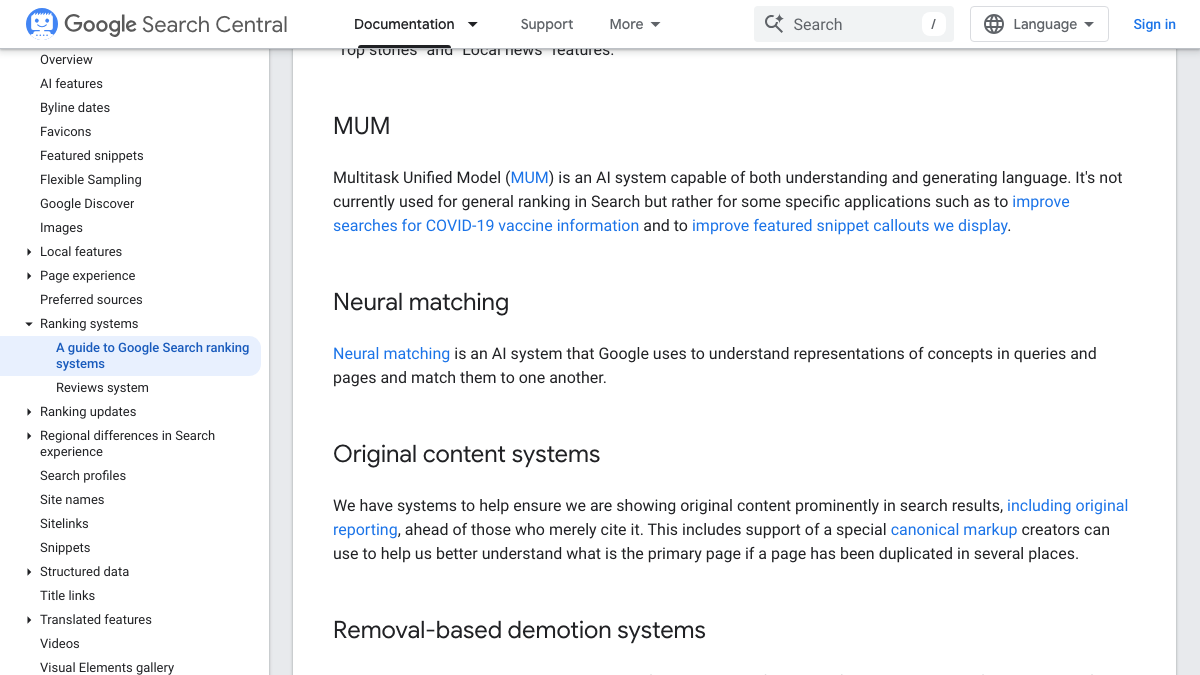
You'll still find these systems in Google's ranking systems guide today. Neural matching, the guide says, links "representations of concepts in queries and pages" to one another. RankBrain can return pages that don't contain all the words you searched.
We searched the same things in different words
Nobody who searched "inexpensive airfare to london" saw "inexpensive airfare" in a single top title. All ten results were about cheap flights.
We ran that search from the US on October 19, 2026. It was one of 14 pairs of queries that mean the same thing in different words. In most pairs one phrasing is common and the other is rare, going by Google Ads search volume. For each rare phrasing we read the top titles and asked whether Google used the searcher's words or the common ones.
| Rarer phrasing (monthly searches) | Common phrasing (monthly searches) | Top results for the rarer phrasing titled only in the common words |
|---|---|---|
| inexpensive airfare to london (no data) | cheap flights to london (6,600) | 10 of 10 |
| customer management software for small companies (no data) | best crm for small business (2,900) | 8 of 8 |
| reduce hypertension without medication (40) | how to lower blood pressure naturally (33,100) | 7 of 8 |
| egg cooking time (2,900) | how long to boil an egg (18,100) | 7 of 7 |
| sneakers for fallen arches (720) | running shoes for flat feet (4,400) | 6 of 7 |
| get merlot out of rug (no data) | remove red wine stain from carpet (140) | 5 of 6 |
| notebook computer not powering up (no data) | laptop won't turn on (6,600) | 5 of 7 |
| car makes noise when braking (720) | squeaky brakes (18,100) | 0 of 8 |
In the 11 pairs where one phrasing was clearly rarer, the rare one lost most of the time. Of the 83 top results for those searches, 56 had titles using only the common words, about two in three.
The pull only ran one way. For the common phrasings, 0 of 90 results had titles using only the rare words.
We call this the common-words pull. Your query gets moved toward the words most people use, and the pages written in those words are the ones you see.
Where the pull stops
I wouldn't stretch that into "Google always swaps your words." Two of our searches show where it stops.
"Car makes noise when braking" got pages in its own words, since plenty of pages already carry titles like that. "How to fix a dripping tap" is the British phrasing. It mostly got pages titled with "tap," several from UK sites, even though we searched from the US.
So the pull depends on supply. When enough pages already use your phrasing, Google shows them. It reaches for the common words when the rare phrasing has few pages of its own.
There's a second catch, and it's in the overlap. Put the two top 10 lists for each pair side by side and they barely match.
| Same-meaning pairs | Count |
|---|---|
| Pairs searched | 14 |
| Different pages in both top 10 lists | 207 |
| Shared URLs, in total | 7 |
| Most shared in one pair | 1 |
That's about 3% overlap for searches with the same meaning. Google matched the meaning, and the exact words still chose most of the pages on each list.
We'll show you exactly where your brand stands in AI search.
No commitment. $0 due today, cancel anytime. See how ChatGPT, Perplexity, Claude, Gemini, Grok, Google AI Mode, and Google AI Overviews talk about your brand today.

How semantic search works under the hood
"Tap the screen twice to fix the dripping paint effect" has nothing to do with plumbing. A small embedding model still ranked it above the real answer to "how to fix a dripping tap."
To see why, you need the idea most semantic search runs on. A model turns a piece of text into a long list of numbers, called an embedding. Texts with similar meaning end up with similar numbers. The engine then looks for pages whose numbers sit closest to the query's.
We tried this with three free, open-source embedding models run on a laptop. Each of three queries got scored against five short sentences. One sentence meant the same as the query in different words. Others were decoys that shared the query's words and meant something else.
| Query | Same meaning, different words | Small model (bge-small) | Large model (bge-large) | Large model (mxbai-large) |
|---|---|---|---|---|
| how to fix a dripping tap | Replace the worn washer to stop a leaky faucet | 3rd, with the screen-tap decoy 1st | 2nd, behind the same decoy | 1st |
| best crm for small business | Customer relationship software for teams of 5 to 20 people | 4th, with a CRM for enterprise banks 1st | 1st | 2nd, by 0.004 |
| cheap flights to london | Budget airfare deals to Heathrow and Gatwick | 4th, with cheap London hotels 1st | 1st | 1st |
The small model fell for word overlap on all three. The two larger ones put the right sentence first in two of the three queries each.
The margins were thin, too. In the faucet test the large model gave the decoy 0.730 and the real answer 0.715. Gaps that small are one reason search systems often blend meaning scores with plain word matching, a setup usually called hybrid search. Our explainer on how large language models work starts one step earlier, where text gets split into tokens.
Semantic search in AI answers
When ChatGPT answered our queries from memory, it covered both words. Its answers said "notebook computer (laptop)," "dripping tap (faucet)" and "high blood pressure (hypertension)."
We asked it all 29 queries on the same day, through a data provider's ChatGPT feed. It searched the web for 9 of them and answered the rest from memory.
The searches are where the rewriting shows. "Inexpensive airfare to london" went out as a search for "cheap flights to London." "Customer management software for small companies" became a search for CRM software for small businesses. Our guide to how ChatGPT searches the web covers that rewriting step.
| Google AI Overviews in our pair test | Result |
|---|---|
| Pair searches that showed an AI Overview | 27 of 28 |
| Pairs where both phrasings had one | 13 |
| Sources the two overviews shared | 27 of 179, about 15% |
So the overviews drew on a bigger shared pool than the blue links did. Most of their sources still changed when the wording did.
Know exactly what AI says about your competitors.
RankControl's Recon Agent monitors competitor citations across ChatGPT, Perplexity, Claude, Gemini, Grok, Google AI Mode, and Google AI Overviews. See where they show up and you don't.

What semantic search changes for SEO
This summer a poster in r/WebsiteSEO asked whether semantic SEO is a real shift or just good writing with a new name. One reply said a bit of both, and I'd answer the same way. Our test points to a few plain rules, none of them about stuffing synonyms into a page.
| What to do | Why it works |
|---|---|
| Put the words most people search with in your title and main headings | That phrasing collects the rare searches too |
| Use the other ways people say it in the body | A page about cheap flights can mention airfare and budget tickets where they fit |
| Keep one page per meaning | Separate pages for "cheap flights" and "inexpensive airfare" compete for the same searches |
| Answer each question in a passage that makes sense alone | Google's guide lists passage ranking, and AI answers usually quote a passage rather than a whole page |
| Cover a topic fully across related pages | Engines can see what your site is about |
Our guide to topical authority goes deeper on that last row.
The one-page-per-meaning rule has a limit, and the overlap numbers show it. Only about 3% of URLs were shared across same-meaning pairs, so the exact words still decide which pages your searcher sees. When your buyers use a phrasing that has its own pages, like "car makes noise when braking," give that phrasing its own section or page.
Where exact words still win
If you sell anything with a model number, this part matters most. Product names, part numbers, error codes and quoted phrases all need literal matching, and semantic search can get in their way.
Our test of which search operators still work found that quotes mostly held on Google. ChatGPT dropped them when it rewrote the search. So when someone types your exact model number into an AI tool, the rewrite can lose that string too.
The fix is dull. Use one product name, spelled one way, on your site, your listings and your docs. AI engines match by meaning, so two spellings of one product name can look to them like two different things.
For how engines decide which page gets quoted, see our breakdown of how AI engines choose sources to cite.
What this takes by hand
By our estimate, writing for semantic search adds up to this each month.
| Task | Hours a month |
|---|---|
| Finding the common phrasing for each topic | 2 to 3 |
| Mapping other phrasings into existing pages | 2 to 4 |
| Merging pages that target the same meaning | 2 to 3 |
| Rewriting answers into clear passages | 3 to 5 |
| Checking which pages rank and get cited | 2 to 3 |
| Total | 11 to 18 |
Doing it by hand or with help
You can do all of it by hand, or give the steady part to RankControl. We plan and write articles against the pages already ranking for each search, and publish them to your site once you approve. Every week we check 50 of your buyer questions on ChatGPT, Perplexity, Claude and Gemini. Grok, Google AI Mode and Google AI Overviews get the same check, so you can see which pages each engine cites.
26 content formats. Published on your domain. Matched to your brand.
Guides, comparisons, listicles, case studies, and more. RankControl generates content that gets cited by ChatGPT, Perplexity, Claude, Gemini, Grok, Google AI Mode, and Google AI Overviews.